

For far too long, South Africa’s political elite and law enforcement apparatus have comforted themselves with a dangerous, deeply flawed narrative.
They have looked at the systematic stripping of our electricity grids, the raiding of our rail networks and the plundering of our water infrastructure and classified these activities as “petty theft”. They have dismissed them as the desperate actions of the impoverished, the opportunistic crimes of the unemployed or the minor headaches of municipal management.
This is a lie. And it is a lie that is costing South Africa its future.
Let’s call a spade a spade: infrastructure vandalism and copper cable theft are no longer mere crimes of poverty. They represent a well-organised, multi-billion-rand campaign of deliberate economic sabotage that directly threatens the survival of South Africa’s economic heartland.
When heavily armed syndicates descend upon City Power substations equipped with industrial-grade tools, specialised cutting machinery and tactical logistical vehicles, they are not looking for a few rands to buy food. They are systematically disabling the vital life-support systems of the City of Johannesburg.
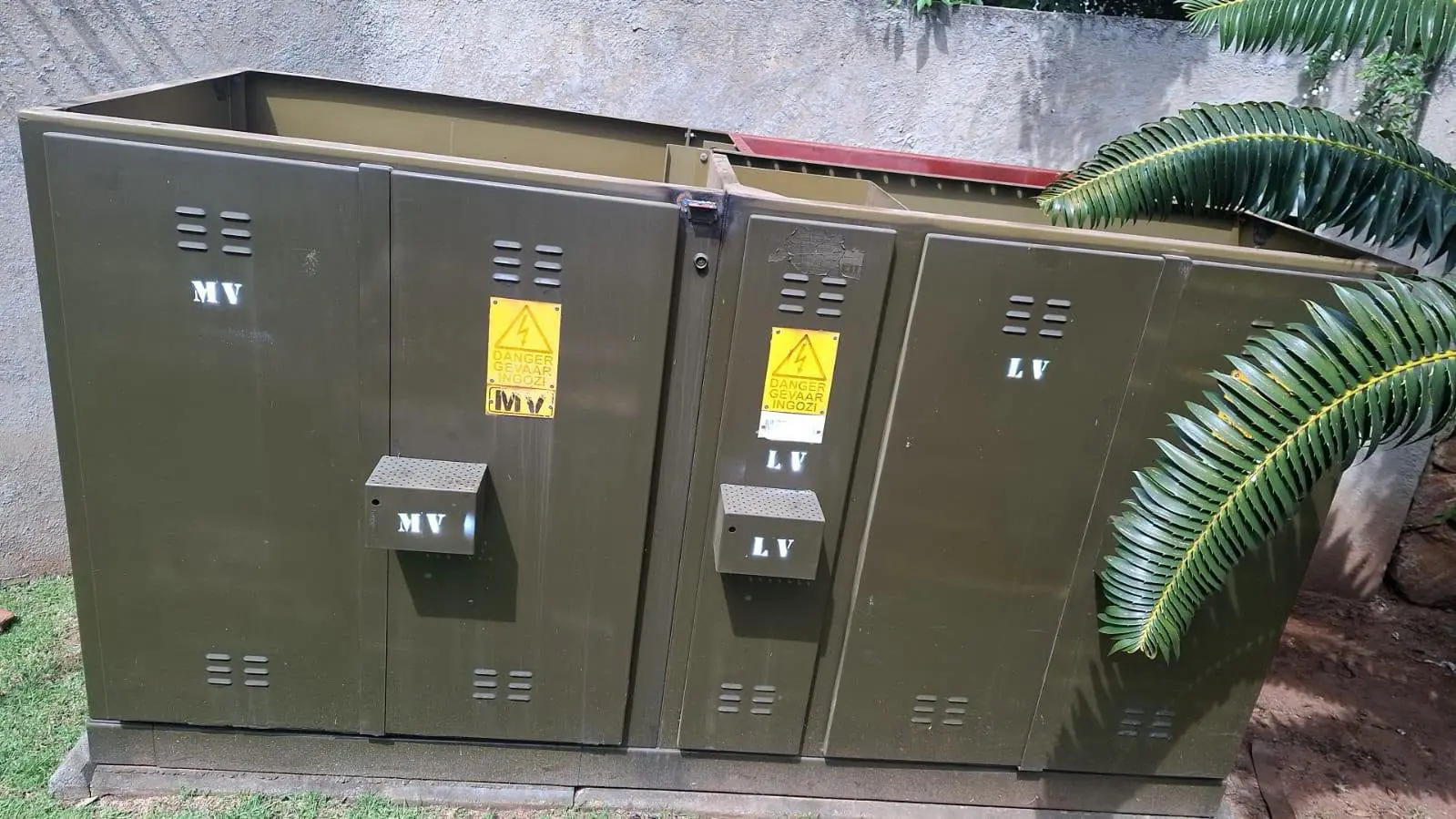
The recurring fires at the Central Substation, which have repeatedly plunged large portions of the Johannesburg city centre into pro-longed, terrifying darkness, illustrate a brutal truth: our public infrastructure is under active siege. The economic and human toll of this warfare is staggering.
Research from Genesis Analytics indicates that the illicit copper trade alone costs the national economy more than R45 billion annually.
It is time to call this crisis what it truly is — an existential threat to our socioeconomic fabric. We must cease treating these syndicates as mere thieves and begin treating them as enemy combatants engaged in treasonous acts of sabotage against the state.
Overcoming this crisis demands an aggressive, coordinated and unyielding state response that permanently shuts down the rogue scrap metal market, roots out internal utility corruption and deploys the full weight of the nation’s intelligence apparatus to protect our collective survival.
City Power routinely spends hundreds of millions of rands each financial year repairing networks that were perfectly functional before criminal intervention. This creates a crippling, regressive diversion of scarce state resources. Funds that should be used for grid modernisation, planned maintenance, expanding electricity access to informal settlements and structural upgrades are instead consumed by emergency cable replacements, substation fire rebuilds and armed guarding.
To understand the sheer scale of the crisis, one need only look at the financial records of City Power. The direct financial toll of infrastructure crime is a staggering indication of state vulnerability. During the 2024- 25 financial year, City Power spent approximately R235.4 million repairing infrastructure damaged by theft and vandalism.
Smaller-scale, localised attacks accumulate devastating costs with alarming speed. For example, just seven substation vandalism incidents in Kibler Park and Mondeor, in October and November 2025, cost the utility more than R7.8 million in a matter of weeks. Furthermore, by August 2026, the theft and vandalism of public lighting infrastructure alone had cost about R161.8 million, leaving most Johannesburg roads in pitch darkness.
The long-term financial burden of securing, modernising and rehabilitating the network is even more prohibitive. We estimate a capital requirement of R1.7808 billion (excluding VAT) just to address critical structural, environmental and access control risks across the innercity tunnel network. This massive requirement comes against a staggering R44 billion infrastructure backlog for general network expansion and renewal across Johannesburg.
The sheer precision of the attacks on City Power’s grid reveals an even darker, more subtle reality. Syndicates do not accidentally stumble upon the exact high-voltage cables that feed the financial heart of the country. They do not blindly guess which tunnels contain live or dormant infrastructure. They operate with high-level technical intelligence. The truth is that this criminal enterprise is being supplied, directed and protected through internal complicity. The evidence points directly to an unholy alliance between organised crime syndicates, private security contractors and corrupt utility employees who possess intimate, specialised knowledge of City Power’s network layout and operational vulnerabilities.
The modus operandi discovered by enforcement teams confirms this narrative. In May 2026, City Power exposed highly organised “cable swap” syndicates operating initially in Randburg and Alexandra before spreading to other service delivery centres (SDCs). These groups do not just steal cable; they actively excavate underground copper cables and replace them with aerial bundled conductor cables. This is not the work of desperate, untrained individuals; it is the work of qualified electrical technicians using specialised tools.
The physical danger associated with this internal compromise came to a head on 2 June 2026, when three employees of an authorised service provider were caught red-handed and arrested in Beverley Gardens, Randburg, while actively interfering with and sabotaging electricity infrastructure. During the 2025-26 financial year, City Power was forced to dismiss three internal employees and suspend four others pending disciplinary and criminal hearings for corruption-related offences and severe governance breaches.
Furthermore, the physical security of our infrastructure is being compromised by outright military-grade intimidation.
In December 2025, City Power’s tactical team encountered an armed group of approximately 15 suspects inside the specialised underground tunnels near the City Gen Substation. The suspects did not flee; they opened fire with automatic weapons, forcing a prolonged armed confrontation that required emergency South African Police Service (SAPS) backup.
On 14 October 2026, power restoration efforts were delayed in Orlando after criminals breached a security fence and exchanged gunfire with City Power security. Earlier, on 5 May, a contracted security officer was fatally shot three times in the head, chest and stomach while guarding the Shalazile Microgrid Plant. A month later, on 27 June, three contracted electricians were held hostage overnight in Ennerdale Extension 13 by residents who barricaded the street, demanding immediate power restoration to homes lacking electricity meters.
When utility workers and security guards are outgunned by syndicates operating inside our own tunnels and our technicians are also attacked, we are no longer dealing with a policing issue — we are dealing with a national security failure.
However, City Power’s current management is not sitting idly by. We are fighting back with every single resource at our disposal. We are collaborating closely with SAPS and the Johannesburg Metropolitan Police Department (JMPD) and have deployed extra security resources, reinforced access control and increased patrols at high-risk sites. During the 2025-26 financial year, we recorded 1,054 infrastructure crime incidents, executed 2,551 illegal connection removal operations and conducted 58 joint raids on scrap metal dealers.
These gruelling operational efforts resulted in 280 arrests and 36 successful convictions, culminating in 261.5 years of combined prison sentences. For the 2026-27 financial year, we have allocated a further R46.4 million to security, specifically for substation fencing, security lighting, advanced surveillance cameras and anti-tampering systems.
But let us be brutally honest: these measures, while commendable, are a drop in the ocean. The current strategy is a failure of scale. It relies on a retail approach to enforcement — catching one copper thief at a time, cutting down one illegal wire at a time, raiding one minor scrapyard at a time — while the wholesale machinery of the illicit trade continues to operate with absolute impunity.
The data proves the futility of this localised approach. Despite thousands of illegal connections being removed, they are routinely reinstated within 24 hours of enforcement teams leaving the area. Why? Because the criminal enterprises selling illegally obtained electricity to vulnerable households for monthly fees face no existential threat. The asset forfeiture units are not seizing their assets; the state is not freezing their bank accounts. As long as the financial reward outweighs the minor risk of an easily bribed or poorly prosecuted legal system, the destruction will continue. City Power cannot police its way out of a national economic war using municipal budgets. If we are to save Johannesburg and by extension South Africa, from becoming a dark, de-industrialised wasteland, we must completely discard our passive, localised enforcement models. We must launch a centralised, unyielding and systemic war on the entire economic ecosystem of infrastructure crime. The state must implement a comprehensive, multi-pronged offensive that targets the head of the snake, not its tail. First, the presidency must formally declare infrastructure theft and vandalism as acts of economic terrorism. The responsibility for securing our energy grid must be elevated beyond municipal security guards and shifted directly to the State Security Agency (SSA) and specialised units within SAPS. We must deploy military intelligence to map the syndicates, use advanced drone and satellite surveillance over high-risk corridors and authorise the use of maximum legal force to protect critical national infrastructure.
Second, the state must implement a permanent, unyielding and total ban on the export of all unsmelted copper and ferrous scrap metal from South African ports. The temporary restrictions on scrap metal exports previously attempted by the government were insufficient and riddled with corporate exemptions.
Finally, the corporate sector and local communities can no longer remain passive spectators to their own destruction. We must empower communities through structured, funded and legally protected infrastructure watch arrangements, turning every citizen into a defender of our shared economic survival.
We can no longer afford the luxury of bureaucratic complacency or political timidity. South Africa must choose: either we crush the criminal cartels that are plundering our nation, or we allow them to plunge us permanently into the dark. Charles Tlouane is the acting chief executive of City Power.