

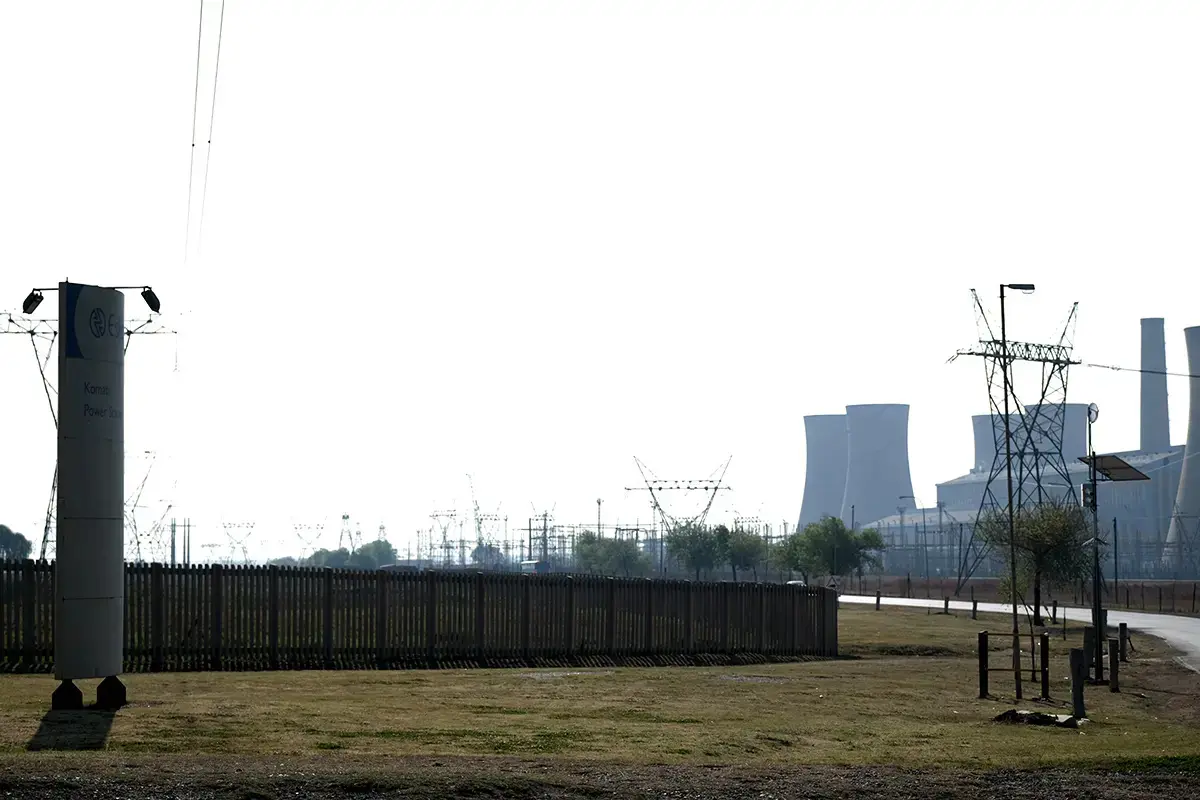
Mention climate change in South Africa and the phasing out of coal-generated power and the closure of coal mines invariably come up. Hot on their heels is the question of what will happen to Mpumalanga, its miners and mine communities that stand to lose their jobs in the inevitable transition that follows.
It is true that workers and communities whose economies were built around coal deserve credible alternatives, social protection and a meaningful say in what happens as coal is phased out. But the focus cannot stay there.
If the just transition is to live up to its name, we need to make the circle bigger. The just energy transition is a crucial part of a much wider transformation. South Africa must also consider how changing technologies, production requirements and climate risks affect agriculture, manufacturing, transport, tourism and the small businesses connected to them across all nine provinces.
National policy acknowledges this. At the handover of South Africa’s Just Transition Framework in 2022, the presidency explicitly recognised the implications of the transition for mining, automotive manufacturing, tourism and agriculture. The task is to give that breadth practical expression.
A proposed JUST SA Community of Practice conference, scheduled for the first half of 2027, offers an opportunity to do so. Its draft programme brings all nine provinces into a conversation about risks, green industrialisation, decent work and implementation.
Its organising premise is simple: one national transition, nine provincial realities. Over the past two years, TIPS held provincial just transition workshops in all nine provinces and some of the insights shared by practitioners were captured in a podcast series.
Vulnerability assessments were conducted with practitioners and some of the issues raised included the transition from internal combustion engine (ICE) vehicles to electric vehicles, vulnerable agricultural livelihoods and water insecurity in the Eastern Cape. KwaZulu-Natal faces challenges around flooding, ports, logistics, petrochemicals and manufacturing, while Gauteng requires major investment to decarbonise factories, steel, chemicals, logistics and other energy-intensive activities.
The Free State faces questions about agriculture, drought and mining-linked towns. Limpopo’s priorities include mining, mineral pro-cessing, agriculture and rural livelihoods. North West must consider the futures of mining communities and opportunities in rehabilitation and new mineral value chains.
The Northern Cape’s renewable energy potential sits alongside drought and spatial inequality. In the Western Cape, agriculture, tourism, water pressures, wildfires and coastal risks are key considerations. Mpumalanga’s coal-dependent communities remain central, with particular attention to worker displacement, municipal revenue and diversification.
These challenges require locally grounded responses.
The risks created by economic restructuring and those created by climate change itself also need to be distinguished. A worker displaced by industrial change needs a pathway to income and employment. A farming community exposed to drought needs resilience, water security and support for its livelihoods. Some communities face both. A credible just transition must be able to respond to that complexity.
AJust Transition Inter-national Study Tour which took place in October 2026 will bring home key insights from the South-South collaboration that can help us find approaches suited to these realities. The study tour was organised by Trade & Industrial Policy Strategies through the Just Transition to a Decarbonised Economy for South Africa (JUST SA) project. The delegation included 21 South African participants, with representation from national departments, provincial and municipal government, the Presidential Climate Commission, research institutions and organisations supporting the green economy. The choice of India for the October 2026 JUST SA study tour reflected a search for solutions that South Africa could afford and adapt. India offered an opportunity to examine community enterprises, decentralised energy, resource efficiency and productive infrastructure in another developing economy.
The planned programme included waste recycling, alternative building materials, water security and women-led renewable energy enterprises. These activities connect cleaner technologies with the everyday questions of ownership, income and local development.
Affordability must still be tested project by project. Equipment costs, maintenance, skills, financing and demand will determine whether an approach developed elsewhere can work here. The purpose of the exchange is to examine those conditions and develop useful partnerships.
Countries in the Global South should have more opportunities to learn directly from one another. We can share experience of building enterprises, extending services and creating livelihoods under difficult conditions. The same spirit of collaboration is needed within South Africa. Provincial borders organise government responsibilities, but electricity systems and economic value chains connect us. Renewable energy development zones and power corridors were conceived to link generation opportunities with strategic grid expansion. They offer a practical reason to plan beyond individual provincial interests.
The JUST SA Community of Practice is an attempt to strengthen partnerships across renewable energy equipment, grid infrastructure, electric vehicles, agriculture, water technologies and the circular economy.
A province with strong renewable resources could work with another that has manufacturing capacity. Municipalities could collaborate on waste markets or technical expertise. Training institutions could prepare workers for opportunities across connected value chains.
Such cooperation needs clear responsibilities, funding and accountability. It also needs political leaders willing to recognise that a neighbouring province’s progress can strengthen their own. Party competition will remain part of democratic life. But workers should not have to wait for political alignment before their futures receive serious attention.
The just transition could become a vehicle for much-needed change: better services, stronger local enterprises, wider ownership and more equal access to economic opportunity. That requires participation by workers and communities in decisions about what gets built, who benefits and how public resources are used.
We share one planet. Fossil fuels are finite and the natural systems that sustain livelihoods need protection. We also share one South Africa, with infrastructure, resources and economic relationships that bind our provinces together. Our transition planning should reflect those connections.
Let’s make the circle bigger. Elize Hattingh is an economist/ researcher on the Just Transition to a Decarbonised Economy for South Africa (JUST SA) project, commissioned by the International Climate Initiative (IKI) and the German Federal Ministry for Economic Affairs and Climate Action (BMWK).