

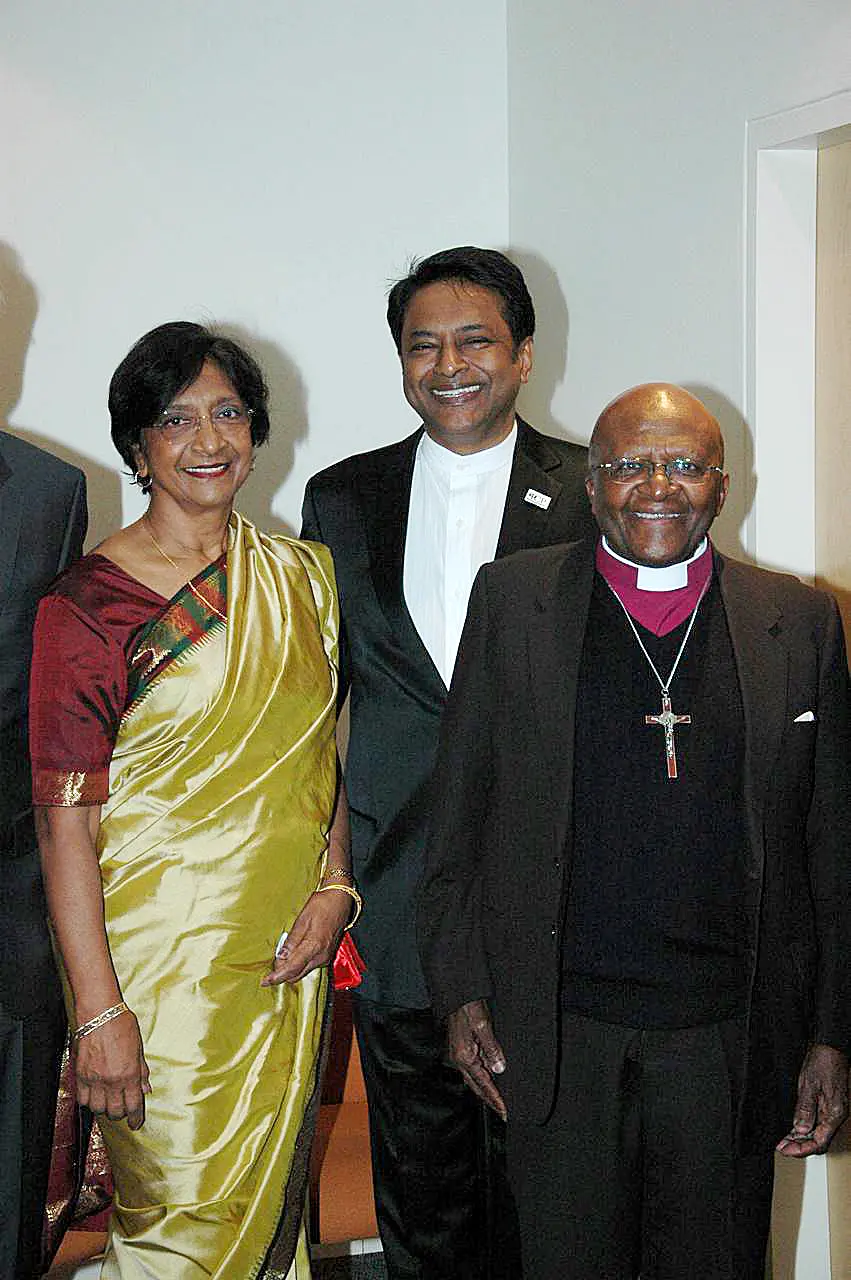
Seldom has the announcement of a Nobel Peace Prize generated such a wave of global acclaim. On 9 October 2026, congratulations poured in from every corner of the world for Durban-born human rights champion Dr Navanethem “Navi” Pillay.
Leaders, jurists, activists, academics and ordinary citizens celebrated a woman whose life’s work has been devoted to justice, dignity and the protection of the vulnerable.
Among the proudest voices were millions from the global Tamil diaspora, who viewed the award as a historic moment not only for South Africa but also for Tamil communities spread across India, Sri Lanka, Malaysia, Singapore, Europe, North America, Africa and Australasia.
For many, Pillay’s achievement represented the triumph of education, perseverance and public service over discrimination and adversity.
Yet while the world was celebrating one of Durban’s most distinguished daughters, South Africa found itself confronting a troubling reality closer to home.
The day coincided with incidents of anti-migrant protests and tension that once again revived concerns about xenophobia and social intolerance. While some referred to the day as Durban’s “Black Friday”, that label deserves only a passing mention.
Far more significant was the enduring message carried by Pillay’s Nobel recognition and her timely warning that xenophobia remains a threat to South Africa’s constitutional values and democratic future. In many respects, the Nobel announcement transformed the narrative of the day.
Rather than being defined by anger, exclusion and fear, Durban became the birthplace of a global symbol of justice whose career has been dedicated to defending the principles that intolerance seeks to undermine.
A journey from Clairwood to global leadership
At 85, Pillay’s Nobel Peace Prize crowns an extraordinary journey from the working-class suburb of Clairwood to the pinnacle of international public service.
Born into a Tamil family during apartheid, she grew up in a society designed to limit opportunities on the basis of race and gender.
The path to becoming one of the world’s most respected jurists was far from guaranteed.
Reflecting on her upbringing after receiving news of the Nobel Prize, Pillay recalled how community support helped shape her future.
“I grew up in a poor community,” she said. “A teacher appealed to the community to raise funds to send me to university to study law.”
That act of collective faith became the foundation of an exceptional career.
After qualifying as a lawyer, Pillay established bursaries to assist other young people pursuing higher education. She understood that ability alone was never enough when opportunity remained absent.
Her academic achievements broke barriers. She became one of the first South Africans to pursue advanced legal studies at Harvard Law School, eventually earning a doctor of juridical science degree and establishing herself as an internationally respected legal scholar.
White-owned law firms refused to give her a job and she could not enter the front door of the judge’s chambers under apartheid laws.
Yet her legacy would be defined not by academic success but by her relentless pursuit of justice.
Challenging apartheid and defending human rights
When Pillay established her legal practice in Durban in 1967, she became one of the first women of colour to own and operate a law firm in the city. Alongside her husband, the respected attorney and activist Gaby Pillay, she represented political detainees, trade unionists and anti-apartheid activists during some of South Africa’s darkest years.
She challenged detention without trial, exposed torture and defended those targeted by a repressive state. One of her most important victories came in 1973 when she secured access to legal representation for prisoners on Robben Island, including Nelson Mandela.
Throughout her legal career, Pillay demonstrated a belief that human rights are indivisible. Whether defending political prisoners, abused women, marginalised communities or victims of discrimination, she advanced the principle that justice must extend to every individual regardless of race, nationality, religion, gender or political belief.
This philosophy would later define her international career.
A global voice for accountability
The advent of democracy opened a new chapter. In 1995, president Nelson Mandela appointed Pillay as the first woman of colour to serve in the high court.
Thereafter, her influence expanded across the world.
She served as a judge and later president of the International Criminal Tribunal for Rwanda, helping establish important precedents in the prosecution of genocide and crimes against humanity. She went on to serve at the International Criminal Court and later as the United Nations high commissioner for human rights.
Pillay’s work confronted some of humanity’s most painful challenges: genocide, ethnic cleansing, war crimes, sexual violence, state repression and systemic discrimination.
Among the many issues she addressed was the suffering endured by Tamil civilians during Sri Lanka’s long and devastating civil conflict. Pillay argued that accountability and international scrutiny were essential to ensuring justice for victims on all sides of the conflict.
In more recent years, she chaired the United Nations Independent International Commission of Inquiry on the Occupied Palestinian Territory, once again demonstrating a willingness to engage with some of the world’s most contentious and politically charged issues.
Supporters and critics alike have recognised a defining quality in her work: a commitment to principle over popularity.
A warning South Africa cannot ignore
The Nobel Peace Prize arrives at a moment when many societies are grappling with rising nationalism, hostility towards migrants and growing social divisions.
South Africa is no exception.
Pillay has repeatedly stressed that xenophobia undermines the foundations of democracy and human rights. Her defence of refugees, minorities and vulnerable communities reflects a conviction that constitutional rights cannot be selectively applied.
The true measure of a democracy lies not in how it treats the powerful but in how it treats strangers, migrants, minorities and those without influence.
This lesson carries particular relevance for South Africa.
Economic hardship, unemployment and inequality continue to fuel frustration. Yet history has repeatedly shown that scapegoating foreign nationals does not solve structural problems. Instead, it weakens social cohesion, damages international standing and erodes the values upon which the democratic Constitution was built.
At a time when xenophobic sentiments persist, Pillay’s Nobel recognition offers more than an opportunity for celebration. It presents an opportunity for reflection.
Her life’s work challenges South Africans to ask whether the nation is living up to the ideals it so proudly enshrined in its Constitution.
Pride for a global Tamil community
Few Nobel laureates have received such heartfelt and widespread community recognition.
Across South Africa, India, Sri Lanka and the international Tamil diaspora, messages of pride and congratulations reflected the depth of Pillay’s influence. For millions of Tamils worldwide, her achievement symbolises not only personal excellence but also the possibilities created through education, resilience and service to humanity.
Yet Pillay herself has never defined her work through ethnic identity alone.
While proud of her heritage, she has consistently embraced universal human rights principles that transcend nationality, race and religion. That universalism explains why her Nobel Peace Prize has resonated so powerfully across continents and cultures.
South Africa at its best
The significance of Pillay’s Nobel Peace Prize extends beyond individual achievement. It reaffirms South Africa’s remarkable capacity to produce leaders whose influence reaches far beyond its borders. Like Chief Albert Luthuli, Archbishop Desmond Tutu and Nelson Mandela before her, Pillay represents a moral tradition rooted in justice, equality and human dignity.
Most importantly, her recognition arrives as a reminder of the kind of society South Africa aspire to be.
The Nobel committee honoured a woman who has spent a lifetime defending the rights of others. Her message remains clear: human dignity is not negotiable, exclusion has no place in a constitutional democracy, and xenophobia threatens the values that bind societies together.
Long after the headlines of pro-test and unrest have faded, Pillay’s achievement will endure.
For Durban, South Africa and the millions around the world who see themselves reflected in her story, the 2026 Nobel Peace Prize is far more than an award. It is a call to uphold humanity over prejudice, inclusion over intolerance and justice over fear. Marlan Padayachee is a former political, foreign and diplomatic correspondent who covered South Africa’s transition to democracy and writes on politics, history and civil society.