


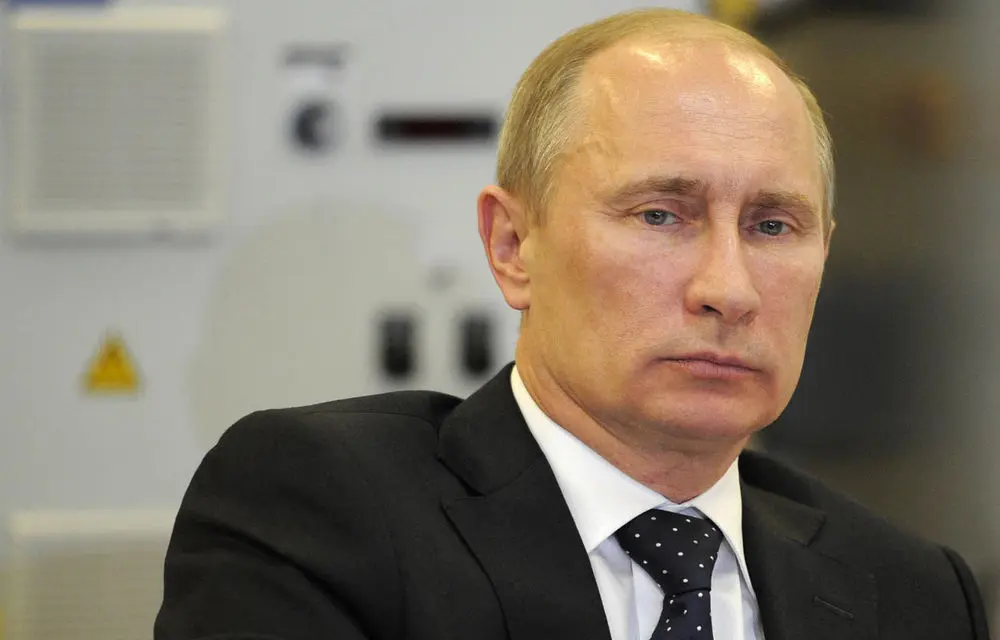
Several African heads of state are heading to Moscow for the third Russia-Africa Summit as pressure mounts at home to confront Russian President Vladimir Putin about the covert enlistment of their citizens to fight in the protracted invasion of Ukraine.
The third Africa-Russia summit scheduled for 28 and 29 October, under the theme "For Peace, Security and Development", will be attended by at least 30 African countries, with at least 23 heads of state.
Russia’s foreign affairs ministry said Moscow was focused on "developing mutually beneficial cooperation and realising the potential of all African countries together”.
However, it threatens to be an anticlimax; the first summit in the ski resort area of Sochi in 2019 drew all 54 African countries, with 40 represented by prime ministers and presidents.
The follow-up in 2023, as the war in Ukraine surged, had 49 African countries represented and 17 African heads of state.
This time around, there’s a heavy cloud hanging over the summit, with at least 2 982 individuals from 37 African countries in active service at the warfront on Russia’s side as recently as August, according to Ukraine’s Foreign Ministry.
The ministry also stated that 35 citizens from 17 African countries were being held on Ukrainian territory as prisoners of war.
Most Africans fighting in Ukraine were lured through deception.

For the past two years, a media activism group from Zimbabwe, the Centre for Innovation and Technology (Cite), has been documenting cases of Africans, mostly from Southern Africa, fighting in Ukraine.
In a statement before the summit in Russia, Cite said: "Across the continent, thousands of Africans have been recruited.
“Families want to know if their relatives are alive, where they are and when those who died will come home for burial. We hope our leaders will raise this with their Russian counterparts in Moscow.”
Cite added that the long-standing relations between African countries and Russia and each government's right to choose its partners and good relations made it possible to discuss difficult issues.
Addressing the United Nations General Assembly in August, Ukrainian President Volodymyr Zelenskyy urged leaders of Zimbabwe, South Africa, Ghana, Sudan and Kenya to block the recruitment drives.
According to data published by Ukraine’s Ministry of Foreign Affairs and human rights monitoring groups, at least 486 African nationals recruited into the Russian armed forces have been confirmed killed in the war in Ukraine as of August this year.
In Kenya, Peter Kamau leads a group that wants President William Ruto to assist in bringing their loved ones home.
This month, Kamau and others petitioned the Senate, saying 841 Kenyans were involved in the Russia-Ukraine War. However, the government said it had confirmed 354 through diplomatic channels.
With Ruto due in Russia, Kamau sees an opportunity.
“We have been engaging the government for some time now and it’s the president with the best chance to help us. He should directly speak to Putin this week,” he said.
He added that since African Union chair Évariste Ndayishimiye, the Burundian president, would co-chair the summit, Africa could speak with one voice on the matter.
In Cameroon, a group calling itself “Bring Back Our Sons and Brothers” stepped forward in August 2026, after the government confirmed the death of 16 nationals in Ukraine.
Pressure groups demand that African countries be more actively involved in investigating the networks that recruit Africans through false job offers.
They also want Russia to cooperate in helping those who want to come home return safely and return the remains of those who died to their families.
This, they say, would be possible if governments shared verified information with families.
Last month, Amnesty International released a report titled “Russia: Trafficking of Foreign Nationals to Fight in Ukraine”. It concluded that methods used by Russia to recruit Africans into the war, such as fake job promises, tricking Africans into signing contracts written in Russian and targeting migrants with expired visas and refugees meet the criteria for human trafficking under international law.