

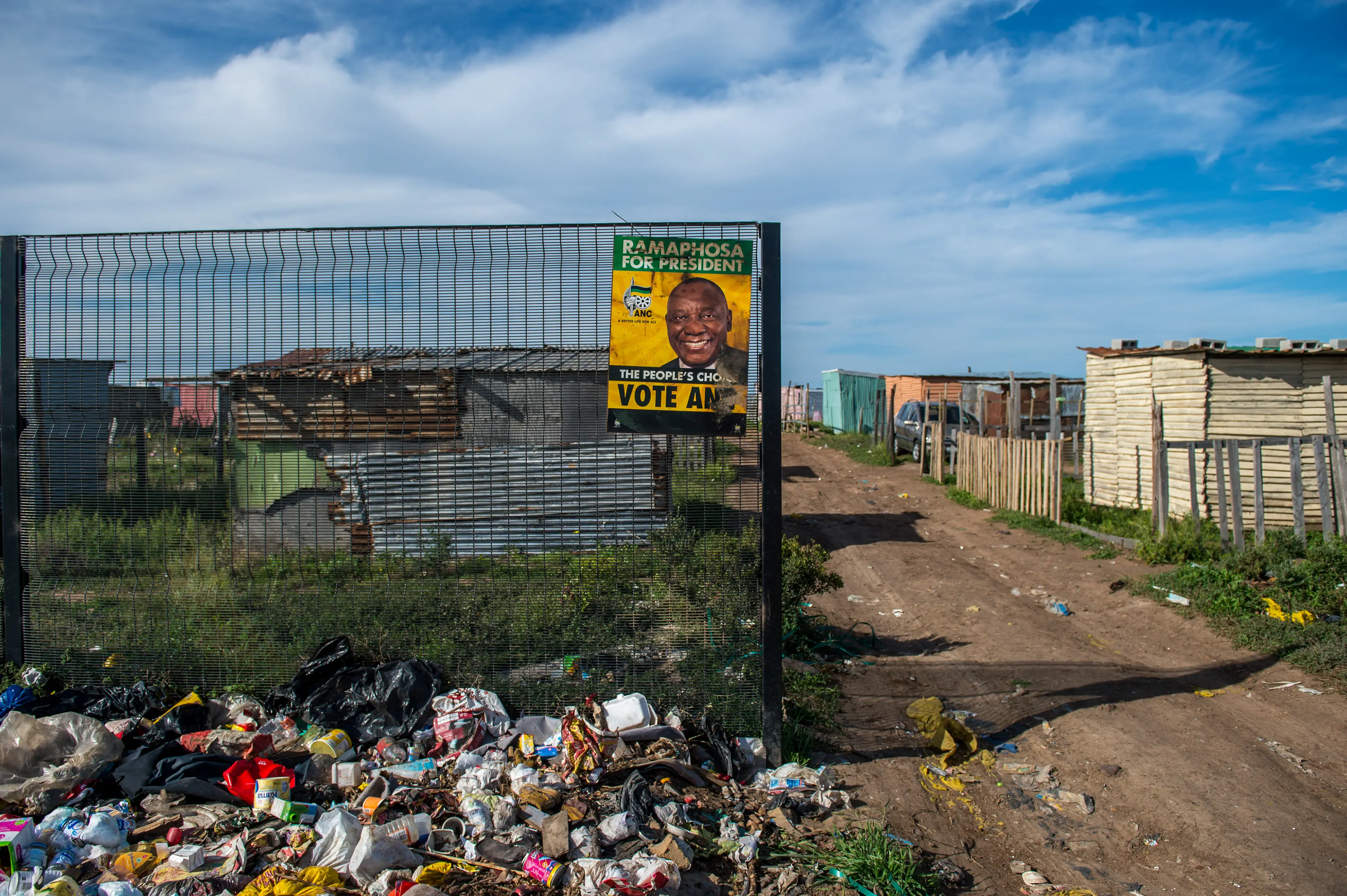
The Local Government Elections 2026 democracy circus comes to town again this Halloween week. For millions of poor and unemployed it is a nightmare and the stakes couldn’t be higher.
In a world of cost-of-living crisis, gangsterism, social media polarisation and disinformation, as well as high-profile public social influencers, which mirror the polarisation of politics of the US, Brazil, India and others, South Africa faces geo-political headwinds too — from energy and trade wars to a migration crisis. At ground zero, local elections elicit raw emotion, volatile energy, divisions and violence because this sphere of government is closest to citizens.
Our National Development Plan (NDP) 2030 is underpinned by the laudable concept of creating a “democratic developmental state”. Is this still achievable?
Let’s unpack the core drivers eroding substantive democracy.
Corruption and political killings to capture mega budgets: Corruption and violence in local government has been in the making for decades. The Madlanga commission has exposed the dark underbelly in communities — from the focus on political killings to gender-based violence (GBV), SAPS complicity and more. It is here where the gang culture — from taxi bosses and tenderpreneurs to construction mafia and an array of stakeholders — plies its trade to influence and control budgets and programmes for narrow interests. Hence the contest of local government candidates where the stakes are high for posts in metros and districts.
In this cauldron the national government’s shortcomings are exposed. Decades of deregulation, mismanagement of state-owned entities and neo-liberalism have eroded state capacity. This filters downwards.
Political funding and corporate capture of political parties: The IEC’s political party funding records paint a chilling picture: JSE-listed corporations, private families and controversial multinationals, such as Betway, make generous donations to and bet on pro-business parties, among them the DA, ActionSA, Patriotic Alliance and Build One SA. This is corporate capture. Our elections are akin to an online betting market where these power brokers make bets on our democracy.
The councillor as an orphan in local governance: While MPs in the National Assembly and MPLs in provinces have a structured and linear governance model and “a healthy social distance” from the people, ward councillors occupy a precarious role in the system. On the one hand they interface with communities and face a bewildering array of demands from communities but, on the other hand, their committees are toothless. Ward councillors depend on their party or other coalition partners for direction. They have little influence on budget allocation and, like any citizen, can only engage entities responsible for service delivery.
Decisions are hobbled by horse-trading. An array of ward committees with no power becomes symbolic and a chamber of frustration.
Likewise, the annual Integrated Development Plan, which makes public inputs mandatory, becomes a mere compliance process.
This is much like the Spatial Land Use Management Act, which is intended to promote spatial justice and sustainability but, over decades, wealthier suburbs have seen the bulk of developments. The contradiction deepens in townships where there are shopping centres but little social housing, sports facilities and so on required to meet our NDP and sustainable development goals agenda. Disconnect of the national-local policy matrix on utility services: Another driver is the decline of service delivery amid a high cost of living crisis and a ballooning debt where most municipalities owe Eskom about R400 billion. The local government is a “policy orphan” because it does not really influence national policy. It is the local government that has to deal with the fallout of high utility prices when the National Energy Regulator of South Africa approves yet another increase for Eskom.
Ward councillors and PR councils have little, if any, policy-making influence on national policy, especially those affecting SOEs and where utility prices have a direct bearing on the citizens who elected them.
Our multiparty democracy resembles a supermarket that has a bewildering array of policy products. For example, in Ward 9 in Lenasia, south of Johannesburg, more than 61 candidates are contesting in one ward.
This is an imported repurposed multiparty democracy rooted in free market consumerism. The label should warn that the product distracts from real governance and delivery. Our social crisis, GBV, corruption, policy disconnect and lack of capacity amid the rise of controversial social media influencers, endless litigation, online hate speech and misinformation, corruption and the new corporate-private capture of political parties, makes this year’s local government elections anything but democratic, fair or good.
We have a chaotic, captured, hollowed out, violent and corrosive local government system where the bulk of our people live amid crime, utility breakdowns, gangsterism, xenophobia and mass confusion on the margins. A pitiful, lived reality.

Ashraf Patel is a senior researcher a senior researcher at the Institute for Global Dialogue.