

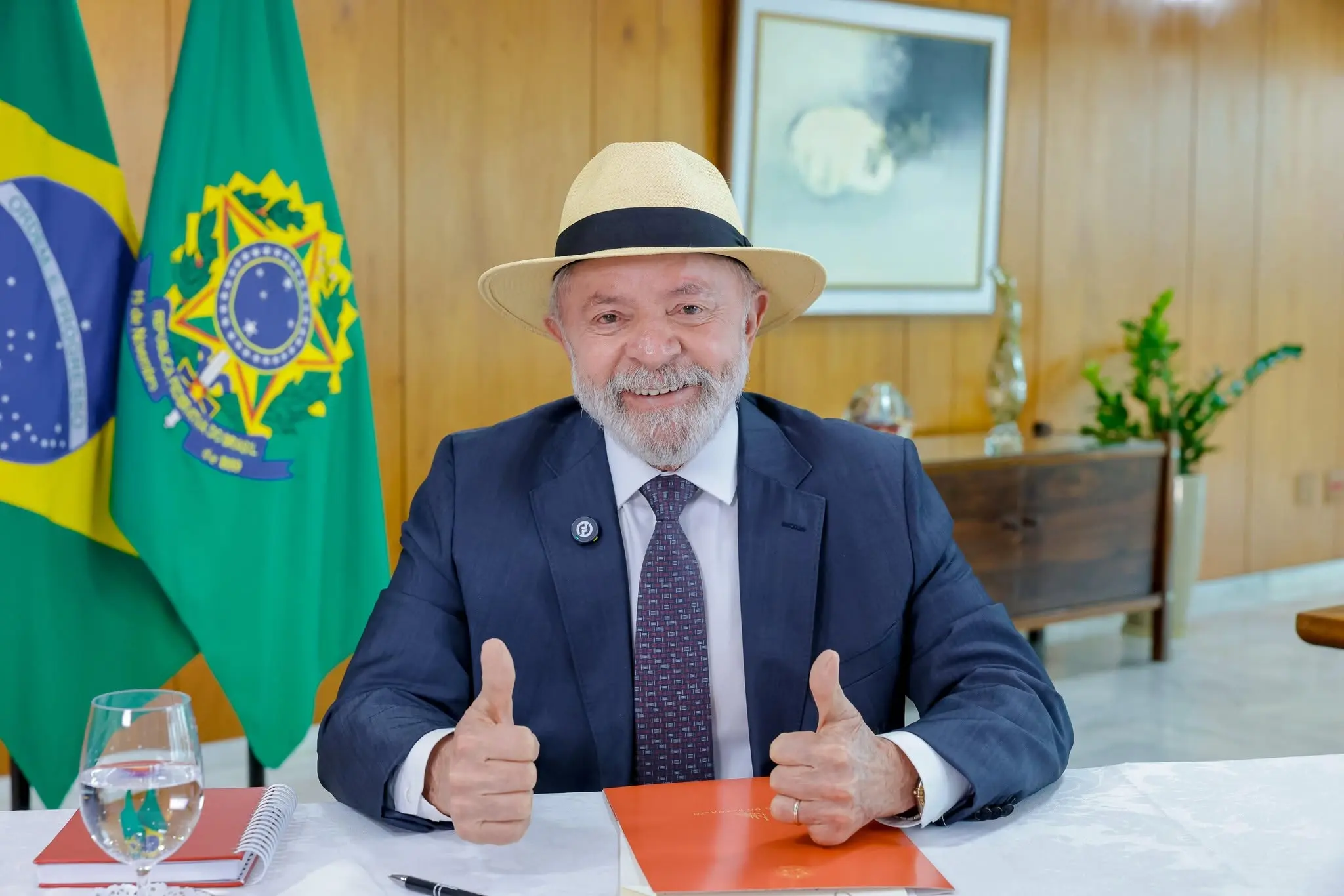
The victory of Luiz Inácio Lula da Silva in Brazil carries significance far beyond its borders. It affirms that, even in an era of polarisation, rising nationalism and geopolitical confrontation, democracy can produce leaders who recognise that national sovereignty and international cooperation are complementary, that national inter-ests can advance alongside international solidarity and that development and peace must reinforce one another. For the African National Congress (ANC), Lula’s victory also offers important lessons in political mobilisation, democratic renewal and the enduring need to earn the people’s confidence.
Lula’s victory comes at a defining moment for the international community. Multilateralism is under mounting pressure, great-power rivalries are intensifying, international law faces growing challenges, and the Global South is demanding not charity, but a meaningful voice, equitable representation and the power to shape a fairer global order. This moment represents a political rebuke to the idea that the future belongs exclusively to the politics of division. It is also an affirmation that the progressive world has not disappeared.
This electoral triumph strengthens the prospects for progressive internationalism, multilateral cooperation and a more representative global order at a time when geopolitical rivalry, protectionism, trade disputes and armed conflicts threaten peace and shared prosperity. It creates renewed space for South Africa and Brazil to deepen cooperation in trade, education, health, technology, climate action and development finance. Our partnership must translate diplomatic solidarity into tangible benefits for workers, entrepreneurs, students and communities. In a world increasingly divided by confrontation, South Africa and Brazil must demonstrate that nations can defend their sovereignty while cooperating for the common good. Peace requires dialogue across political differences, respect for international law and a commitment to resolving conflicts through peaceful means. The strategic importance of this partnership is also reflected in the role both countries play within BRICS and the wider aspirations of the Global South.
BRICS provides an important platform for developing countries seeking a greater voice in global governance. The Global South is not asking for charity. It is demanding fair representation, mutually beneficial partnerships and the opportunity to shape decisions affecting its future. Consider what might have happened had Lula lost. A Flávio Bolsonaro presidency would almost certainly have altered Brazil’s inter-national orientation. A Bolsonaro victory could have meant Brazil significantly reducing its role in BRICS and withdrawing from some of the Global South-oriented diplomacy associated with Lula’s Workers’ Party. That would have been a disaster of biblical proportions.
BRICS has become an important platform through which emerging powers seek greater representation in global governance, financial reform, development finance and international trade. Brazil without Lula would have weakened its political coherence at the moment when the Global South needs greater strategic confidence.
Washington had much more to gain, politically, from a Bolsonaro victory. Such an outcome would have strengthened the network of Trump-aligned governments emerging across Latin America and would have represented a significant victory for his hemispheric strategy. Lula’s victory frustrates that project. Progressivism is not simply about left-wing electoral victories. It is about the defence of human dignity, social justice, democratic institutions, environmental responsibility, peaceful coexistence and a world order in which the powerful are subject to the same rules as everyone else. This is where Lula’s victory acquires international significance. The significance of Lula’s victory, however, extends beyond global affairs and carries important lessons for progressive movements seeking renewal, including the ANC as South Africa approaches a crucial electoral period. Elections are not won on history alone. They are won when a movement reconnects with the hopes of ordinary people, mobilises those who have withdrawn from political participation and recognises that no movement can take the people’s confidence for granted. It must continually earn it.
Lula’s campaign demonstrated the power of grassroots mobilisation, alliances with organised labour and progressive movements, direct engagement with communities and strategic use of social media. It showed that political momentum can be rebuilt when a movement listens, adapts and mobilises around the material concerns of ordinary people.
For the ANC, this is more than an international electoral story. It is an opportunity to reflect on how the movement can renew its relationship with its historical constituency while reaching those who have become disillusioned, disengaged or remain undecided.
South Africa has made significant advances in political inclusion, social protection and access to essential services. These achievements must be acknowledged and defended. However, history cannot substitute for present-day performance. Unemployment, poverty, inequality, inadequate municipal services and declining public confidence demand honest reflection and decisive action.
Lula’s victory reminds us of a fundamental democratic principle that historical legitimacy does not confer a permanent electoral mandate. People must experience the value of progressive politics in their daily lives. The ANC must therefore approach the elections as an opportunity to renew its relationship with communities. Where the government has failed, the response must be honest acknowledgement and correction. Where progress has been achieved, it must be demonstrated. Where commitments remain unfulfilled, communities deserve credible plans and accountability.
The working class and the poor must remain central to the renewal agenda. They carry the heaviest burden of unemployment, rising living costs, unreliable water and electricity, deteriorating infrastructure and dysfunctional municipalities. The ANC must deepen its relationships with workers, trade unions, young people, women, community organisations and progressive formations. These relationships cannot be activated only during elections. They must be sustained through meaningful participation, responsive leadership and a shared commitment to social transformation.
Lula’s campaign also illustrates the importance of combining traditional political organising with effective digital communication. Social media helped carry campaign messages beyond rallies and established political networks, enabling supporters to share content, engage communities and contest competing political narratives.
For the ANC, digital communication must be treated as a central arena of democratic engagement, not merely an additional publicity channel. WhatsApp networks, short videos, community-based digital platforms and direct engagement with young people must complement door-to-door campaigning, public meetings, community radio and local-language communication.
But digital visibility alone cannot win lasting trust. Communication must be grounded in facts, credible commitments and demonstrable performance. The ANC must counter disinformation with evidence, answer criticism without defensiveness and show how its policies can improve people’s lives. Most importantly, social media must become a listening tool. A movement that broadcasts without listening risks losing touch with the people it seeks to represent.
Perhaps the most important electoral lesson is the need to look beyond those who already support a party. The ANC must pose these questions to itself: who is absent from our meetings? Who has stopped voting? Who feels politically abandoned and who remains undecided?
These citizens may include first-time voters, young people frustrated by unemployment, residents disappointed by municipal performance and eligible voters who no longer believe their participation makes a difference. Electoral renewal begins by finding the people who are missing, understanding why they have disengaged and giving them compelling reasons to participate. Reaching them requires returning to communities where trust has weakened, listening without dismissiveness and responding to legitimate grievances with practical solutions.
The local government elections are an important test of the movement’s capacity to renew itself, strengthen democratic participation and advance the unfinished project of social transformation. The task is neither to romanticise the past nor to surrender to pessimism. It is to defend democratic achievements while confronting failures that undermine the promise of a better life for all.
Lula’s victory reminds the ANC that progressive politics remains relevant when it places people at the centre of its purpose. On 4 November, the task is bigger than winning votes. It is about renewing hope, restoring confidence and demonstrating that democracy can deliver meaningful change in every community.
The ANC must reach the absent, engage the undecided and persuade the disappointed, not through entitlement, but through humility, conviction and a credible programme of action. Let us defend the gains of democracy, confront the failures that threaten them and mobilise our collective strength to advance the National Democratic Revolution. Let us build municipalities that work, communities where dignity is pro-tected and an economy that creates opportunities for those excluded for too long.
Cornelius Monama is a communication specialist and commentator. He writes in his personal capacity.