


The African National Congress’ African liberation movement model of governing in a coalition where a party that has the largest number of votes imposes its own policies, decisions and state appointments and these are automatically adopted by the governing coalition, has created instability in coalitions across the country where the ANC is the largest party.
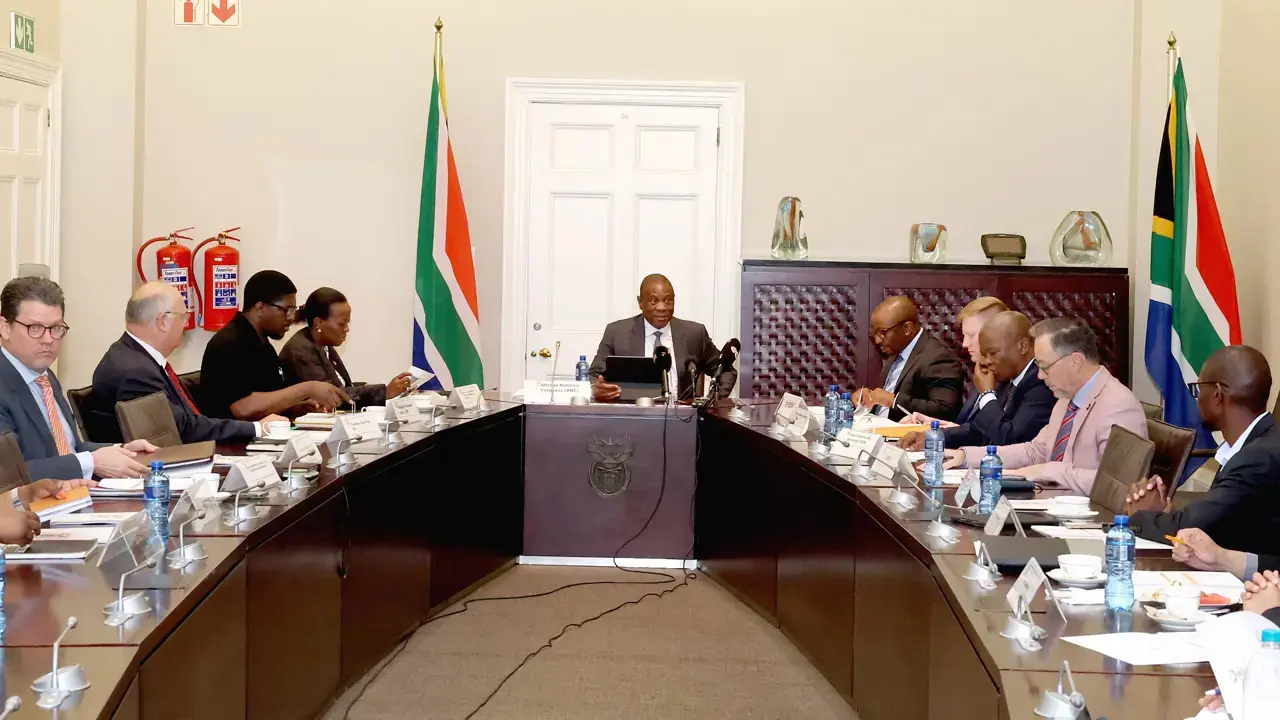
This liberation movement majority-based coalition model has led to instability in South Africa’s Government of National Unity (GNU) where the ANC is in part-nership with 10 other parties in a national coalition following the 2024 national and provincial elections which gave no party an overall majority to govern alone but gave the ANC the largest number of votes.
The 4 November 2026 local government elections are likely to deliver more coalitions at the municipal level than any in the country’s history, where no party will get an overall majority and coalitions will have to be cobbled together. There are likely to be up to 100 “hung councils” where no party will have the majority and coalitions would be needed.
South Africa urgently needs a new and more inclusive coalition governance model, which is more collaborative and therefore more stable and which can deliver public services more effectively for all citizens.
The ANC has been the majority governing party since the end of formal apartheid in 1994, so its political culture has also dominated South Africa, influencing all other parties, especially parties that were spun off it, as well as new post-apartheid parties unconnected to it. The ANC coalition governing model has also been adopted by its spin-off parties and new parties alike and this has created coalition instabilities across the country.
African liberation movements, like the ANC, Zimbabwe’s Zanu-PF, Algeria’s FLN and Mozambique’s Frelimo, have majority-based, winner-takes-all, governing models, where if the party received the most votes in an election, the party takes control of all state power, excluding all other parties from decision and policymaking and from appointments to government, public institutions and state contracts.
African liberation movements in government often make policies based on party-interests, corrupt-interests and ideology-interests, against the warnings of the opposition, business, civil society and experts. When these policies pre-dictably fail, these African liberation movements want society to rally behind them to correct the self-inflicted mistakes.
Such parties, once in government, appear not to believe in compromise on policy, decisions and state appointments with coalition partners, unless the compromise benefits them. They also appear not to embrace consensus-seeking approaches to agree on policies, decisions and state appointments with governing coalition partners.
This means that the coalition part-ners have to continuously fight every liberation movement unilateral policy, decision and state appointment. The irony is, African liberation movements in coalitions do not consult their partners on policy, decisions and state appointments; yet when these policies, decisions and state appointees predictably fail, they want their coalition partners to take collective responsibility.
These movements largely govern in the interests of their parties, rather than in the national inter-ests, appointing their party cadres to every state and non-state public institution and channelling state tenders to their cadre companies. They force through their own party-interest policies, excluding non-liberation movement connected talents, ideas and companies, even if these may deliver better results for their countries. One would have thought that when such parties lose their majorities and have to establish coalition governments because of their failed policies, failed decisions and failed state appointments, they would rethink their strategies. Instead, they double down and continue with more of the same.
Parties that are in governing coalitions with them are forced to be both a partner and an opposition within the governing coalition, causing continuous governing instability. In South Africa, the Democratic Alliance, a partner with the ANC in the GNU, had to continuously take the ANC to court over party policies that the ANC refused to compromise on and the DA also had to continuously issue public statements to say it opposes a particular ANC unilateral party policy that the ANC had not consulted its coalition partners on.
When African liberation movements are seen to be corrupt and incompetent, they want the public to also see the former opposition parties now in coalition with them as similarly corrupt or incompetent as the liberation movements.
In the GNU, the ANC has been trying to depict the DA as similarly corrupt, with the ANC appearing to elevate every perceived wrongdoing of the DA, even if it is on a minute scale. ANC leaders try to show that the DA and the ANC are the same: both are corrupt, incompetent and self-interested. This would make it impossible for the DA to show, through its ministerial appointments performing better than ANC peers, that they are better at governing.
When such parties are the sole majority, they deploy their cadres to all key positions in the public service, state-owned entities, army, police and prosecuting sectors. Many of these cadre deployees in the public service, SOEs, army, police and prosecuting sectors are loyal not to their countries’ Constitutions, laws and their professional codes, but to the African liberation movement and its leaders.
In a national coalition, if a member of the dominant African liberation movement’s coalition is appointed a Cabinet minister, the public servants in the ministry often undermine their non-liberation movement minister and report clandestinely back to liberation movement ministers.
This means that non-liberation movement Cabinet ministers are continuously undermined by liberation movement cadre deployed civil servants so they cannot deliver effectively or upstage poor performances by liberation movement Cabinet ministers. Many of the governing coalition partners of dominant African liberation have often lost their individual identities.
When coalition partners of these parties are forced to go along with the dictates of the leading party, their supporters are confused, often believing that their parties have now been captured by the dominant African liberation movement party. In Zimbabwe, for example, the opposition Movement for Democratic Change formed a GNU with Zanu-PF.
Zanu-PF behaved as if it was still the majority party, forcing through its own policies, decisions and state appointments. The MDC supporters were confused, believing their party was now supporting flawed Zanu-PF decisions, policies and state appointments. The MDC fragmented after its coalition partnership with Zanu-PF. Unless the coalition partners of the liberation movement oppose these failed policies, decisions and appointments, their supporters will leave in the next elections.
The ANC has insisted that its policies, decisions and appointments which have failed before, still remain untouched.
The ANC’s GNU partners risk being rejected by the voters for appearing to go along with the ANC’s failures, the same way the MDC lost the support of many of its supporters after its GNU with Zanu-PF.
What should a post-African liberation movement coalition model look like? Parties that enter a coalition must agree on new core joint policies, not adopting the policies of the largest party. Coalition partners must agree to govern in the widest interests of the country, their provinces or their municipalities and not in the exclusive interests of their own constituencies or their self-interest.
Every decision of the coalition must be based on: will it be in the public interest?
Parties should seek consensus on policies, decisions and appointments. Coalition partners must beforehand agree to a conflict resolution mechanism which is either managed by an external independent arbitrator, or by the smallest party in the coalition. Coalition conflict resolution bodies should not be managed by the largest party in the coalition. Party leaders in the coalition must engage with each regularly, outside Cabinet or the formal business of government, to deal with potential and real problems.
The public service at national, provincial and municipal level has to become professional, rather than cadre-based. This means that all appointments to the public service, and all state tenders must not be based on political connectedness, but on merit, value for money, effectiveness and competence. William Gumede is an associate professor at the School of Governance at the University of the Witwatersrand and author of Restless Nation: Making Sense of Troubled Times (Tafelberg).

The article is based on his discussion on “South Africa’s Next President” at the recent Woordfees in Stellenbosch.