


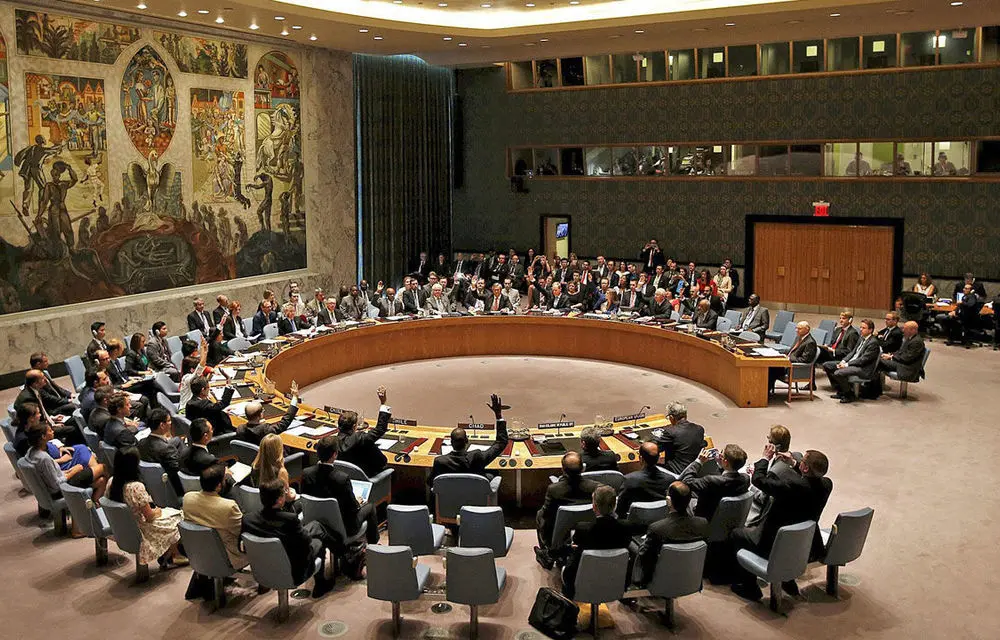
The United Nations lacks political commitment, not declarations of support. The UN General Assembly’s 81st session exposed the gap.
Governments agree that the UN must adapt to 21st-century pressures but disagree on what reform should achieve, who should finance it and whether the organisation should lead collective action or serve powerful capitals.
The divisions persist despite shared threats that no state can manage alone. Unreliable funding and late payments further disrupt the UN’s work.
The UN80 Initiative organises reform around three tracks: efficiency, mandate review and structural and programmatic change. Secretary-General António Guterres can pursue managerial improvements but member states decide which proposals advance, how mandates are financed and where authority resides.
The five permanent members of the Security Council wield exceptional influence over these choices, thus meaningful reform also depends on their willingness to limit their own privileges. The General Debate of the 81st General Assembly, held from 22 to 26 September 2026, under the theme “Restoring trust, managing transformation: a United Nations that delivers for all,” revealed how far apart they remain.
Guterres framed the choice in his opening address, describing power as shifting among states, from governments to corporations and individuals and from people to machines. War, inequality, climate disruption and artificial intelligence, he argued, made interdependence unavoidable. His answer — “networked multipolarity” anchored in international law — linked effectiveness to representation. On Security Council reform, he was direct: excluding Africa from permanent membership was “unjust and indefensible”. A better-managed UN could not command trust while its most powerful body reflected the world of 1945.
Drawing on Guterres’s argument, I propose five tests for the speeches of the five permanent members: representative institutions, reliable financing, meaningful UN authority, action on shared development challenges and rules that constrain powerful states. The tests reveal what each power wants the organization to do — and what limits it will accept in return.
US President Donald Trump’s address presented a contrasting view. Portraying the US as the actor that delivers while international institutions deliberate, he cited American military action and diplomatic efforts in Iran, Gaza, Ukraine and Venezuela. In his telling, national power and personal diplomacy — not multilateral institutions — drove global outcomes. The UN was not rejected but relegated — given no independent role in setting priorities or legitimising action.

Washington offered an agenda of retrenchment rather than institutional strengthening. Trump claimed sweeping UN reform through budget and staffing reductions but offered no comparable vision for stronger mandates, reliable financing or more representative institutions. In his account, the UN merits support when it advances American objectives, not because multilateral legitimacy has value in its own right. This leaves room for selective engagement without strengthening rules that might constrain Washington.
UK Prime Minister Andy Burnham’s General Assembly address focused on a narrower set of practical concerns. Addressing Russian disinformation and the risks of artificial intelligence, he proposed a National Centre for Information Defence and called for global standards on transparency, preparedness and safe AI development.
Britain framed multilateralism as cooperation against threats that no country could manage alone. Yet London largely avoided the institutional questions at the centre of UN reform: Security Council representation, reliable financing and the privileges of permanent membership. Its argument for cooperation was credible but incomplete.
President Emmanuel Macron offered the strongest defence of the UN as a source of legitimate order. Contrasting the “law of the jungle” with a civilised international society, he recommitted France to international law and renewed multilateral action. For Macron, rules were not merely tools of coordination; they were the foundation of order.
Macron also linked legitimacy to accountability. He warned against impunity, backed the International Court of Justice and supported Security Council enlargement, especially African representation, alongside a council able to respond to atrocities. By acknowledging that sovereignty was defended more vigorously in Europe than in the Middle East, he identified the weakness of a rules-based order applied selectively. The problem lay not only in institutional design but also in the conduct of powerful states whose double standards erode the system they profess to defend.
China’s Vice-President Han Zheng’s address grounded multilateral legitimacy in a different set of principles. He presented China as a defender of a UN-centred order based on international law, common security, development, dialogue among civilisations and fairer global governance. Rejecting bloc confrontation, he argued that major powers carried a special responsibility to follow common rules. Beijing’s multilateralism, however, rested chiefly on sovereign equality and state responsibility.

Zheng’s focus on poverty reduction, food security, energy transition and narrowing the digital divide made development — not conflict management alone — a test of whether the UN serves most of its members. He called for greater support for the Global South and urged developed countries to honour their development and climate financing commitments.
This vision of a stronger UN as a forum of sovereign states, less dominated by Western influence, addresses real imbalances in representation. It is less convincing on how collective rules should operate when sovereignty conflicts with accountability.
Russian Foreign Minister Sergey Lavrov’s speech cast multipolarity as a correction to Western dominance. He accused a “Western minority” of defending its privileges, substituting its preferences for international law and using force selectively. Russia’s appeal to the charter also served as an indictment of Western conduct.
Moscow translated that critique into a position on Security Council membership: permanent seats for Brazil and India, accommodation of African claims and no additional Western permanent members, particularly Germany or Japan. Enlargement, on this view, would correct underrepresentation while reducing the West’s relative weight.
Yet Russia’s defence of sovereign equality and non-interference sits uneasily alongside a multilateralism organised around confrontation with the West. When every dispute becomes an episode in bloc competition, the UN cannot mediate among rival visions of order; it becomes their stage. Moscow supports an expanded council without explaining how enlargement would make it more capable of acting.
The five addresses agreed on the need for a functioning UN but diverged on the authority it should exercise. France emphasised consistent application of international law; China and Russia stressed sovereignty, multipolarity and greater influence for the Global South; Britain favoured practical cooperation against cross-border threats; and the US judged institutions by their alignment with national priorities. The dispute is not whether the UN should exist but which rules should govern international order — and whether powerful states will accept them when they constrain their own freedom of action.
Turning this limited agreement into renewal requires a shared bargain: permanent African representation, veto restraint, predictable financing, equal accountability under international law and a workable balance between sovereignty and collective action.
Administrative reform can reduce duplication, improve delivery and stretch scarce resources. But a leaner Secretariat alone will not end political paralysis, make the Security Council more representative, ensure timely contributions or persuade governments to honour the charter when strategic costs rise. Without political agreement, the UN might become cheaper but no more legitimate or effective.
The five powers’ separate commitments are a starting point, not a settlement. UN80 can renew multilateralism only if the states that dominate the system accept that reform must constrain privilege — not merely improve performance.
Anthony Ohemeng-Boamah writes on international development and socioeconomic transformation, with a focus on Africa.