

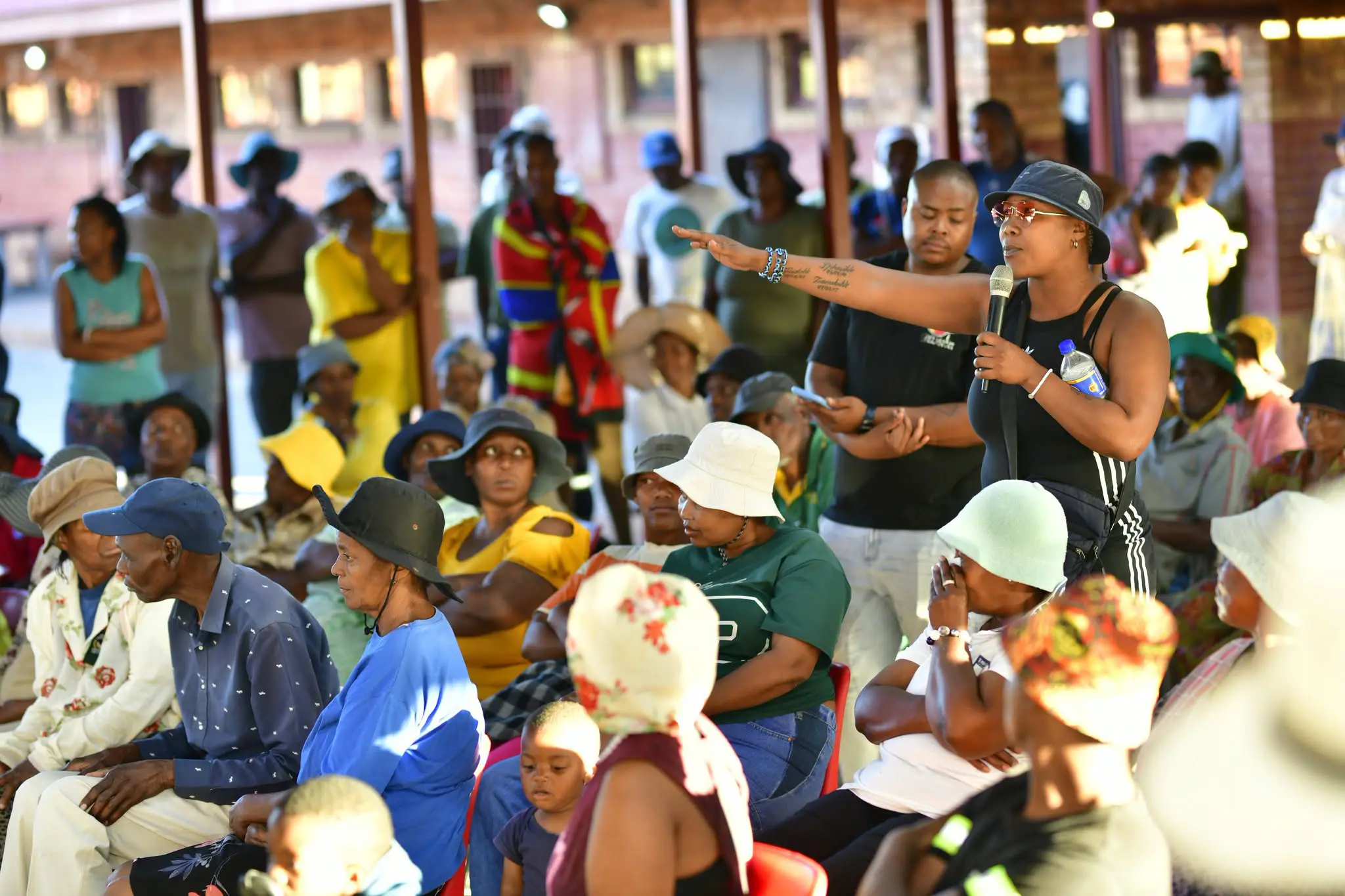
The ballot boxes have closed, the votes have been counted and the political contest concluded. The immediate focus will be on political negotiations as parties seek to carve out coalition and power-sharing arrangements. Yet, as South Africa enters the next five-year local government term following its sixth democratic local government elections, democracy’s most important work is only beginning.
As many analysts and ordinary citizens reflect on the November 4 local government elections, we must ask what it means to honour the sacrifices through which the vote was won, and translate that right into dignity, accountability and cohesion. Voting should never be treated as an ordinary administrative act. It is an expression of political personhood, secured through generations of resistance, organising, imprisonment, exile and loss. The heroes and heroines remembered at places such as Freedom Park did not die for a ballot paper alone. They fought for a society in which all people could participate in shaping their collective destiny.
The vote was one of liberation’s indispensable fruits, but never its entirety. It opened a political space in which other promises could be pursued: equality before the law, social justice, human dignity, material opportunity and belonging. To reduce freedom to casting a ballot would diminish both the ambition of the liberation struggle and the responsibility inherited by those who live in the democracy it made possible.
Voting is therefore also an act of remembrance. When we enter a voting station, we exercise a right purchased at extraordinary cost. We affirm that the sacrifices of those who came before us were not in vain and that the future remains theirs to shape. The ballot is therefore not merely a choice between parties or candidates; it is a continuation of the journey towards freedom; translating memory into civic action.
Nelson Mandela’s long walk to freedom was never simply a journey towards personal release. It came to signify a collective struggle to free a country from racial domination and establish a constitutional order founded on equal worth. That walk did not end with the first democratic election in 1994, nor should it end at any subsequent election. Each generation must continue it by confronting the unfinished business of its own time.
Local government is where much of that unfinished business becomes visible. It is the sphere closest to people’s daily lives, where constitutional promises are tested in neighbourhoods and households. Water, electricity, sanitation, refuse removal, roads, public transport, housing, parks, libraries and safe public spaces shape health, dignity, economic participation and the opportunities available to young people.
Section 152 of the Constitution requires local government to provide democratic and accountable government; ensure sustainable services; promote social and economic development; foster a safe and healthy environment; and encourage community participation. These objectives are connected. A municipality cannot credibly advance development while residents lack reliable basic services or build trust while decisions and public resources remain beyond reach or scrutiny.
The distance between constitutional promise and lived experience measures the work still required. Where infrastructure fails, water is unreliable, waste accumulates or public spaces become unsafe, the consequences are borne most heavily by people already constrained by poverty and inequality. Municipal dysfunction undermines enterprise, public health and confidence in democratic institutions. Such failures deserve candid scrutiny, not because they negate the democratic achievement, but because they expose the gap between the freedom won and the freedom still to be realised.
An election confers a mandate; it does not confer ownership of public institutions. Those elected to municipal councils are entrusted with authority on behalf of all residents, including those who supported other parties or did not vote. Public office is an obligation to serve the common good, not a licence to treat public resources as political property or criticism as disloyalty.
The post-election period must be one of accountability. Councillors and municipal administrations must demonstrate ethical leadership, competent administration, transparency and sound financial management. Promises should be judged against outcomes: whether services improve, infrastructure is maintained, pro-curement is fair, public monies and resources are not applied effectively and residents receive answers when things go wrong. Oversight institutions and community structures must perform their roles without intimidation. Accountability is not an obstacle to service delivery; it is a condition of its sustainability.
The responsibility does not rest with elected representatives alone. Democracy requires citizens to remain engaged between elections. Voting is fundamental, but it cannot be the only expression of citizenship. Residents can attend ward meetings and public consultations, scrutinise integrated development plans and budgets, use complaint mechanisms, question councillors and participate in local initiatives. Such engagement should be persistent. Municipalities must provide meaningful channels for participation.
On the other hand, participation must not become a means for the state to transfer its responsibilities to communities. Residents may help protect infrastructure and improve shared spaces, but they cannot compensate for absent services, weak administration or failures of leadership. The relationship is reciprocal, but the obligations are not identical: public institutions carry constitutional duties that cannot be delegated away. Citizens have a stake in holding those institutions to account and contributing to neighbourhood life.
There is also a social task after every election. Political competition and disagreement are necessary features of democracy. But electoral divisions should not harden into hostility. People who supported different parties share streets, schools, water systems and public spaces. They depend on the same local institutions. Building communities requires cooperation across political differences.
South Africa’s transition from apartheid showed that a common future could be pursued without denying the pain and injustice of the past. Reconciliation does not mean forgetting or remaining silent in the face of present failures. It requires honest remembrance, respect for the equal dignity of others and institutions capable of serving everyone. Heritage has a role in this work: it preserves memory, gives public meaning to sacrifice and asks each generation what it will do with the inheritance it has received.
At Freedom Park, memorialising those who struggled for freedom is not intended to place the past beyond question or reduce remembrance to ceremony. It is an invitation to connect memory with responsibility. Memory must remain a source of accountability. The stories of those who sacrificed their lives challenge us to ask whether today’s institutions reflect the values for which they had struggled. Their legacy should inform how authority is exercised and dignity protected.
Respect for the fallen is not measured only by the solemnity with which we remember them. It is also found in the seriousness with which we defend the democratic rights they helped secure. To vote is to honour their sacrifice; to demand accountability afterwards is to give that honour practical meaning. Where service delivery falls short, citizens must insist that those entrusted with public office answer for it. Where institutions work, they must be strengthened. Neither complacency nor cynicism is an adequate response to the history we inherit. Municipal decisions shape the conditions passed to future generations. Infrastructure, spatial planning, environmental protection, local economic development and public spaces are questions of inter-generational justice. They require leadership that looks beyond the next electoral cycle and communities that recognise their shared stake in the future.
The November 4 elections should not be measured only by turnout, party victories or changes in municipal leadership. Their deeper significance will be seen in what follows: whether leaders govern as custodians of public trust; municipalities become more capable, transparent and responsive; residents participate meaningfully; and democracy becomes more visible in everyday life.
Freedom was not delivered once and for all at the ballot box. The vote opened a road; it did not complete the journey. Those who died for the right to choose our leaders entrusted the living with more than the periodic act of choosing. They entrusted us with the continuing work of making freedom tangible. As we vote, and hold those elected to account, we continue the walk to freedom together, with our eyes fixed on the society still to be built. Dr Hilton Fisher is the chief executive (CEO) of Freedom Park Heritage Site in Pretoria.