

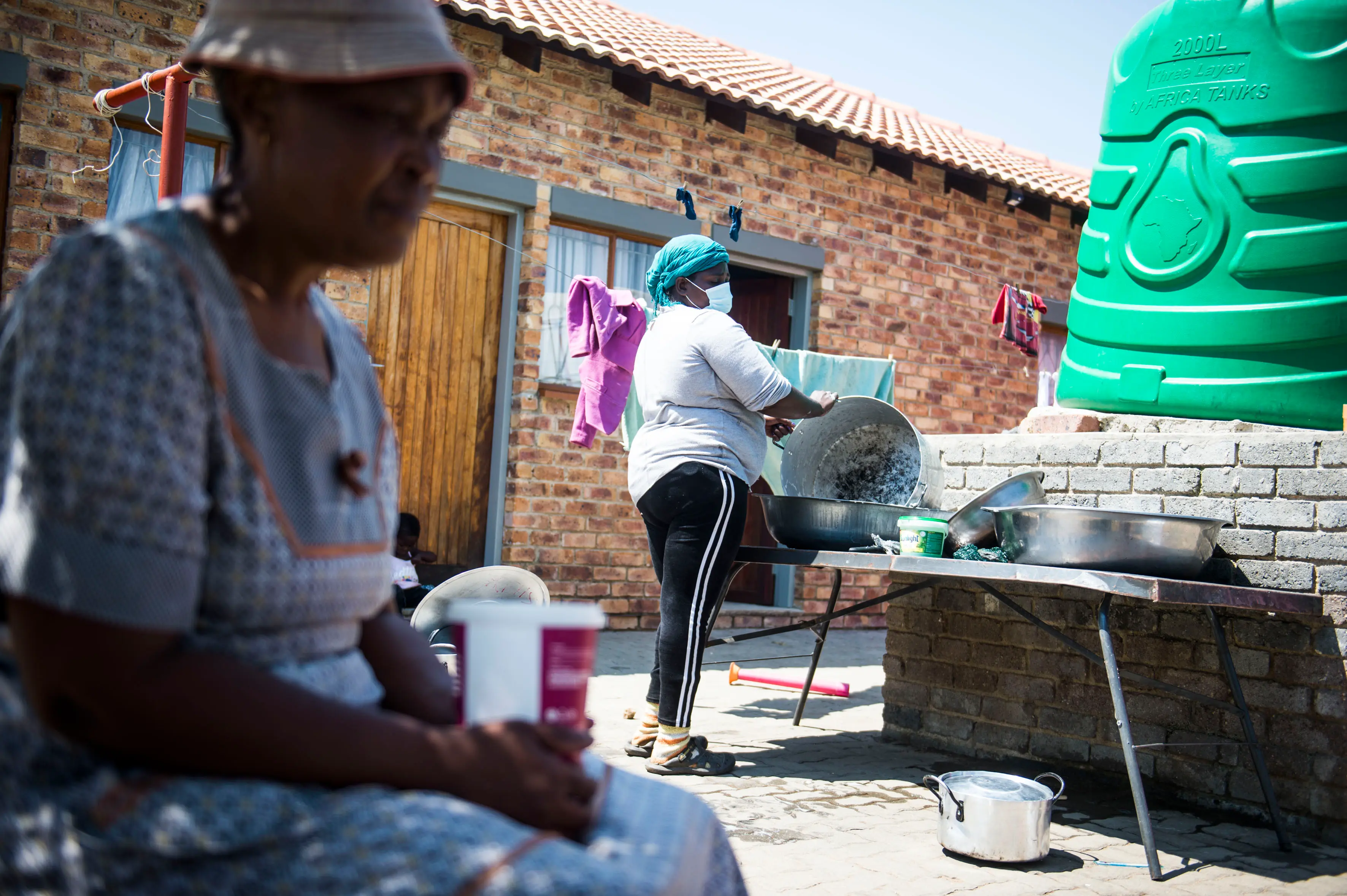
Some of us may have forgotten what life was like during the COVID-19 hard lockdown. The deserted streets, the uncertainty of tomorrow, the fear of infection and, for millions of South Africans, the more immediate concern of not knowing where their next meal would come from. For those fortunate enough to have retained their incomes, that period may seem like a distant chapter in our history, but for families who lost their livelihoods and communities already living on the margins, its consequences remain painfully familiar. More than six years later, poverty, unemployment and inadequate basic services continue to expose our country's deep inequalities. As South Africa reflects on another local government election, I find myself returning to those difficult months and six lessons that have stayed with me about compassion, leadership, collaboration, dignity, corruption and turning hope into meaningful action.
During the lockdown, I had the privilege of participating in food distribution efforts across the country alongside colleagues and part-ners from the Nelson Mandela Foundation, Kolisi Foundation, Imbumba Foundation and Kaizer Motaung Jr Foundation. Together, we mobilised resources and networks to reach communities where hunger threatened survival, encountering parents struggling to preserve their dignity, informal traders whose incomes had disappeared and households that had never imagined needing charitable assistance. For many, a food parcel represented more than temporary relief; it was reassurance that somebody had remembered them when the world seemed to have stopped.
One of the lessons was that hunger has no political affiliation, and neither should compassion. Hunger does not ask which party someone supports, whether they voted, what language they speak or where they worship. Yet access to opportunities and sometimes basic assistance can become entangled in political loyalty and patronage. Newly elected representatives must recognise that an election may determine who governs a municipality, but should never determine who deserves its services. A family waiting for clean water or a community without sanitation should not have to concern itself with which political party controls the council.
Political parties entering coalition arrangements must place people's wellbeing above political expediency, personal ambitions and the endless contest for positions. Public office is not an opportunity to divide the spoils of political power, but a responsibility to improve lives. The measure of a successful coalition should not be how long political partners remain together, but whether their cooperation produces meaningful improvements for ordinary people.
Our experiences also challenged my understanding of leadership, reminding me that some of its most important lessons are learned not in boardrooms or conferences, but by standing alongside people whose circumstances confront us with uncomfortable realities. There is something profoundly humbling about listening to a parent explain that they cannot feed their children.
I came to understand that leadership is measured not by the distance one maintains from suffering, but by the willingness to move closer to it. Leaders removed from their communities' daily struggles risk losing touch with those they represent, particularly when public office shields them from failing services. It is difficult to appreciate the urgency of a broken water system when one has never queued for water, although leaders need not personally experience every hardship to understand it. They must listen, remain present and allow ordinary people's experiences to shape their priorities.
Another enduring lesson was the extraordinary power of collaboration. No single foundation, government department or business could adequately respond to the scale of hardship confronting South Africa during the lockdown, when needs were overwhelming and resources limited. The Foundations brought different strengths to the humanitarian response, demonstrating that no organisation has a monopoly on compassion. It was Ubuntu in action, not an expression reserved for speeches, but a practical commitment to responding collectively to suffering.
I often wonder what municipalities could achieve if that spirit became central to everyday governance. Civil society organisations possess extensive community knowledge, while businesses, faith-based institutions and community structures offer resources that can strengthen development. Political differences are inevitable in a democracy, but cannot become permanent excuses for administrative paralysis. During the lockdown, we could not wait for every disagreement to be resolved before responding to hunger, and that urgency should apply when communities lack water, electricity or sanitation.
The experience also reinforced an uncomfortable truth about how society views poverty. Too often, people experiencing hardship are treated as though their circumstances reflect insufficient ambition, discipline or personal responsibility, ignoring the structural inequalities shaping opportunities in South Africa. We witnessed how quickly circumstances beyond an individual's control could turn a relatively secure household into one dependent on assistance, as informal traders lost their livelihoods, businesses closed and families that had previously managed without assistance suddenly needed help.
Their circumstances were not evidence of personal failure, but reminders of how vulnerable many households remain. Poverty must never diminish human dignity, and nobody should surrender their self-respect in exchange for a meal or have their suffering turned into institutional publicity. Food parcels provided immediate relief, but could not address the conditions that made families vulnerable. Charity cannot substitute for functioning institutions, economic opportunities and sustainable development. We should strive towards a society in which fewer families require emergency assistance, rather than becoming increasingly efficient at distributing food parcels to communities whose circumstances never improve.
Perhaps the most disturbing lesson was that even during a national emergency, some people saw an opportunity to enrich themselves at the expense of the vulnerable. While healthcare workers, volunteers and ordinary citizens made extraordinary sacrifices, the hyenas of corruption came out to feed. Emergency procurement processes were exploited, prices inflated and resources intended to alleviate suffering became opportunities for personal gain. It remains one of the great moral betrayals of that period that money intended to protect lives could be diverted for private enrichment while those needing assistance continued to suffer.
Every rand lost through manipulated procurement represents resources that could have provided clean water, improved sanitation or supported essential services. Corruption is not merely a financial failure; it steals dignity, opportunity and sometimes lives. For newly elected municipal leaders, the lesson is unmistakable: integrity should not be celebrated as exceptional bravery, but expected as the minimum standard of public service. We need leaders prepared to reject corruption even when it involves political allies, friends, relatives or those who helped them secure power. A nation cannot claim to care for the poor while allowing the powerful to become wealthy from their suffering.
Despite the hardship and corruption, I remember the extraordinary generosity of ordinary South Africans, particularly volunteers who continued helping despite their fears, organisations that shared limited resources and neighbours who supported one another even when they had little themselves. Their actions reminded me that our country possesses an enormous capacity for compassion and solidarity, although we must never romanticise resilience. The fact that communities survive without reliable services or meaningful opportunities does not make those conditions acceptable.
Hope is not simply what we say to people; it is what we help make possible. For a parent, hope may mean a safe road to school; for an unemployed young person, an opportunity to earn a living; for a household without water, the dignity of opening a tap and finding that water flows. These are not extraordinary demands, but reasonable expectations of a government entrusted with improving people's lives.
I still think about the families we encountered during those difficult months, wondering whether their circumstances have improved, whether their children have found opportunities and whether the promises of a better South Africa have moved closer to their doorsteps. The responsibility we felt towards them should not have ended when lockdown restrictions were lifted, just as the responsibility of elected leaders cannot end when election campaigns conclude.
The lockdown revealed both the depth of our inequalities and the strength of our shared humanity, demonstrating what we can achieve when we put aside differences and respond to a common need. We should not require another national emergency to rediscover that responsibility. As election post-ers come down and political negotiations begin, our representatives must understand that leadership is measured not by how convincingly they speak about the poor, but by what they do to improve their lives, particularly when there are no cameras, election campaigns or public recognition.
If we could mobilise across political, geographical and institutional boundaries to feed families during a crisis, surely we can summon that same determination to build municipalities that serve with integrity, compassion and competence.
The people we encountered during the lockdown did not need another promise that somebody cared. They needed somebody to show up, and South Africans deserve leaders who understand the difference. Sello Hatang is the executive director of Re Hata Mmoho