


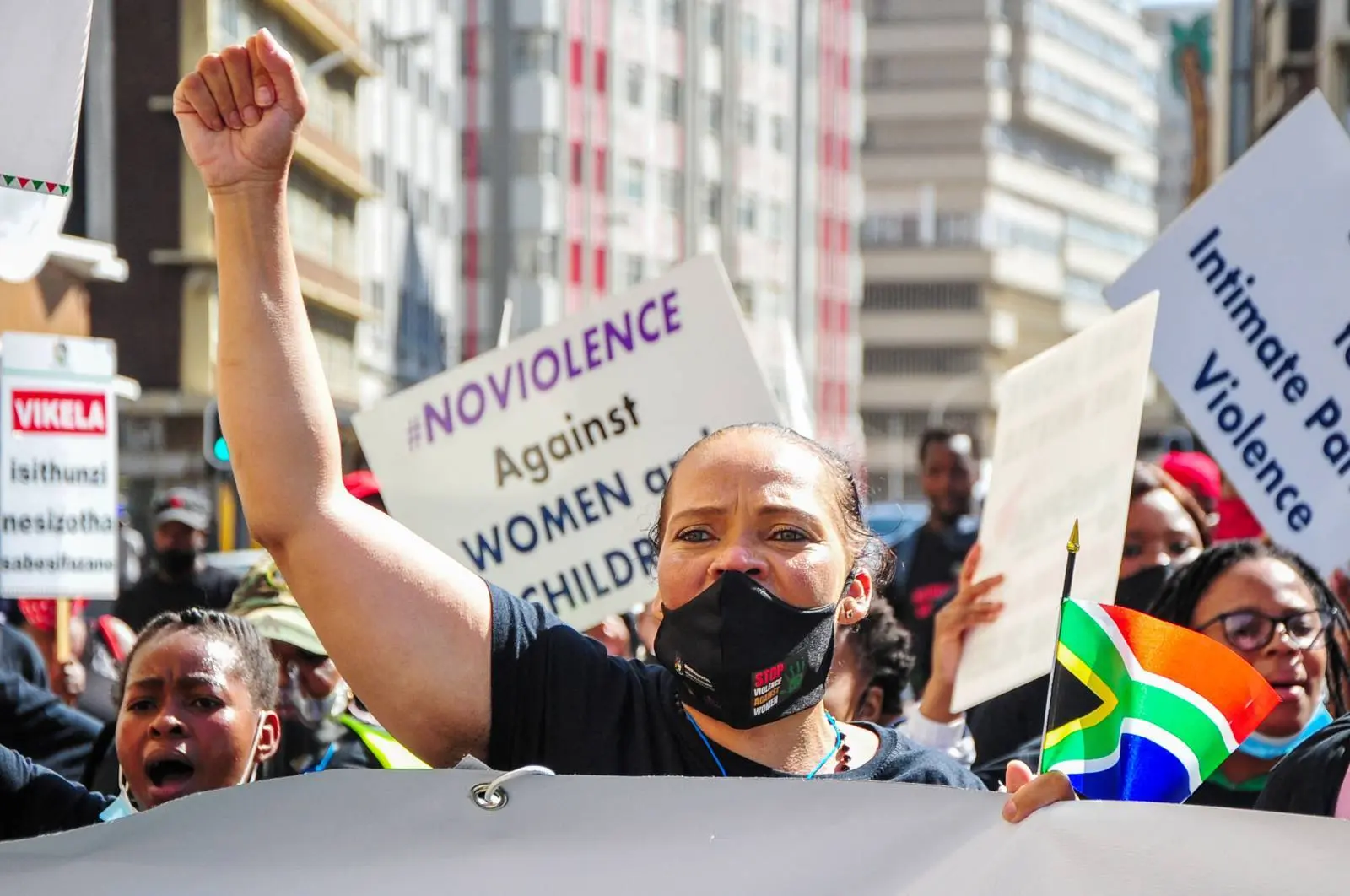
South Africans celebrated the 29 May 2024 elections as the beginning of a new democratic era. For the first time since 1994, no party secured an outright majority, ushering in coalition politics and creating new opportunities for accountability. This was rightly celebrated as a victory for democracy.
Yet while democracy advanced, gender transformation quietly moved backwards.
This is the uncomfortable outcome we must confront during the 16 Days of Activism for No Violence Against Women and Children: a more competitive democracy has produced a less equal political landscape.
Women vote, Men rule
The numbers, as presented by the Commission for Gender Equality (CGE) and Gender Links, tell the story: women make up 55% of registered voters, approximately 15.3 million people, and turn out in greater numbers than men. Yet in 2024, women were only 42% of candidates and secured just 43% of seats in Parliament, down from 46% in 2019.
South Africa dropped from 12th to 22nd in the world for women's political participation and from first to third in SADC, behind Namibia and Mozambique.
At the local government level, where decisions about water, clinics, community safety and local development are made daily, the reversal is equally concerning. Women's representation fell from 41% in 2016 to 37% in 2021.
It is still too early to quantify the likely outcome of the 2026 Local Government Elections. However, unless deliberate interventions are introduced, the declining trend in women's representation at local government level raises serious concerns about further regression.
We have opened the doors of Parliament but have not transformed the corridors of power.

Why the drop? The quota problem
The 2024 results prove what feminists have said for more than three decades: progress is not automatic.
Gender equality in politics is the product of deliberate policy choices. It requires political will, institutional commitment and accountability mechanisms that survive changes in electoral fortunes.
The ANC has a voluntary 50/50 gender quota, which contributed to women constituting 53% of its MPs in 2024. The EFF also achieved 54% women's representation.
However, when the ANC lost its parliamentary majority, the overall number of women elected declined because many of the parties that gained influence do not have comparable gender parity measures.
The DA, now the second-largest party within the Government of National Unity (GNU), has approximately 32% women representation. Jacob Zuma's MK Party, now the third-largest party in Parliament, has around 34%.
The consequences are also visible in the Executive. In 2019, South Africa achieved a gender-parity Cabinet. In the GNU Cabinet of 77 ministers and deputy ministers, only 31 are women, or 40%. This represents a significant setback in a country long viewed as a continental leader in women's political representation.
In short, the decline of a dominant party with a gender quota has exposed the fragility of gains that were never institutionalised across the political system. While non-sexism remains one of the Constitution's foundational values, the composition of the GNU raises important questions about the extent to which gender parity and women's representation are being prioritised across coalition partners.
From numbers to lived reality: the Mantashe moment
This is not just about numbers. It is also about political culture.
Recently, Minister Gwede Mantashe was asked about sex-for-jobs allegations against an ANC councillor in the North West. His response, dismissing the allegations, was rightly criticised by many for trivialising a serious issue. The ANC Women's League was correct to demand accountability.
More broadly, recent public responses by senior political leaders to allegations of sexual exploitation and abuse illustrate how deeply entrenched sexist attitudes remain within political institutions. These incidents reinforce concerns raised in numerous gender equality audits about environments where women's experiences are minimised, dismissed or ridiculed.
When allegations of sexual exploitation are met with ridicule or dismissive responses by senior leaders, it risks reinforcing attitudes that trivialise the abuse of power and undermine efforts to hold perpetrators accountable.
Gender transformation is not when women occupy seats in Parliament but are expected to navigate institutions that remain hostile to them. Gender transformation is when women can report misconduct without fear of humiliation, retaliation or political consequences.
If political parties are unwilling to hold leaders accountable for harmful language and conduct, it becomes significantly more difficult to build a culture of accountability around budgets, shelters, Thuthuzela Care Centres and other commitments aimed at addressing GBVF.
Why Representation Matters
This debate is about more than the numbers.
Research from across the world consistently shows that greater representation of women in decision-making structures contributes to stronger attention to issues such as gender-based violence, childcare, healthcare, social protection, education and community safety.
When women's representation declines within legislatures and executive structures, the consequences are not merely symbolic. They affect whose experiences shape policy priorities, whose needs are reflected in public spending, and whose voices influence national decision-making.
The decline in women's political representation therefore has implications not only for equality, but for governance itself.

What the election outcome demands now
The election outcome is not simply the emergence of a new government. It also highlights the extent to which increased representation alone has not fully transformed the gendered power relations that continue to shape political decision-making.
South Africa cannot assume that gains achieved over three decades are irreversible. The 2024 results demonstrate how quickly progress can be eroded when institutional safeguards are weak.
Therefore, during this 16 Days of Activism, and as coalition politics continues to shape governance, we must demand three key legal reforms:
a) Legislate 50/50
Voluntary quotas have delivered important gains, but they remain vulnerable to political change. South Africa should consider legislated gender parity requirements for all political parties, drawing lessons from countries such as Senegal. No democracy should depend on the goodwill of individual political parties to achieve equality.
b) Parity in the GNU statement of intent
The GNU's founding framework should explicitly strengthen commitments to gender equality and women's representation. Every government department should be required to report publicly on gender-responsive budgeting, gender equality outcomes and spending related to the implementation of the National Strategic Plan on GBVF.
c) Clean the local state
Ahead of and following the 2026 local government elections, municipalities should undergo independent assessments of sexual harassment complaints, allegations of sexual exploitation and workplace gender equality practices.
Local government legislation should provide clear mechanisms to suspend or remove elected representatives found guilty of sexual harassment, sexual exploitation or related misconduct, while ensuring due process is followed.
South Africa is often celebrated internationally for having high levels of women's political representation. Yet, as the CGE report reminds us, women vote in greater numbers than men while continuing to exercise less political power.
We cannot celebrate democracy if the majority of voters remain underrepresented in decision-making while continuing to bear a disproportionate burden of violence, economic exclusion and inequality.
Until political institutions consistently challenge sexist attitudes, until government budgets adequately reflect commitments to gender equality, and until survivors can access an effective and fully resourced justice system, South Africa's transformation project remains incomplete. We have made progress, but significant gaps remain.
Bafana Khumalo is the co-founder and co-executive director of Sonke Gender Justice and a former commissioner of the Commission for Gender Equality. He writes in his personal capacity.