


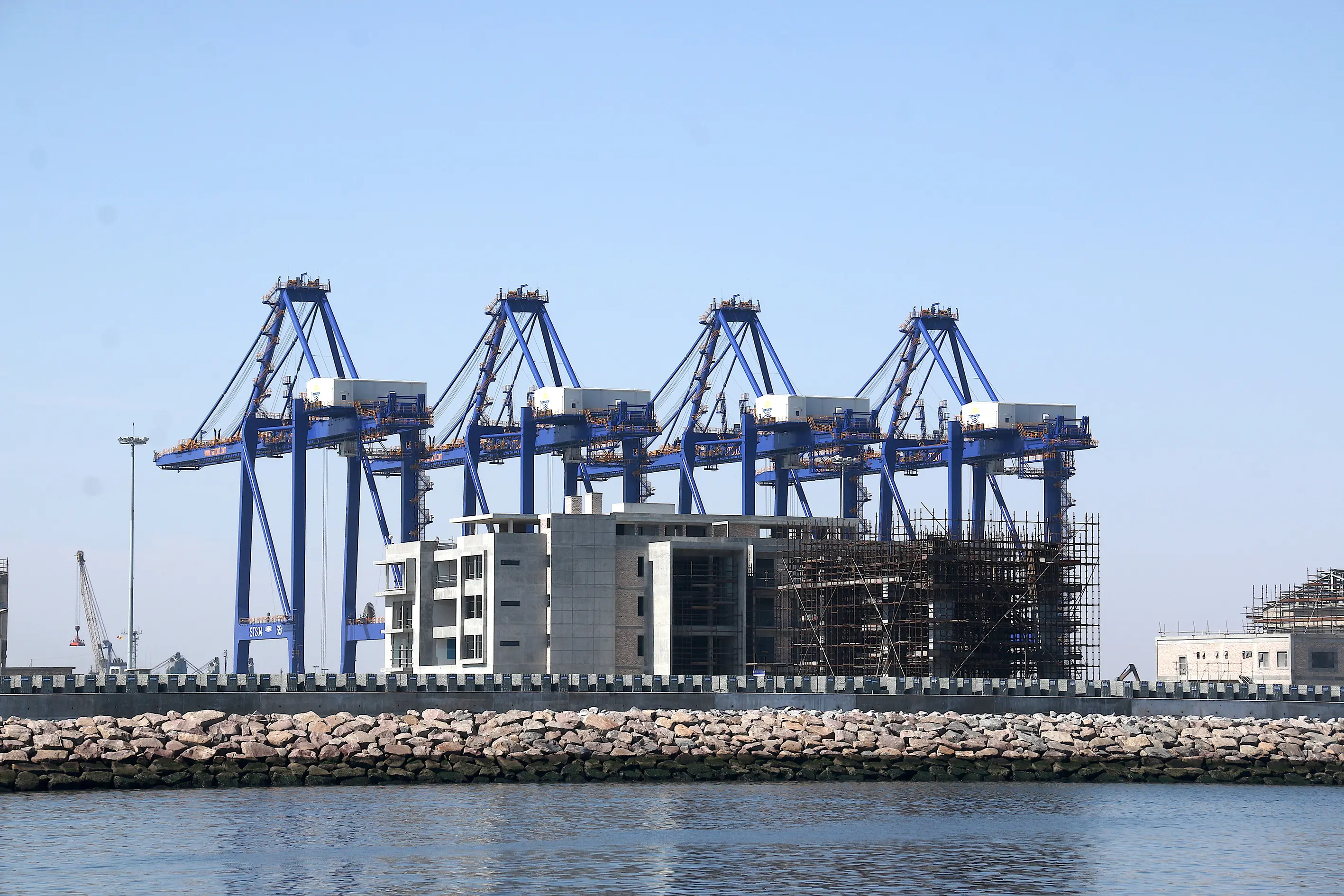
On 4 November, in the Namibian port of Walvis Bay, Aliko Dangote and President Netumbo Nandi- Ndaitwah launched a $2.5 billion (R41bn) fuel storage and pipeline project meant to supply landlocked countries across southern Africa.
It is the latest move by a man betting against an old African arrangement, in which the continent sells what it digs and pumps and buys back what others make from it.
The bet began in Nigeria, where it has paid off. Before Dangote’s refinery near Lagos, one of Africa’s largest oil producers imported nearly 400 000 barrels a day of refined fuel but by the second quarter of 2026, US Energy Information Administration data show, seaborne imports had fallen below 130 000 barrels a day.
The refinery supplies most of the country’s gasoline and also sells abroad, with exports to Europe rising from about 15 000 barrels a day in 2023 to roughly 130 000. A country that spent billions every year buying fuel now sells it.
Such bets are rare. Africa has plenty of capable traders but far fewer investors willing to risk sums large enough to change how an economy is built. Refineries and pipelines are slow, expensive and exposed to politics. National laws, licences, currency controls and mismatched standards make it hard to invest across borders or sell beyond the home market. Trading is easier but it does not build the skills, jobs and technology that factories do, so someone must take the harder road.
Dangote has taken that road more than once. His refinery in Nigeria is built and running and in Kenya ground was broken in September at Lamu for a refinery and petrochemicals complex reported at around $16bn. Both process raw materials Africa has in abundance.
He is also bringing others in. Dangote has offered regional governments a share of the Lamu equity and Kenya, Ethiopia and Rwanda are reported to be interested. In Nigeria, the refinery’s September share offering, billed as the largest in African history, gave citizens a stake. Even if the sums are modest, it shows that large African projects can raise capital at home and teaches governments and investors about share ownership and risk-taking.
The Namibian project takes the same logic south. Its terminal will hold about 600 million litres, roughly eight times the capacity of Namibia’s national facility, and a proposed 1 700km pipeline would carry fuel to landlocked Botswana, Zambia, Zimbabwe, Malawi and southern Congo, though the route needs approval.
Dangote put the idea plainly at the launch: “Africa must industrialise Africa.” Entering another African country, he said, was “coming home”. More executives should back such lines with money, as Dangote has done by raising his target for investment in African industry to $60bn by 2030.
Projects on this scale also test the African Continental Free Trade Area, which exists on paper but begins to work only when companies move fuel, goods and money across borders and compel officials to fix what stops them. Each project that works makes the next one easier and adds up to regional centres of production that employ people and give African producers more say in world markets.
Nigeria has felt that pressure. Dangote’s venture pushed the government to confront policies on petroleum imports, exchange rates and local supply that had been left alone for years. A government that responds and an investor who commits can each make the other’s risk worth taking.
The Petroleum Industry Act set a framework that favours domestic refining. In May 2023 Nigerian President Bola Tinubu removed the gasoline subsidy while the foreign-exchange market moved to a single market-set rate. A naira-for-crude arrangement lets local refiners buy crude in local currency and new tax laws took effect in January 2026. By April the refinery was meeting nearly 80% of gasoline demand, and in May S&P upgraded Nigeria’s sovereign rating, citing domestic refining and export capacity among the reasons.
The reforms have had costs. Pump prices have risen sharply, crude supply under the naira arrangement is disputed, arguments over import licences have reached the courts and reliance on one dominant producer is a fair worry. Regulators need the independence and competition rules to protect consumers while rewarding the company that went first. Investors will trust reform only if it is applied consistently.
Namibia’s president added a practical lesson to those reforms. By placing the project under presidential oversight until completion, she created one accountable office for a major investment, avoiding delay and keeping to schedule. Governments should do the same for the projects that matter most, keep import and exchange-rate rules predictable and show patience with cross-border business that bureaucracies find awkward. Working with entrepreneurs, they can also help build the single African market that no one country can offer alone.
Many countries could nurture t own Dangotes. Most have resour and some a port or corridor to m product through. Bauxite, iron cobalt, lithium and cocoa are lar shipped out raw. The missing piec rarely the resource but the depen ble power, transport and predicta rules that make processing at ho pay. Governments can fix those n Entrepreneurs should be hon about luck. Dangote’s Lagos refin met favourable conditions: Eur is short of fuel because of the wa Ukraine and instability in the Mid East. But margins swing with eve far from Lagos and part of the rec profit comes from a disrupted w market. The hard part comes w the shortage ends and the plant m compete on cost and reliability.
Dangote did not build it expec turmoil; he saw an opportunity African entrepreneurs too often p up. The openings for those who low reach beyond petrochemical logistics, mineral beneficiation, ro and power. Few have Dango balance sheet,but many can p capital, bring in governments development banks, and plan reg ally from day one, because no sin African market is big enough alon Dangote is not acting out of ch ity; he is betting big and asking o Africans to do the same. If gove ments answer with reform and en preneurs with capital, his bet co turn out to be the first of many.
Nobody has built a refinery by w ing for safer ground. From Gui to South Africa the continent is of missing markets for resourc entrepreneurs and serious gove ments to seize.

Anthony Ohemeng-Boamah writ on international development an socio-economic transformation, with a focus on Africa.