

By age 13, nearly three in five boys already hold at least one harmful attitude about power and relationships between men and women, including that it can be acceptable for a husband to hit his wife in certain circumstances or that men, not women, should decide when to have sex.
UNICEF’s new report analysed data from nearly 5,000 adolescent boys and young men aged 13 to 24 across Kenya, Lesotho, Mozambique, Namibia and Zimbabwe.
Strikingly, these attitudes were already widespread among 13-year-olds, with remarkably little difference in prevalence across age groups - suggesting that we need to start much earlier, during early adolescence (ages 10-14), before these attitudes become deeply entrenched.
This is a wake-up call. At a time when harmful attitudes are increasingly normalised, these numbers deserve our attention.
We are often asked: What about the boys? Yet despite growing recognition of the challenges boys face, we have often failed to engage them intentionally in efforts to promote gender equality, healthy relationships and positive health outcomes.
This is a missed opportunity. If harmful ideas about masculinity are already taking root by age 13, then waiting until later adolescence is too late. Interventions to promote gender-equitable attitudes must begin early before these beliefs become entrenched.
Our multicountry analysis, Beyond Behaviour, drew on nationally representative Violence Against Children and Youth Survey data from the five countries.
It found boys who endorsed more harmful attitudes were more likely to report behaviours linked to increased HIV and STI risk, including inconsistent condom use and multiple sexual partners.
They were also more likely to experience mental distress, sexual violence and be victims of intimate partner violence, while also being more likely to perpetrate intimate partner violence themselves. Ultimately, harmful ideas about masculinity were associated with risks to boys’ own health, relationships and wellbeing.
Through our work with adolescent boys and young men across the region, we regularly see these pressures play out in everyday life. We’ve seen boys often grow up believing that vulnerability is a sign of weakness, that seeking help should be avoided, and that risk-taking is part of proving their manhood.
These expectations can shape whether a boy seeks help when he is struggling, how he perceives relationships, sex, violence and his own mental health. But these attitudes are not innate; they are conditioned by society.
This matters to everyone
These findings also reinforce what many educators, programme implementers and community organisations have long observed. Harmful gender norms do not only harm girls. They also constrain and harm boys.
Girls and young women continue to face disproportionate burdens of HIV, violence and inequality and remain an urgent priority. Engaging boys is not about shifting attention away from girls. It is about recognising that many of the forces harming girls are the same ones shaping boys and that transforming these norms requires working with both.
For example, boys and young men who hold these beliefs are more likely to have experienced sexual violence themselves and to have used physical or sexual violence against a partner.
We cannot shift the norms that harm girls without also engaging the boys and men whose lives, relationships and behaviours are shaped by those same norms.
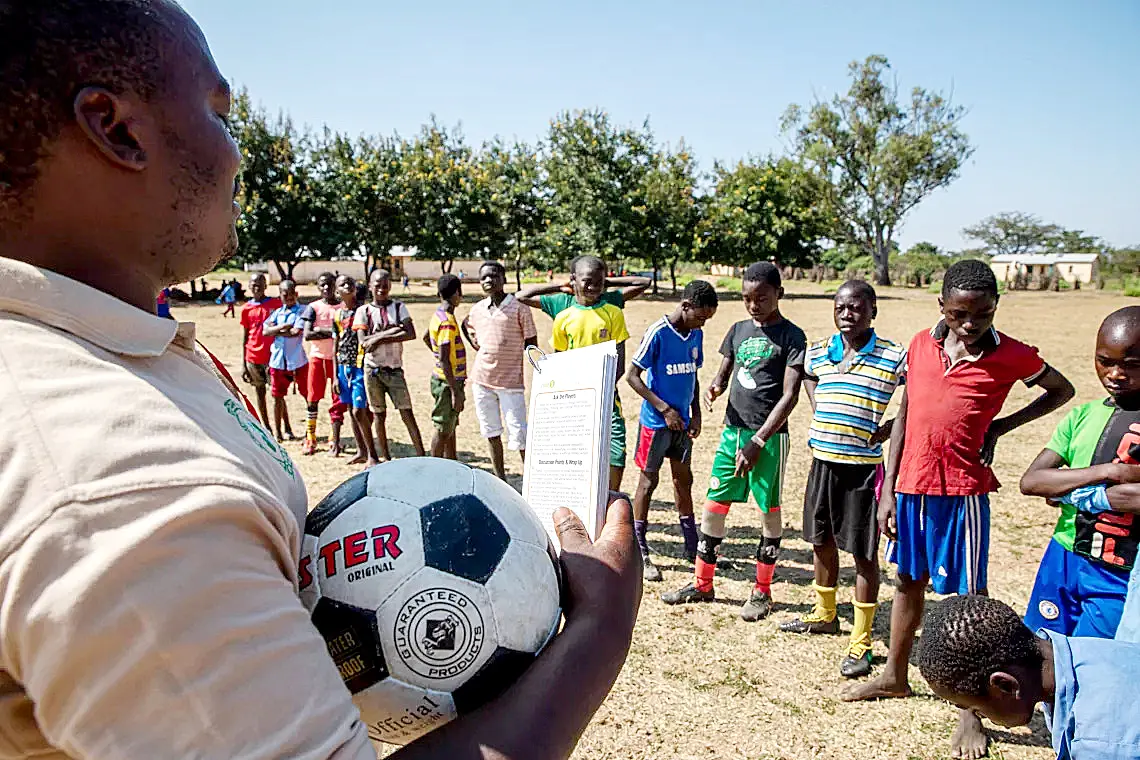
We know where to find boys
They are in schools, sports clubs, faith communities, youth programmes, online and increasingly in health services. The problem is that we have not consistently used these spaces to help boys question harmful ideas and develop healthier ones. That’s especially important given these same environments are often where ideas about masculinity are formed and reinforced in the first place.
The task now is to use those spaces more deliberately and much earlier. They can give boys space to question assumptions about masculinity, relationships, sex and emotion and provide positive role models. The evidence recommends school and community discussions, parenting programmes and broad transformative approaches, rather than treating boys’ attitudes in isolation.
So, what would that look like?
Programmes that show promise tend to share several characteristics. They start early, before harmful attitudes become deeply entrenched. They create safe spaces where boys can reflect, question assumptions and discuss relationships, emotions and wellbeing without fear of judgement. Importantly, they go beyond conversations alone, creating opportunities for boys to practise different behaviours and making positive examples of masculinity visible within their communities.
They also recognise that boys do not develop attitudes in isolation. Similar to girls; parents, teachers, coaches, faith leaders, peers and communities all play a role in shaping social norms. Engaging these influences is critical, recognising that social norms are learned collectively and must be transformed collectively.
We are not starting from scratch
The good news is we are not starting from scratch. Research such as Beyond Behaviour is helping build the evidence base for action, developed through 2gether 4 SRHR, a joint UN programme where UNAIDS, UNFPA, UNICEF and WHO work together to address SRHR needs across Eastern and Southern Africa in partnership with Sweden. Across the region, governments and partners are already putting these approaches into practice.
Programmes such as Uganda’s Gender Roles, Equality and Transformations (GREAT), South Africa’s Promoting Sexual and Reproductive Health among Adolescents in Southern and Eastern Africa (PREPARE) intervention and other community-based approaches have demonstrated that healthier, more equitable attitudes can be fostered when young people, families and communities create safe spaces to break down taboos.
Gender equality cannot be achieved by choosing between girls and boys. We have to change the norms and power relations shaping their lives. If we want different outcomes for girls, we have to pay attention to what boys are learning too. We can no longer afford to wait because there is too much at stake for boys and girls.
Nicholas Niwagaba is a health specialist on HIV & SRHR for UNICEF, Luciana Leite is a researcher at the Universities of Oxford and Cape Town and Samuel Nyoni is a young advocate for the UNITED! Movement, Zambia.