


Energy poverty is a major contributor to stunted childhood development, arguably the most damaging feature of rampant inequality, and a barrier to inclusive economic growth. The opportunities to eliminate energy poverty, particularly through decentralised deployment of renewable energy technologies, are increasingly affordable, especially for a middle-income country with South Africa’s abundant natural resources.
Signs suggest this will receive the concerted government attention it deserves; for example, Minister Kgosientsho Ramokgopa recently said the government will increase Free Basic Electricity (FBE) from 50 kWh to 200–300 kWh per household per month. However, the government prioritises market reform by establishing a wholesale electricity market and a new Electricity Pricing Policy, with cost-reflective pricing as the central principle.
Over the past two decades, the Integrated National Electrification Programme (INEP), tasked with expanding the electricity distribution network, has been neglected. The INEP, which receives direct funding from Treasury for Eskom to implement, in cooperation with local government, has increased connections, but at a rate that often falls behind the growing number of households. Last year, the Department of Electricity and Energy (DEE) reported 1.6 million households without any electricity.
Various policies, programmes, and pilot projects aim to deliver energy services beyond the grid, including some worthwhile local government initiatives under the Free Basic Alternative Energy policy. Still, most depend on international donors or local philanthropy. The collective impact on energy poverty has been marginal, largely because ambiguous mandates and fragmented responsibilities make it hard to adopt a comprehensive national approach.
Extensive research unpacks the immediate and enduring benefits of adequate energy services in poor households, where the value of each unit of energy is far higher than the system-wide aggregate; for example, the Hungry for Electricity report by the Public Affairs Research Institute (PARI, 2022). However, the Integrated Resource Planning process, based on expected market demand for electricity, does not include the potential socio-economic value of subsidised electricity provision; it treats energy poverty as ‘suppressed demand’ that may need to be met in the future, when households can afford to pay for it.
Social justice advocates argue that providing electricity to poor households is a key, and even necessary, enabler of ‘economic growth’, even when measured only by gross domestic product (GDP). The prevailing capitalist economic model treats high GDP growth as necessary to reduce poverty. Within this model, a resource or service is valued only when there is money to pay for it.
This model is reflected in the government's dominant focus on attracting investment by promoting projects that are ‘bankable ’; in other words, projects that can offer investors ‘reasonable returns’ or profit, including a continued appetite for extractive megaprojects that promise huge future revenues. These projects allow investors to secure claims on future value to finance spending today. As a result, opportunities for decentralised and distributed renewable energy (DRE) deployment have been marginalised.
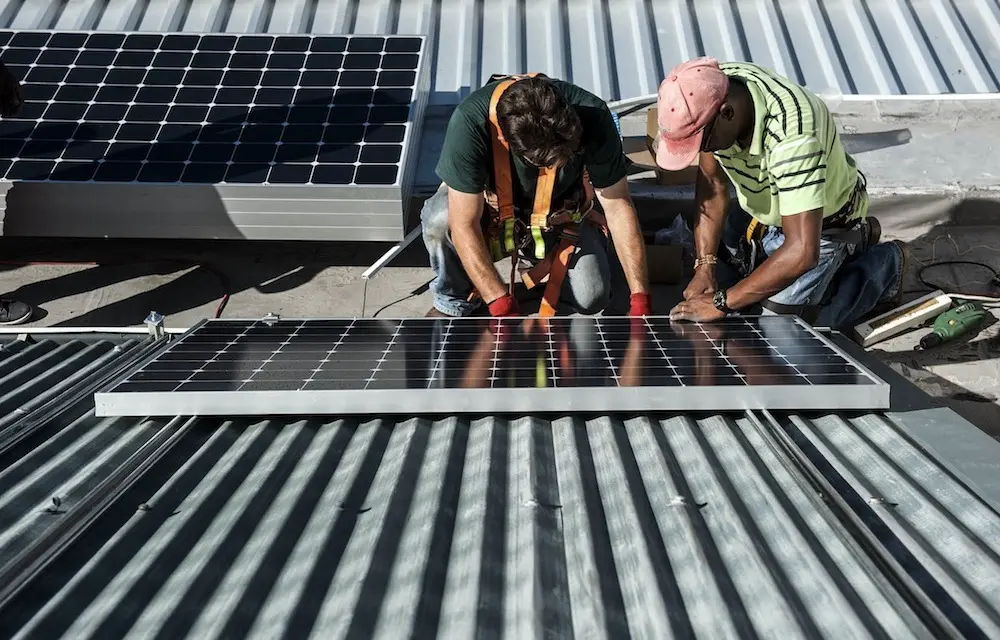
Of all the opportunities to develop our energy system, a coordinated large-scale roll-out of small-scale Solar PV (photovoltaic panels) with battery energy storage systems (BESS) offers the quickest and most cost-effective means to achieve government’s official target of universal access to electricity in 2030 (a target that was once set for 2010), while also being an investment in long-term energy security.
Furthermore, installing and maintaining DRE, predominantly solar home systems and micro-grids, is labour-intensive and offers the largest opportunity for new jobs in our energy system. Realising the full potential benefits for households and energy workers requires an ambitious national programme over five years or more, backed by a major public finance commitment by National Treasury that is not contingent on donor aid or climate finance.
A year ago, the DEE proposed to the parliamentary portfolio committee responsible for electricity that the Integrated National Electrification Programme (INEP) be expanded to fund off-grid renewable energy solutions, and ‘clean cooking’ initiatives. When presenting the department’s Annual Report to the committee on 1 October this year, the acting Director General announced that Cabinet had approved the proposal in August, repurposing the INEP into a Universal Access Programme. However, the details of the new programme were deferred for discussion to a yet-to-be-scheduled presentation.
The Presidential Climate Commission Framework for a Just Energy Transition (JET), approved by cabinet in 2022, recognises the principle of distributive, restorative and procedural justice. The Commission has also published research on DRE, including a report on opportunities for Socially Owned Renewable Energy drawing from local and international experience.
The recently established JET Municipal Council could play an important role in championing the implementation of the promised Universal Access Programme, including the deployment of solar PV and BESS at scale. As a governance body led by the South African Local Government Association, the council brings together local government, relevant national departments and the JET Project Management Unit in the Presidency.
We need more from Minister Ramokgopa and his DEE than promises to increase FBE, with no indication of how this will be financed. Less than a third of the funds allocated through the Equitable Share to local government currently reach the households that qualify for FBE. National Treasury has indicated it will not increase the current allocation for FBE through the distribution grid before the ongoing implementation failures are addressed. This is not a barrier to financing a separate programme for DRE.
A major commitment in the next national budget is essential for a programme aiming to achieve universal access to electricity in the near future. Such public spending is justified by the distributed benefits this would bring, from generating employment and stimulating local economic activity to addressing gender inequality, air quality, and childhood development.
The responsibility to seize the opportunities of DRE cannot rest with a single department, and the promised Universal Access Programme need not wait on protracted market reforms or the resolution of accumulated debts within the electricity distribution system.
The Electricity for All campaign is building the public pressure needed to mobilise the political will to realise renewable energy’s potential to power the people.
Richard Worthington works for the Electricity For All campaign