


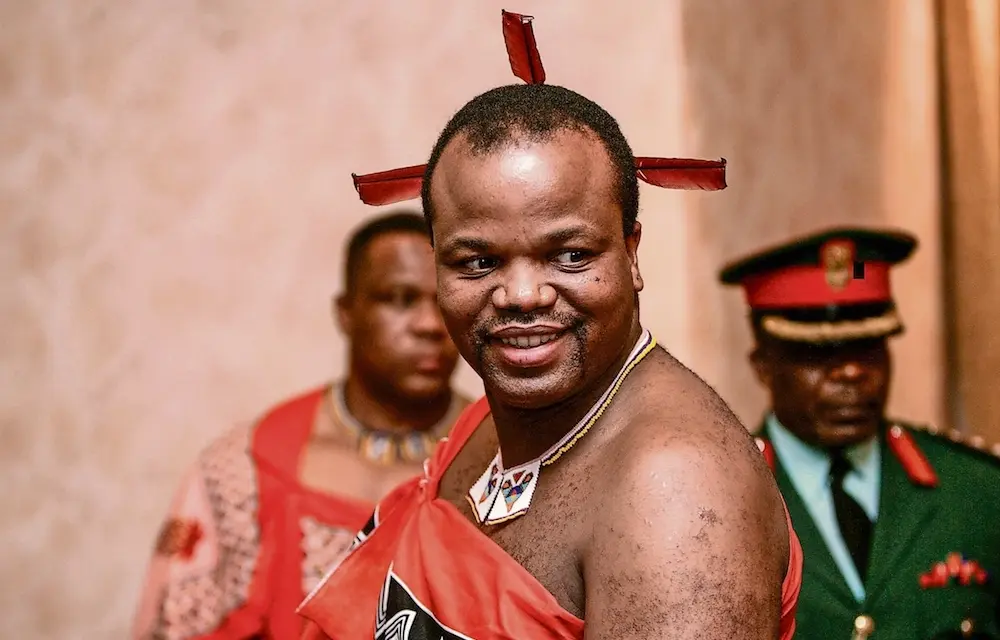
A monarchy can survive a change of government. Eswatini should no longer expect its citizens to endure a system in which they cannot meaningfully change theirs. The country needs a negotiated transition from absolute monarchy to a democratic constitutional monarchy: a settlement in which the Crown retains its non-partisan national role while elected institutions exercise governing authority.
Not another consultation that leaves executive power untouched, but a constitutional bargain in which elected leaders govern, Parliament controls public expenditure, and citizens can peacefully remove a government. King Mswati III could remain a custodian of national identity and tradition. What must change is the concentration of governing power around the Crown.
Constitutional reform will not abolish poverty by proclamation. But durable, inclusive development requires institutions that let citizens challenge priorities and replace leaders whose policies fail. Democratic constitutional monarchy is therefore not a decorative reform to consider after economic recovery. It is a necessary foundation for making that recovery accountable to the people.
Poverty needs a political remedy
Eswatini’s economic performance demonstrates why growth alone is insufficient. The World Bank estimates that real GDP expanded by 4.8% in 2025 and projects growth of 3.8% in 2026. Inflation moderated to 2.5% in July 2026. Yet it estimates that 54% of the population lived below its $4.20-a-day lower-middle-income poverty line in 2025, while roughly one-fifth remained food insecure.
These figures do not mean that monarchy alone causes poverty. They show that economic expansion has not delivered sufficient security and opportunity. Young people need employment, households need affordable essentials, and communities need reliable services. The continuing HIV burden makes dependable healthcare and medicine supplies indispensable.
But citizens also need the power to change the national response when it fails. Under the non-party Tinkhundla electoral system, voters elect constituency representatives without choosing between competing political parties offering national programmes. The king appoints the prime minister on the recommendation of the King’s Advisory Council, as provided in section 67 of the Constitution.
That arrangement weakens the connection between public dissatisfaction and a change of government. A democratic constitutional monarchy would allow citizens to choose between economic programmes and dismiss those responsible for failing to deliver them. Demands for jobs and services would become electoral tests of government, not merely appeals for responsiveness.
Public money requires public control
The 2026/27 budget proposed E36.92 billion in expenditure and an E5.02 billion deficit, equivalent to 4.9% of GDP. The public-service wage bill was budgeted at E12.44 billion, approximately one-third of spending. Public servants deserve fair remuneration. The issue is whether permanent commitments are affordable and whether spending delivers functioning schools, clinics and infrastructure.
Eswatini’s dependence on volatile Southern African Customs Union receipts makes those choices particularly consequential. Its revenue-stabilisation fund is useful, but deposits and withdrawals require enforceable oversight. The lilangeni’s parity peg to the South African rand also constrains monetary independence. With interest-rate policy broadly aligned with South Africa’s, fiscal decisions become especially important.
These constraints demand democratic accountability, not indiscriminate austerity. Parliament must scrutinise procurement, arrears, public-enterprise liabilities and all royal expenditure financed from public resources. Major projects should disclose costs, financing terms and expected public returns. An elected government must explain its priorities and face electoral consequences when its choices fail. Independent audits must lead to corrective action, and parliamentary committees need access to records and authority to question ministers.
Without those powers, scrutiny risks becoming advice to power rather than control over it.
Foreign partnerships must answer to citizens
Citizens of any country should oppose treating diplomacy as the private property of a privileged class. Eswatini’s relationship with Taiwan illustrates why constitutional reform must extend beyond domestic administration. The Observatory of Economic Complexity’s bilateral profile identifies Eswatini exports including beef, sugar and processed fruit. Its reverse profile records Taiwanese supplies, including rice and machinery. Trade is only part of the relationship. Assistance, training and investment must be assessed separately.
The issue is not whether Eswatini should abandon Taiwan or recognise Beijing. EmaSwati should determine their partnerships without external coercion. But diplomatic recognition must not place agreements beyond public scrutiny. Parliament should examine externally financed projects, sovereign guarantees, procurement arrangements and promised employment benefits. Citizens should know which commitments are grants, which are loans and who carries the risk.
A democratic constitutional monarchy would place these decisions under elected political responsibility. Partnerships could endure because they serve national interests, rather than depend on an unchallengeable centre of power. Sovereignty must include citizens’ authority over decisions made in their name.
Accountability must reach powerful networks
Changing the prime minister’s selection will achieve little if politically connected interests remain beyond investigation. The 2024 Swazi Secrets investigation, involving the International Consortium of Investigative Journalists and partners including The Africa Report, examined suspicious financial flows and possible connections to southern Africa’s gold-smuggling economy.
Investigative reporting is not a judicial finding. Allegations require independent investigation and fair process. Nevertheless, regulators and investigators must be able to scrutinise politically exposed persons without fear of interference. Constitutional reform must protect financial supervisors, prosecutors, auditors and courts. Beneficial ownership should be transparent, and public contracts should withstand scrutiny regardless of the beneficiary’s connections.
An economy cannot offer fair opportunity if political connections outweigh transparent rules. Without these safeguards, a new constitutional label could leave the old distribution of power intact.
Rights are obligations, not royal concessions
The argument for change rests on African commitments as well as democratic principle. On 17 July 2021, the African Commission on Human and Peoples’ Rights expressed grave concern about Eswatini’s protests and the security response. It called for an immediate halt to police use of live ammunition, independent investigations, remedies for victims and uninterrupted internet access.
The Commission also distinguished peaceful protest from attacks on property. Protecting public safety and protecting civil liberties are complementary duties. The African Charter does not make expression, association and peaceful assembly conditional on political obedience.
Citizens cannot negotiate freely while fearing punishment for peaceful dissent. Journalists must investigate spending, unions must represent workers, and communities must question projects without intimidation. Repression may suppress visible resistance. It cannot create the legitimacy that comes from consent.
Preserve the Crown, end executive dominance
Under the new settlement, the monarch should serve as a non-partisan head of state and custodian of traditions such as iNcwala and uMhlanga. Elected politicians should exercise executive authority and bear responsibility for public policy. Political parties must be free to organise and contest elections. Tinkhundla structures may retain local significance but cannot substitute for national political competition. EmaSwati should decide whether the prime minister is elected directly or emerges from a parliamentary majority. Either model requires clear rules for appointment, removal, vacancies and disputes.
Royal powers over dissolution, assent, appointments and emergencies must be precisely limited. Courts must enforce constitutional rights independently, and security institutions must answer to lawful civilian authority. Customary law should be harmonised with constitutional protections, including women’s land and inheritance rights. Reform must also prevent elected leaders from becoming unaccountable successors to royal dominance. Opposition rights, independent election administration and transparent political financing belong in the settlement. The objective is not to erase Swazi identity. It is to prevent identity from being used to justify unaccountable government.
Negotiate the transition now
Eswatini’s transition requires more than an invitation to dialogue. It requires a constitutional bargain negotiated by royal and traditional representatives, political formations, legislators, unions, business, women’s organisations and young people. Participation must be protected, abuses independently investigated, and constitutional proposals subjected to public debate and lawful approval within an agreed timetable.
Dialogue must redistribute governing authority, not become a permanent substitute for change. Its credibility will rest on powers transferred, rights secured and institutions made answerable to citizens, not meetings convened. South Africa, SADC, Taiwan and other partners should support that Swati-led process. Their responsibility is to defend the conditions for a peaceful settlement, not mistake the preservation of existing power for stability. Delay carries a constitutional cost. When the Crown remains inseparable from government, failures of administration risk becoming grievances against the monarchy itself. Constitutional monarchy offers a different settlement: continuity in the head of state, contestability in the exercise of power. It allows the Crown to represent the nation without requiring citizens to endorse the government.
No constitution can legislate prosperity into existence. But it can determine whether failure is correctable, public money is traceable, and authority can be withdrawn by those in whose name it is exercised. The monarchy’s future should rest on its place in the nation, not its command of the state. Preserve the Crown’s cultural inheritance; end its executive dominance. Let elected leaders govern, let Parliament control public expenditure, and let emaSwati possess what makes citizenship more than allegiance: the power to replace those who rule.
Wellington Muzengeza is an independent journalist and political-risk analyst specialising in African governance, strategic infrastructure, cross-border risk and sovereignty. He is the founder of BuiltAfrica and author of The Informal State.