


The challenge for South Africa’s former majority party, the ANC, after its catastrophic election performance is where it goes from here: Does it become more socialist populist and ethno-African nationalist by aligning itself with former spinoffs, the Economic Freedom Fighters (EFF) and uMkhonto weSizwe (MK Party) and now the electorally independent SACP; or does it go the social-democratic, multi-racial and pro-Constitution route.
The ANC is divided between two major factions: a populist socialist ethno-African nationalist group, which is blaming the ANC’s decline on its government of national unity (GNU) coalition, with former multiparty charter party (MPC) members, the Democratic Alliance (DA), Inkatha Freedom Party (IFP) and Freedom Front Plus (FF+). The other faction wants the ANC to course correct by aligning itself with the EFF, MK Party and SACP and form a black, socialist populist grouping.
The faction says the ANC’s GNU coalition with the DA was the reason for the party’s 4 November 2026 local elections electoral decline. The faction includes Gauteng leader Panyaza Lesufi, Deputy President Paul Mashatile and others.
It is calling for the DA, FF Plus and IFP to be removed from the GNU and be replaced by the EFF and MK Party, to create a ‘black’ socialist populist GNU national coalition.
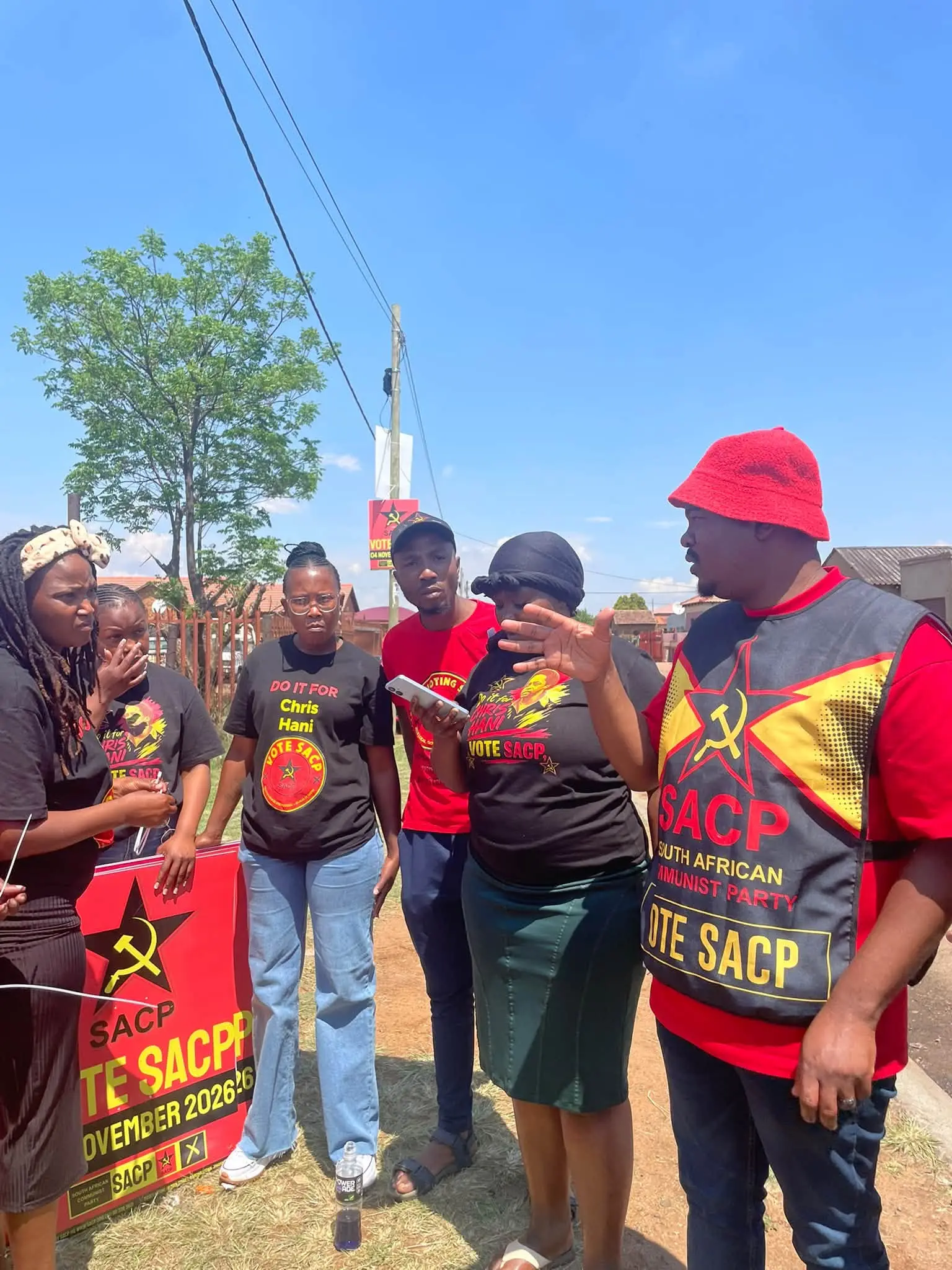
Last Thursday, the SACP hosted what it calls a “Council of the Left”, to establish a political bloc of black, socialist populist parties, to work together and for “leftist parties to seize the moment and prioritise working together post the local government elections”. The “Council of the Left” was a follow-up to the SACP-led “Conference of the Left” which was organised early this year.
The SACP said the political bloc garnered close to 20% of the vote in the local polls. The parties in the “Council of the Left” include the SACP, MK Party, EFF, Pan Africanist Congress (PAC), the Azanian People’s Organisation (Azapo) and Afrika Mayibuye Movement.
SACP general secretary Solly Mapaila said: “(We) want to convince all organisations, particularly those that were voted by the African majority, to work together as a bloc in councils and prevent the DA and the Freedom Front from leading our people.”
EFF chairperson Dali Mpofu, delivering a joint statement on behalf of the “Conference of the Left”, called on the ANC “to reshape the GNU” to exclude the DA and FF+.
The ANC’s social democratic, multi-racial faction is associated with ANC president Cyril Ramaphosa, and includes the likes of former Gauteng ANC leader David Makhura and National Assembly Speaker Thoko Didiza.
In the 4 November 2026 local elections, many black voters, in a seminal political moment for South Africa, shifted to vote for parties based on perceived competence, not colour, ethnicity or ideology. The DA made inroads into black townships.
The FF+ garnered significant numbers of black voters. Pieter Groenewald, the FF+ leader, and the minister of correctional services, has gained many black supporters for the efficiency in which he runs the ministry.
ActionSA has had a standout election, collecting large numbers of voters in Gauteng’s black townships.
Socialist populist, ethno-African nationalist parties, such as the EFF, lost votes. The MK Party, built around its leader Jacob Zuma, was an outlier, gaining votes in KwaZulu-Natal.
The ANC’s extended national executive committee meeting on Friday resolved that the DA should be the last resort to form coalition governments at local municipalities.
Those ANC leaders and members blaming the ANC’s partnership with the DA in the GNU for its decline are mistaken. The ANC’s corruption, public service delivery failures, lack of care and arrogance enraged many ANC voters. Sadly, ANC leaders rarely take accountability for its self-inflicted government failures, always blaming scapegoats — this is the case again after the November polls, with ANC leaders blaming the party’s GNU coalition with the DA for its bad performance.
The truth is, if the ANC was not in a GNU with the DA, FF Plus and IFP, the national government would have performed worse and the ANC would have fared even more dismally in the elections.
If the ANC decides to replace the DA grouping with the EFF-MK Party-SACP in the GNU, it would establish a “doomsday” GNU, which will probably increase state failure, as they would push for more state involvement when state capacity is lacking, the rand currency would be battered and market confidence would tank.
Many black voters in the local elections shifted their traditional voting patterns of voting based on common colour, ethnicity and the past, to voting for competence. If this trend is correct, and if the ANC hunkers down and forms a governing black socialist populist group, many black voters will rebel and punish the ANC in the 2029 national and provincial elections. The ANC will then likely plunge to the 20% floor or even lower in the 2029 elections, ending the party’s reign as South Africa’s largest political party.
William Gumede is associate professor, School of Governance, University of the Witwatersrand and author of the bestselling Restless Nation: Making Sense of Troubled Times (Tafelberg).
This article is based on Prof Gumede’s interview with the Wall Street Journal.