


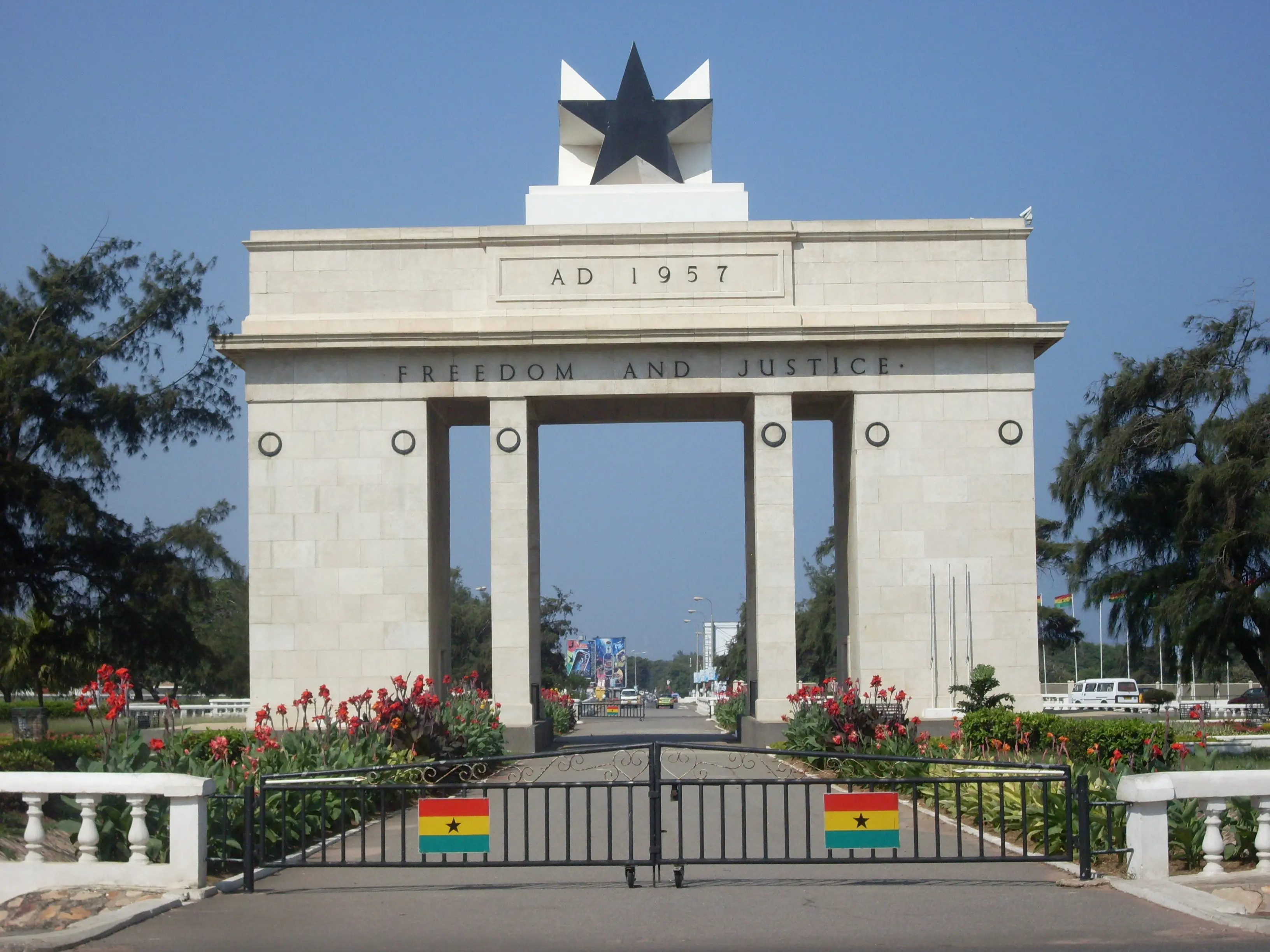
Ghana holds a special place in the pan-Afri-can imagination and on 6 March, 2027, the nation will celebrate its 70th anniversary of independence.
It was in 1957 when Ghana raised the flag over a new independent black nation and bid farewell to British colonialism.
In the following years and decades, Africa witnessed a wave of independent nations, each breaking free from colonial rule.
As we look back over the past 70 years and the changing geography of the continent and the independent nations that emerged, several questions loom large: What value is it to be independent if a nation cannot credibly defend its sovereignty?
If African nations cannot negotiate as equals with nations like the United States, Russia, China, and the European Union, because substantial military and economic asymmetries persist, can those nations ever benefit properly from the soil and minerals under their feet? Does formal political independence matter if the nations on the continent are vulnerable to exposure from external economic, political, and military influence?
The continent and its nations need the ability to defend themselves and deter external threats or they will continue to be dictated to by Super Powers and never assume true African agency and power.
Africa needs nuclear weapons. Conventional wisdom might mark this statement as radical, controversial, outlandish and even dangerous. Yet there is no clear reason why nuclear deterrence is treated as a legitimate national security instrument for the United States, Israel and Russia but viewed differently when placed in the African context.
A nation’s ability to protect its sovereignty extends beyond protecting imaginary borders. It also includes protecting its citizens from predatory treaties and agreements that enrich other nations while leaving its own citizens in various stages of poverty.
Fair negotiations can be accomplished only when both nations are acting from a position of implied power.
And for African nations, power will grow out of nuclear armament.
African agency is a by-product of African power
African-American revolutionary and political activist Dr Huey P Newton defined power as the ability to define phenomena and make it act in a desired manner. A flag, constitution, central government and internationally recognised borders, are all ways of defining a nation.
African nations have worked for nearly the past century to define themselves. Many have worked to decolonise their nation through the adoption of culturally relevant practices. Nations have renamed themselves, adopted indigenous languages as official and abandoned many colonial customs. They have done this to fulfil the first part of Newton’s definition of power; they are defining phenomena.
Yet, oftentimes, they have failed to make phenomena act in a desired manner that is meaningful and beneficial to their citizenry.
Although African nations have gained independence, they have not gained agency.
In order to have agency, a nation must possess the ability to make its aspirations and goals materialise. It must have the power to define and make whatever it defines act in a desired manner. African nations are too often beholden to their former colonial rulers or other powerful nations. Because of this asymmetrical power relationship, African nations often find themselves having their destiny dictated to them as opposed to defining it for themselves.
In his book, Neo-Colonialism, Kwame Nkrumah warned African nations of the illusion of independence and indirect control.
He argued that African nations might be granted the veneer of independence but remain economically and financially directed from an external power.
Nkrumah warned that Western powers, through multinational corporations, will use financial and military dependence to control African nations. These Western nations will control the production, pricing and export of African resources while keeping the African nation poor and dependent.
Neo-Colonialism exists only because African nations don’t possess power, militarily, to deter other nations from forcing them into unfair and exploitative agreements and arrangements.
Said differently, political independence establishes the legal right to self-determination. Military and material power determine the extent to which that right can be exercised.
We are all equal but some are more than others
International law recognises the sovereign equality of states but the distribution of military and economic capabilities remains highly unequal.
This inequality can be exemplified by the United Nations Security Council.
The UNSC can make decisions, authorise military operations, and impose sanctions.
Africa has 54 UN member states but not a single Africa nation has a permanent seat on the Council and no veto power.
Conversely, China, Russia, France, the UK and the US are the five permanent members of the UN Security Council. Each of these countries possesses veto power or the power to block a decision even when every other country on the security council supports it.
Each of these countries also possess most of the world’s nuclear weapons. Africa has little influence on international outcomes, while the five permanent members often dictate the direction of the world. They are a little more equal.
The five nations possess power in the form of nuclear capability that makes aggression or non-compliance prohibitively costly.
Nuclear deterrence is built on a single principle; the cost of attacking or resisting a nation with nuclear weapons would be intolerable. Nuclear deterrence isn’t about war; it is about the ability to make other nations comply.
The five nations, among others, exercise their nuclear weapons leverage to influence diplomatic negotiations. Critics will say nuclear weapons can’t make other countries do things. The truth is they don’t need to.
What they do is set a boundary on which a country can’t be pushed; no invasion, no regime change, no “or else” hanging over the negotiating table.
Kenneth Waltz made a similar argument in his 1981 paper, “The Spread of Nuclear Weapons: More May Be Better”. Nations with nuclear power don’t have to acquiesce to the whims of other nations. There is a balance of power. But too often, nations are on the African continent and are forced into trade deals and treaties that don’t benefit or protect their citizens.
Trick or treaty?
The Treaty of Pelindaba is the African Nuclear-Weapon-Free Zone Treaty, which bans nuclear weapons across the African continent.
The treaty, which came into force in 2009, prohibits the research, development, manufacturing, stockpiling, purchasing or possessing any nuclear weapons in Africa or nearby islands.
Similar treaties are in force in Latin America, the South Pacific, Southeast Asia and Central Asia. No such treaty covers Europe, the US or Canada. Full stop.
Africa as a nuclear weapons-free zone can be traced from 1960 when France tested atomic bombs in the Sahara. Nkrumah and other African heads of state saw this action as a violation and sought to prevent further nuclear testing on the continent.
In 1961, African states pushed through the UN General Assembly Resolution 1652 which called for countries to treat Africa as a nuclear free zone.
Yet one country stood in the way: apartheid South Africa.
South Africa developed and stockpiled nuclear weapons. It was not until the possibility of democracy/ majority rule was inevitable that apartheid South Africa dismantled its nuclear weapons.
The Treaty of Pelindaba leaves us with one glowing question: Does continental nuclear disarmament strengthen African security or does it leave unresolved the problem of unequal global deterrence capabilities?
The treaty asked Africa to give up the option that all of the current world powers have at their disposal.
The main security benefit of the treaty, the promise that nations with nuclear weapons would not employ them on an African nation, is incomplete.
The US never ratified the protocols and is under no obligation to keep the promise.
Furthermore, giving up the nuclear option leaves African states exposed and vulnerable. Muammar Gaddafi gave up Libya’s nuclear weapons program in 2003. Just eight years later, he was overthrown and killed by Nato-backed rebel forces.
Outside the continent, Iraq had no nuclear weapons, yet Saddam Hussein’s government was crushed by an outside force.
North Korea has nuclear weapons and its leader instead got three meetings with a sitting US president, Donald Trump. Regardless of what you think of Kim Jong Un, no one sends airstrikes over North Korea or arms rebels to force regime change.
Sceptics will point to poverty in Pakistan and ask what the bomb has done for them.
The answer is that nuclear weapons are not meant to build economies. They protect the space in which economies are built.
Pakistan’s struggles come from decades of military rule and a broken tax system. Nuclear weapons did not cause those failures, and they cannot fix them.
China, on the other hand, developed its first bomb in 1964, a time when millions of its people were poor. It has now risen to become the manufacturer of the world without ever negotiating under the harm of asymmetrical power or the threat of invasion.
In 1998, India was sanctioned for testing its weapons. Yet, within a decade it was courted by the US with a special nuclear deal.
Nuclear weapons are not the road from independence to agency. They simply make sure no one can set up roadblocks.
Without the power of nuclear deterrence, Africa remains vulnerable to a nuclear armed external force either through military might or the asymmetrical power relationships during negotiations that will keep the continent from ever developing and thriving.
If African nations want to move from political independence to true African agency, they must focus on power. The power to defend their sovereignty. The power to protect their citizens and resources. The power to negotiate trade deals and treaties from a place mutually assured dignity.
That power starts with nuclear weapons.
Asad el Malik, PhD, is an academic and cultural ambassador.