


Politicians like to believe that they are in control. They surround themselves with advisers, pollsters, strategists and communication experts, all paid to tell them what they want to hear. Then the electorate unexpectedly disrupts the conversation.
On November 3, Americans went to the polls and delivered a resounding rebuke to Donald Trump and the Republican Party. The Democrats took control of nearly 60% of both the House and the Senate, giving Trump's opponents the power to investigate his administration, challenge his policies and put a brake on his presidency. It was a clarion call that a president who has made his own personality the defining feature of his party and his country for a decade is not invincible.
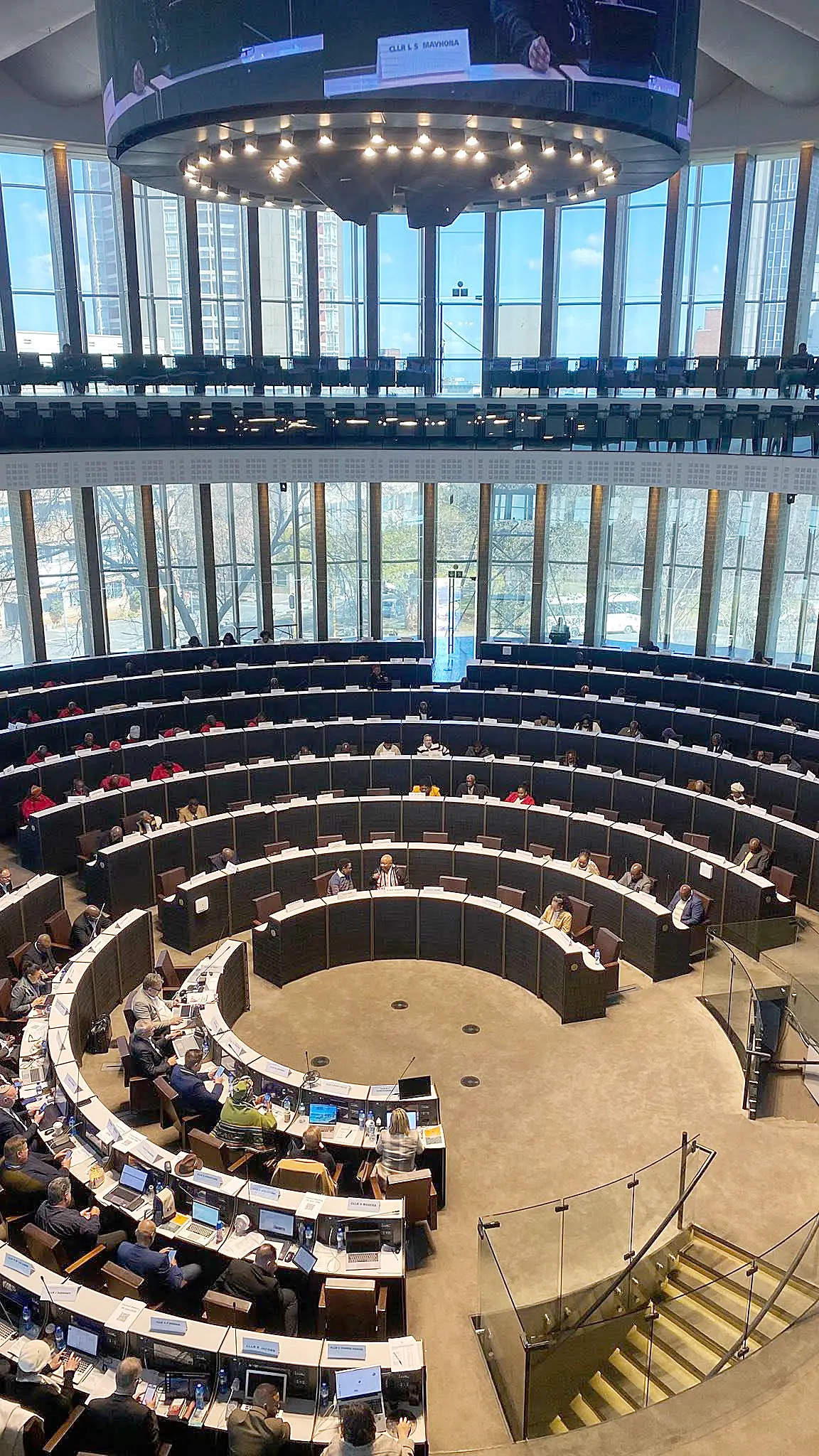
The next day, South Africans had a similar experience. The ANC received barely 30% of the national municipal vote, its worst showing ever by far. In Gauteng, once a political heartland and economic stronghold of the ANC, the DA won by more than 12 percent. Both the national and provincial results continue trends from the past four years in which the ANC’s share of government has plummeted.
The liberation movement that once commanded the loyalty of most South Africans has now been reduced to barely three out of every 10 votes cast in the country – less than half of what was typical in the first 25 years of democracy. Because this change is the first of its kind in South Africa, it’s even more radical than America’s blue tsunami, which has many past parallels.
Two countries across the world from one another with two very different political histories and civic realities. Yet, within 24 hours of each other, two populations delivered the same message: Enough!
It’s fun to watch politicians discover that the people they govern are not as much of a doormat as they imagined, inn’it governor?
In South Africa, we have become almost numb to the scale of the corruption that has taken place under ANC rule. The Zondo Commission exposed a network that turned parts of the state into a private feeding trough. Eskom, Transnet, SAA, and other state-owned enterprises became casualties of a system in which the interests of a connected few took precedence over those of more than 60 million South Africans.
It is difficult to overstate the damage. The deterioration of public infrastructure, the collapse of municipal services and the erosion of confidence in public institutions are the bills we are paying for years of political patronage – bills that have driven the voter revolt. Indeed the biggest cost of the corruption in the ANC may be the ANC’s loss of trust.
Yet four years after the Zondo Commission delivered its findings, most of what was exposed has not been punished. The wheels of justice turn slowly everywhere, but in South Africa we sometimes appear to have misplaced the vehicle entirely. America has become similar recently, as well.
Neither the ANC nor the Republicans can shrug and blame a few bad apples. Key people at the top of the pyramid facilitated state capture, and the Republican Party has empowered Trump universally. Both political cultures have rewarded loyalty over integrity and connections over competence. Radically so.
Trump, like the ANC at times, has brought a transactional approach to leadership. His family's cryptocurrency ventures, business interests and financial relationships have generated billions of dollars in private wealth during the two years of Trump 2.0. Which is why Democrats have made investigations into the president's business dealings and conflicts of interest a central part of their upcoming congressional agenda.
Trump's financial misdealing involves a different set of circumstances from those revealed by Zondo. But the underlying question is the same: when public office becomes an opportunity for private gain, what is to be done?
The recent connection between my two countries is strengthened by the fact that, just two days before South Africans went to the polls, the Trump administration gave South Africa 60 days' notice of its intention to withdraw preferential trade benefits under the African Growth and Opportunity Act (Agoa), effective January 1.
Among the reasons cited by Trump was, ironically, South Africa's failure to make sufficient progress in combating corruption.
I am not suggesting that Trump's own conduct should provide the ANC with some kind of get-out-of-jail-free card. But there is something breathtakingly hypocritical about today’s America invoking the importance of ethical government to end a relationship. It’s like your girlfriend accusing you of cheating after sleeping with your cousin.
Removal from Agoa doesn’t make a significant tangible impact on our economy. South African exports under Agoa were worth approximately $1.7-billion last year, only about 1% of our total global exports and 10% of our exports to America, down from almost 30% the year before. The removal will, however, hamper specific industries and do damage to the people they employ.
More important is the symbolic impact. Along with the refugee status given our white farmers last year, and the politics of Palestine, the Agoa move shows the US continuing to make SA a pariah state in its books, threatening to drive us deeper into cahoots with Asia. A relationship built over decades is being put at risk. But this is standard fare for America in the Trump era. Withdrawal from the Paris Accords, threats to destabilise Nato, and endless global tariffs – all show the US looking for new ways to leverage its advantage over the rest of the world (in most cases this has not been to its benefit).
While the electorates of both countries are demanding new leadership, they also need to both get clear that winning an election on a promise of change is much easier than delivering the change.
Democrats must do more than just investigate and harass Trump if they want to win next time. They must formulate a vision for the government and aim to enact policies.
Likewise, the DA must show that it is more than just an opposition party rising to power. It too must govern effectively. It’s not enough to just slag on the ANC now. We need reliable electricity, clean water, pothole-free roads, and a business-friendly environment. Can the DA deliver on positive policies?
The ANC's political achievement in 1994 was not simply winning power. It was giving tens of millions of South Africans hope where there had been none. That hope has been squandered over the past three decades. Can the DA, of all parties, win hope back?
Not by itself, surely. Coalition governments now for the first time are central to South Africa’s politics, with more than five hundred parties running for office this year and many dozens winning seats.
The multi-party system here is maybe the biggest difference between governance in my two countries. Democrats have a whopping unitary majority. In South Africa, the plurality parties will have to compromise and share power.
This could be a healthy development but it could also become another opportunity for the politics of patronage. Coalitions will only work if they are built around principles, that is, a shared commitment to good governance.
Democracy is not simply the process through which we choose our leaders. It is how we remind them that their authority is conditional. The ballot box is not just an instrument for giving politicians power. It is an instrument for taking it away as well. And it works just as well next time if this year’s winners don’t pull their weight.
Both the ANC and the Republicans have discovered that loyalty has its limits. Neither can continue to assume that the past predicts the future or that the electorate is a captive audience.
As an expert in change leadership, I want to caution that we mustn’t confuse electoral with transformational change. Replacing the people in power does not by itself shift the culture of power. It does not dismantle the systems, incentives and habits that allow corruption to flourish. Nor does it guarantee that those who replace the incumbents will be any better.
The challenge is not getting rid of those who have failed. That’s proven relatively easy. The real challenge is creating something better.
Changing the occupants of the corridors of power just requires a change in voting patterns. Changing what happens inside those corridors requires a generational cultural shift by the politicians.
Both of my countries have voted for change. The hard work starts now.
Michael Brian Lee is the Mail & Guardian’s US correspondent in New York.