


It is evening, and rainwater has begun entering a ground-floor home. Two children are inside and the family have only a few minutes to decide what to do.
This is the kind of situation people might increasingly turn to generative AI for guidance. The answer can shape whether they move upstairs, switch off electricity, leave the house or wait for an official alert. In an emergency, those decisions matter.
The stakes are rising across Africa.
The World Meteorological Organisation (WMO) says El Niño is established and expected to strengthen through the end of 2026.
In the Greater Horn of Africa, the Climate Prediction and Applications Centre forecasts wetter-than-nor-mal conditions for the October to December season. Parts of southern Ethiopia, Somalia and northeastern Kenya face a high chance of enhanced rainfall.
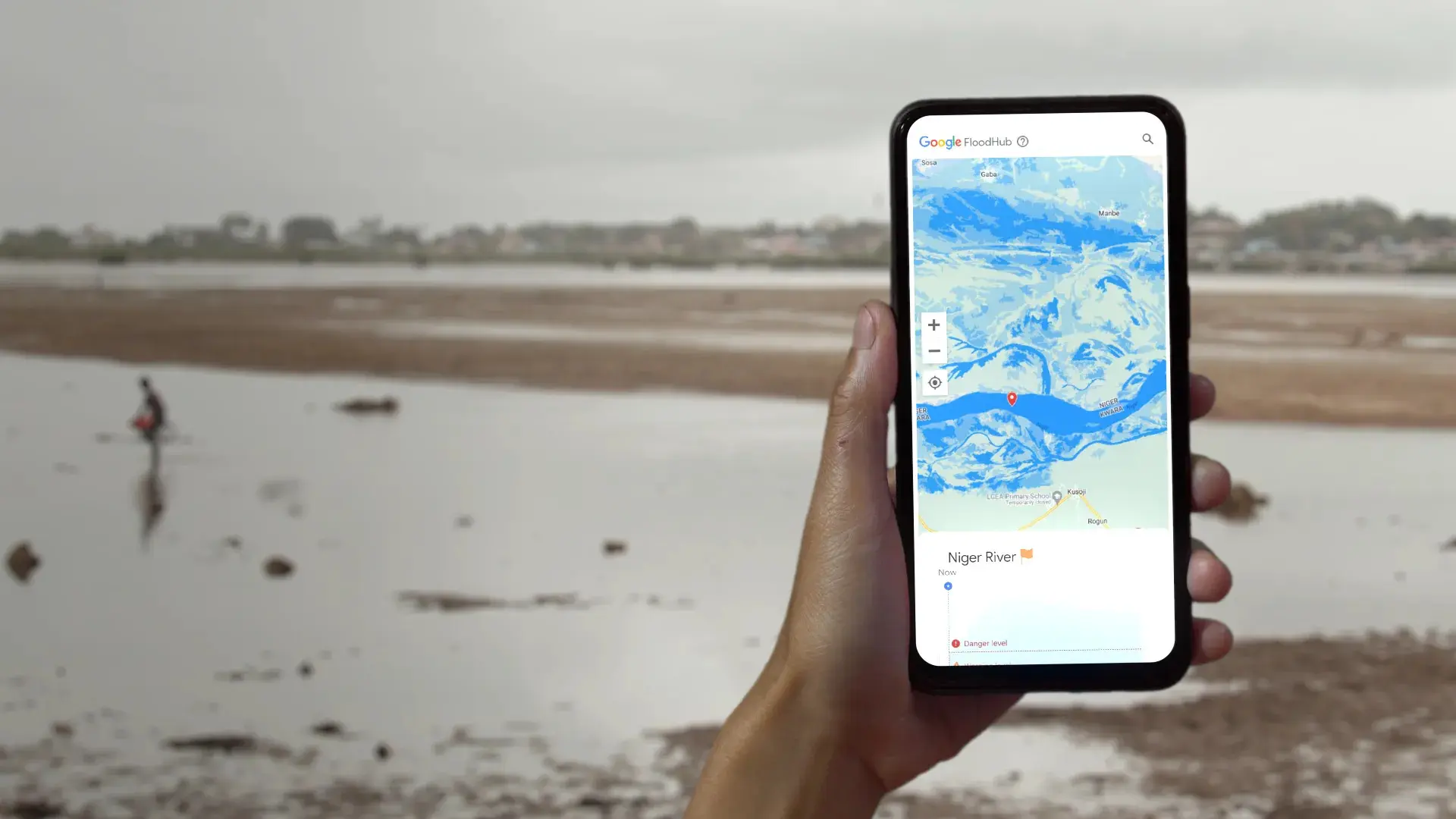
Heavy rain increases the need for information that is clear, local and timely. AI is becoming part of that response. Google is using AI to predict riverine floods days in advance. It has also expanded its work into urban flash-flood forecasting.
Forecasting can tell us that danger is approaching. People need to know what the information means for them and what they should do next.
I recently conducted an exploratory six-country study through Hezron Insights, building on my earlier research under the African Humanitarian AI Citation Index. The study tested how generative AI responds when African families ask for urgent flood-safety guidance. The study covered Kenya, Mozambique, Ghana, Malawi, Nigeria and Tanzania. The scenarios included nighttime household flooding, conflicting evacuation information, limited phone battery, mobility constraints and uncertainty over older alerts.
Across 36 responses, most systems gave useful first-response advice. They often told families to move children away from rising water, seek higher ground and avoid obvious hazards. The weakness appeared when the question became more specific: Is there a warning for my area?
Some systems struggled to establish whether the information was current. Others could not clearly confirm who had issued it, which locality it covered or when it expired.
Seasonal forecasts and older alerts sometimes appeared in ways that could be mistaken for an active local warning. Some responses also surfaced emergency contacts without enough verification.
The strongest answers handled uncertainty well. They said that when they could not confirm a current warning and directed the user to an official meteorological or disaster-management source. For a family watching water move across the floor, that matters. A parent needs to know whether the information applies to their home that night.
Different messages also carry different meanings. A seasonal outlook helps people prepare for what might happen over weeks or months. A flood watch signals increased risk. A warning suggests flooding is expected or happening. An evacuation instruction calls for immediate action. The differences need to remain clear when AI explains the situation. The communication layer deserves as much attention as the technology behind the forecast.
The WMO’s Early Warnings for All initiative treats communication and dissemination as a core part of an effective early-warning system.
At the Africa Early Warnings Forum in Addis Ababa, participants also acknowledged that warnings do not always reach the last mile. AI is becoming part of that last mile. Someone might encounter emergency information through a chatbot, search engine or social platform before reaching the website of a national meteorological agency.
That changes how emergency information travels. When a person asks whether an official warning exists, the answer should identify who issued it and when. It should also state how long it remains valid and which area it covers. If those details cannot be confirmed, the system should say so clearly.
Instructions involving electricity, floodwater, children, older people or people with limited mobility can carry serious consequences. Vague guidance may confuse people. Advice based on unverified local conditions can create new risks.
Access matters as well. Africa’s warning chain has to work beyond English, reliable broadband and smartphone ownership. It needs links with meteorological agencies, disaster-management authorities, mobile operators, radio stations, community leaders and other trusted local networks. AI can help translate technical information, simplify advisories and direct people to authoritative sources. That value depends on the information being accurate, local and easy to verify.
The WMO has also warned that access to timely and actionable information remains limited in parts of Eastern and Southern Africa, despite years of investment in forecasting and early-warning systems. Africa therefore needs systems that do more than predict danger early. They must also help people understand what that danger means for them.
The six-country study was small and exploratory. Platform testing was uneven and the research was not designed to rank ChatGPT, Gemini, DeepSeek or Perplexity.
The question that matters most is what happens when prediction reaches the person who needs to act.
Should success be measured when a flood is forecast or when the person in danger receives the warning, understands it and knows what to do next? For the family watching water cross the doorway, that difference can be everything.
Hezron Ochiel is a Kenyan strategic communication leader, researcher and founder of Hezron Insights. He is studying AI, digital authority and credible information.