

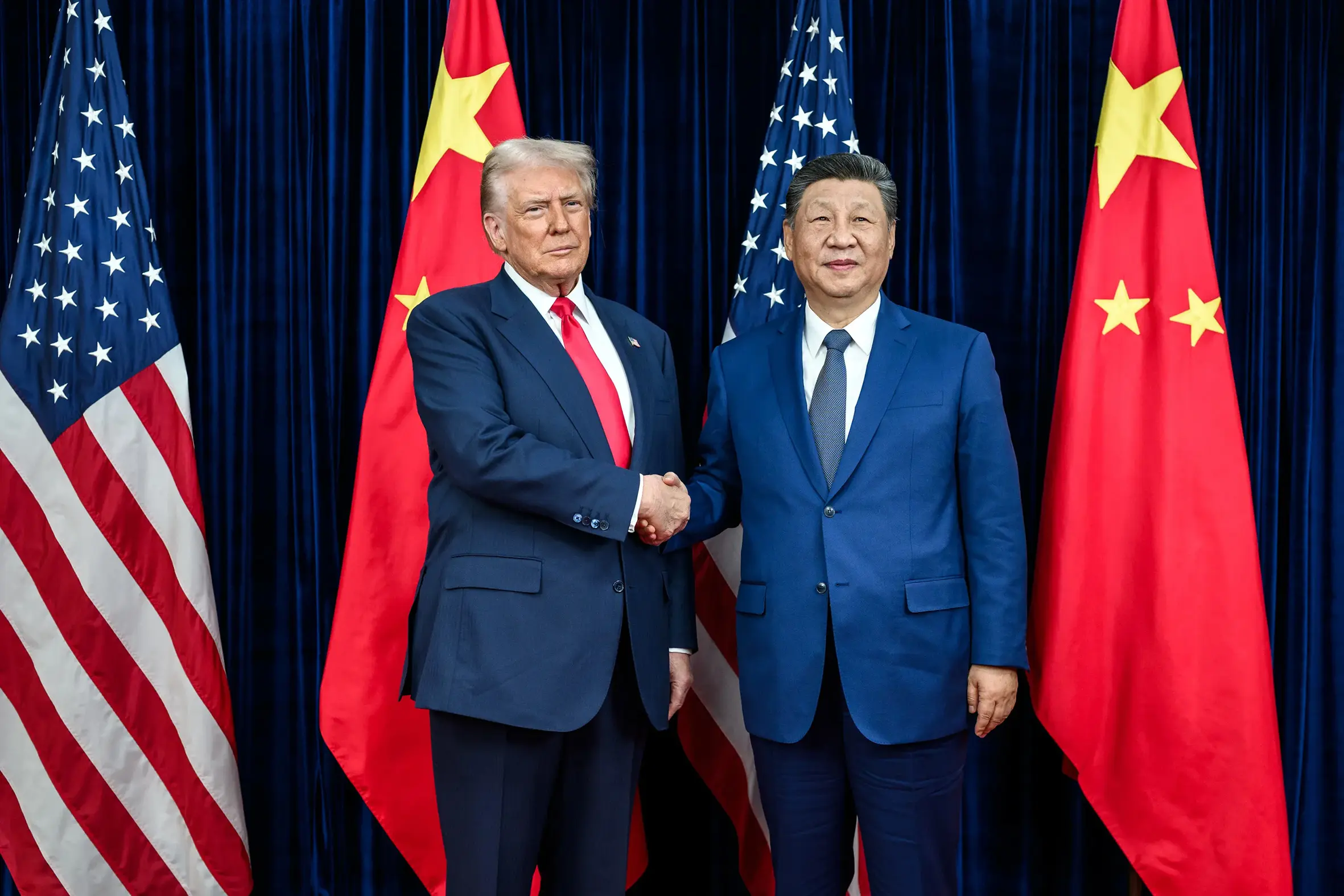
The first reviews of the Shenzhen summit were unkind. The National Herald saw little more than broad declarations and choreographed bonhomie, and several reports noted that the joint text made no reference to the wars in Ukraine and Iran. Both observations are accurate. Both also judge the meeting against a peace conference that nobody had convened. Judge it instead against where the three powers stood at the start of the year, and the 80 minutes that Xi Jinping, Donald Trump and Vladimir Putin spent together at Kylin Villa look a good deal better.
February was the low point. New START expired on February 5, and for the first time in half a century the two largest nuclear arsenals had no binding limits. Washington insisted that any replacement must include China, whose arsenal had more than doubled in five years to an estimated 600 warheads, and has been growing by about 100 a year since 2023. Three weeks later the Iran war began, and Asia, which has historically drawn around 60 percent of its oil from the Middle East, took the first blow. Singapore jet fuel climbed 70 percent above its pre-war close. The three capitals that could have steadied either crisis were not talking as a group. They had never met as a group at all.
Shenzhen changed three things, and Asian capitals have reason to value each of them.
First, it reopened the nuclear conversation, this time with China inside it. The declaration commits the three governments to a dialogue on reducing nuclear risks and preventing proliferation, and reaffirms that a nuclear war cannot be won and must never be fought. It sets no date and makes no commitment to cut arsenals, so the pricking point of warhead numbers is untouched. Yet for most of this year the arms control imbroglio was stuck on a prior question: would all three ever sit at one table? They now have, with Beijing in the chair. The format is not a whim. Trump has said for some time that one of his first meetings, once the wars settled, would be with Xi and Putin, to propose that all three "cut our military budget in half." Shenzhen came before the wars settled, and it seems none of the three wanted to wait for them. Xi went further than either guest, saying nuclear weapons "should be comprehensively banned and thoroughly destroyed." Even an assessment from the Council on Foreign Relations, not a forum given to praising Beijing, called the dialogue pledge a reasonable down payment on stability. A channel with no date is thin. In February there was no channel.
Second, the declaration wrote Asia's real energy problem into a great-power text. The crisis long ago moved from crude to refined fuels. The International Energy Agency expects global refining throughput to fall by 2.3 million barrels a day this year, and diesel prices touched all-time highs in September. Asia's crude imports had nearly recovered to 26.39 million barrels a day by October, but its imports of refined fuels were still 10 percent below pre-war volumes. Against that background, the pledge to increase production and supply of refined petroleum products and keep energy flowing to all countries is the most practical line in the document. China is the party best placed to honour it, and its additional export quotas for gasoil and jet fuel could add supply in the fourth quarter. Truck drivers in Manila and airline planners in Hanoi will never read the declaration. They will read the price on the pump.
Third, the manner of the meeting mattered as much as its wording. Xi laid out a four-point framework asking the three powers to be partners and friends, avoid confrontation, keep a baseline of peaceful coexistence and escape the Thucydides Trap. Trump replied that "no peace was ever forged by declining opportunities for engagement." Putin said the talks were very frank and helped the leaders understand one another. Diplomatic boilerplate, for sure. But the trilateral ran twice as long as Trump's Quad meeting in Manila two days earlier, and that detail will not be lost in Southeast Asia. For ASEAN governments that have spent a decade being asked to pick a camp, the sight of the camps' leaders at one round table muffles the demand. A G3 that talks leaves middle powers far more room than a G2 that does not.
None of this redeems the silences. Beyond Trump's claim that Xi agreed the Strait of Hormuz must stay open and that Iran must not have a nuclear weapon, the Iran war went undiscussed, and Ukraine was, by the Kremlin's own account, not the central topic of the three-way session. Anyone who expected Shenzhen to halt either belligerency was always going to leave disappointed. Summits of this kind are rarely where wars end. They are where the people who can end them agree to keep meeting, and Xi predicted that the seeds sown that afternoon would take root and bear fruit.
The harvest has two near dates. Trump hosts the G20 at Doral in Miami on December 14 and 15, has invited Putin, and Xi is almost certain to attend. The US-China trade truce expires on January 10. If the three governments use Miami to name their negotiators and fix a first date for the nuclear risk dialogue, and if China's refined fuel export quotas for early 2027 rise rather than shrink, Shenzhen will have earned the word "historic" that all three leaders attached to it. If Miami passes with no date, the sceptics will have been right, only a month late. Asian capitals, which paid the earliest bills for this year's misadventures, have every reason to hold the three to their page, starting at Doral.
Dr Imran Khalid is a columnist and geostrategic analyst.