

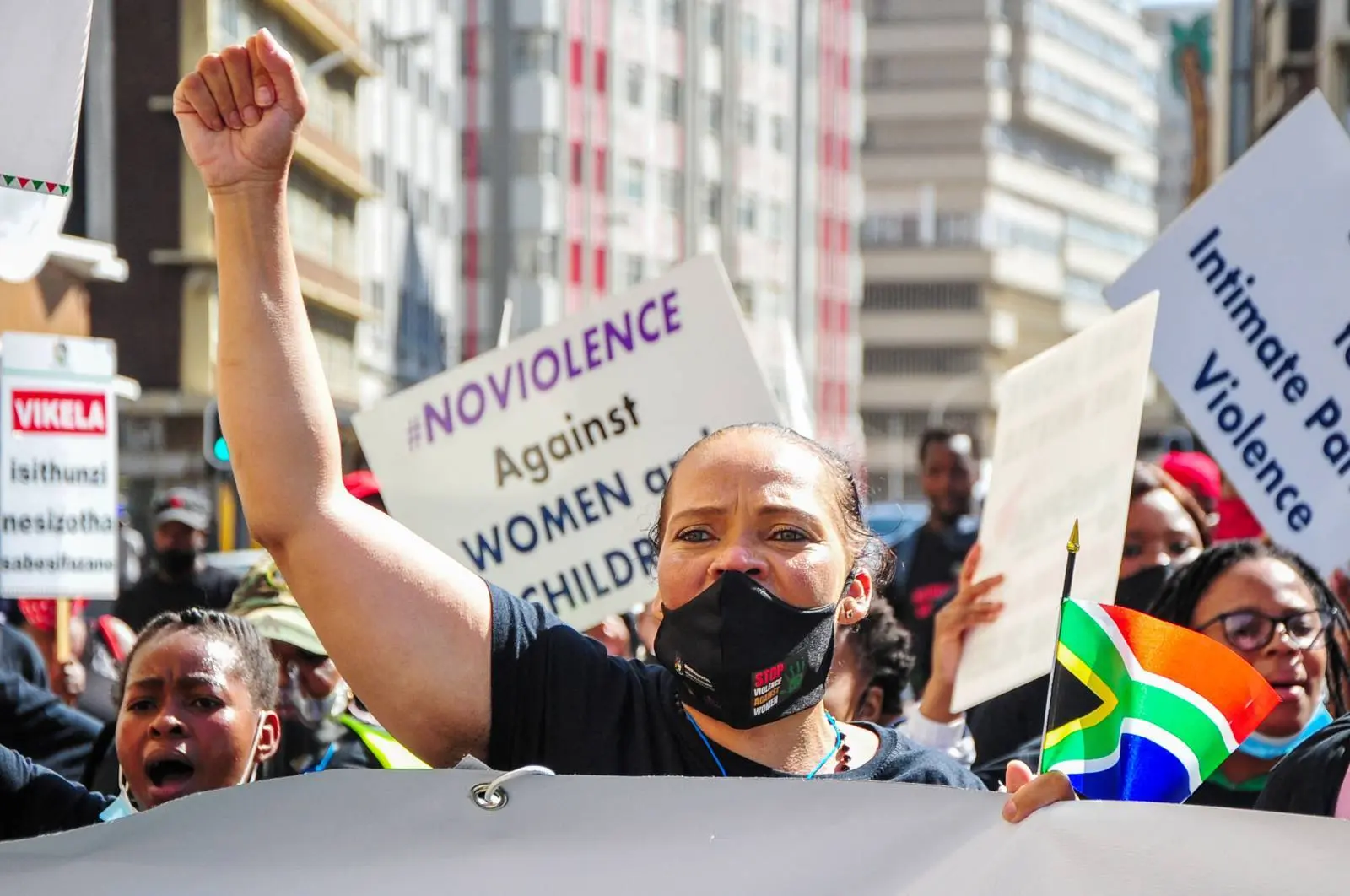
South Africa’s gender-based violence and femicide (GBVF) crisis is long-standing and worsening. Concerningly, our country has one of the highest recorded rates of intimate partner femicide in the world: almost five times the global average at 5.5 per 100 000 women.
The danger usually comes from someone the woman knows: a national study found that nearly two-thirds of women murdered in 2021 and 2022 were killed by an intimate partner. Most recent estimates suggest that three women are killed every day by an intimate partner in South Africa. Behind these grim statistics are untold stories of emotional and financial abuse and, often, underreported physical violence.
Public pressure and outcry have forced the South African government to respond. GBVF was classified as a national disaster on 21 November 2025, after Women for Change gathered more than a million petition signatures, yet the killings have continued.
Most recently, the bodies of 11 women have been found in Ekurhuleni since July 2026, calling for renewed action across sectors of government. Credit is due for how far pressure has pushed the state. For instance, on 29 September, President Cyril Ramaphosa conceded that what the government has done “has not been enough” and announced four measures: an audit of unresolved cases involving women and children, a funded plan to clear forensic backlogs, women’s safety audits in every municipality and a package to reduce alcohol-related violence.
The measures proposed by our president matter. A lost docket, an unprocessed DNA sample and a broken streetlight are real failures. But they are reactionary: responding to violence that has happened or minimising opportunities for it. However, this crisis is more than a failure of policing or public safety. The president himself said we cannot police or arrest our way out of this crisis. Rather, it reflects deeply rooted attitudes and unequal power relations that have long placed the burden of preventing male violence on women, rather than on the men who perpetrate it.
To address our country’s GBVF crisis, we need multilevel interventions that address the precipitating and perpetuating factors of violence. Prevention must begin at home, in how we raise our sons. Yet the work to address these attitudes is left to an appeal to men and a directive to the Moral Regeneration Movement, with none of the same deadlines and public reporting attached to the other measures.
A women’s prevention paradox
In efforts to prevent violence, traditional prevention efforts focused the burden on women: don’t wear that outfit; don’t walk alone; don’t go to that bar at night — as though the right precautions could guarantee safety. The approaches detract scrutiny from the perpetrator to the person whose life was threatened or taken. As the president put it: “We have placed the burden of male violence on women.” A streetlight audit does not reach the bedroom or the kitchen, and considering that most perpetrators are known to victims of GBVF, we need to strategise our prevention and intervention efforts.
What we know about the men who perpetrate
If we want to prevent violence, we need evidence about the men who perpetrate it. Our unpublished and ongoing research on intimate partner violence (IPV) among men in Khayelitsha, Cape Town, offers a glimpse.
We conducted survey research on 221 men to understand their relationships between HIV status, HIV disclosure behaviour and hegemonic masculinity — culturally dominant patterns of masculine practice that legitimises men’s dominance over women and the subordination of other masculinities.

Nearly half of our sample (43%) reported perpetrating IPV in their lifetime. Compared with the other men in the sample, IPV perpetration was more likely among men who held rigid beliefs about what it means to be a man. Linked to these hegemonic beliefs, 40% of our sample agreed that contraception is a woman’s concern and men should not have to worry about it. Moreover, IPV perpetration was higher among men who endorsed problem alcohol use. It was also true that these men were more likely to report being a recipient, or victim, of IPV from a partner at some point in their lifetime.
This is one sample and it cannot represent every man in South Africa or show that any single factor causes violence. But it points to places where prevention could work: harmful norms about masculinity, shared sexual responsibility, alcohol and men’s own experiences of violence. Take that last point carefully. Most men who have been hurt do not go on to hurt others and a painful history never excuses abuse. But it is not only a chance to interrupt the cycle. Without acknowledging it, we miss a big part of the story of why this violence happens in the first place. The same goes for alcohol. The president is right that it does not cause violence and can never excuse it, and tighter regulation is welcome. But it must not become the alibi that hides unequal power and individual choice.
What prevention should look like
The president has said that violence against women begins in attitudes and homes. His four new measures, though, deal mostly with the aftermath and with unsafe spaces. What is missing is serious, funded work on stopping men from becoming perpetrators.
Prevention should be funded, led by government and measured against deadlines, as the new measures are. It means sexual education that covers consent, boundaries and respect, not only reproduction and disease. It means programmes that challenge harmful masculinity norms and screen for risky drinking where men are: clinics, workplaces, sports clubs. It means services, with police, health workers and social workers, that hold men who have been violent to account and help them change.
It also means men doing their part. If we are serious about ending gender-based violence and femicide, prevention must begin long before a woman is assaulted or killed. It requires challenging the attitudes, power imbalances and institutional failures that allow violence to persist. Bystander intervention training can equip men to respond safely when they witness harassment, sexist jokes or controlling behaviour. Speaking up is a skill and it can be taught — workplaces, universities, and sports clubs are ideal environments to start this work.
Similarly, peer-led programmes can challenge harmful beliefs about masculinity, consent and conflict. South African initiatives worth examining include Stepping Stones, Creating Futures and Sonke Gender Justice’s One Man Can. Men listen to other men, so change has to happen in peer spaces too. However, evaluation findings must be carefully assessed: some interventions have reduced men's reported perpetration of particular forms of IPV but results vary across outcomes and settings.
Finally, early education and positive role modelling must shape how boys understand respect, anger, rejection and consent. Fathers, coaches, teachers and community leaders should demonstrate that strength means responsibility, not domination. Prevention starts with what boys see the men around them do. These measures cannot replace effective policing, justice or survivor support. But ending gender-based violence requires more than condemning it after another tragedy. It demands that men challenge harmful behaviour, institutions enforce accountability and communities raise boys who understand that respect is non-negotiable.
In a few weeks, the 16 Days of Activism will begin, just as the first 60-day deadlines fall due. We should judge the response by one test. The question is not only how to protect women from violent men but what we will do to stop men becoming violent in the first place.
Christena Pieterse is an MPhil behavioural medicine candidate in the department of psychiatry and mental health at the University of Cape Town.
Dr Jennifer Belus is a senior researcher in the department of clinical epidemiology at the University Hospital Basel in Switzerland.
Stephan Rabie is an associate professor and chief research officer in the department of psychiatry and mental health at the University of Cape Town.