

“Women belong in all places where decisions are being made. It shouldn’t be that women are the exception.”
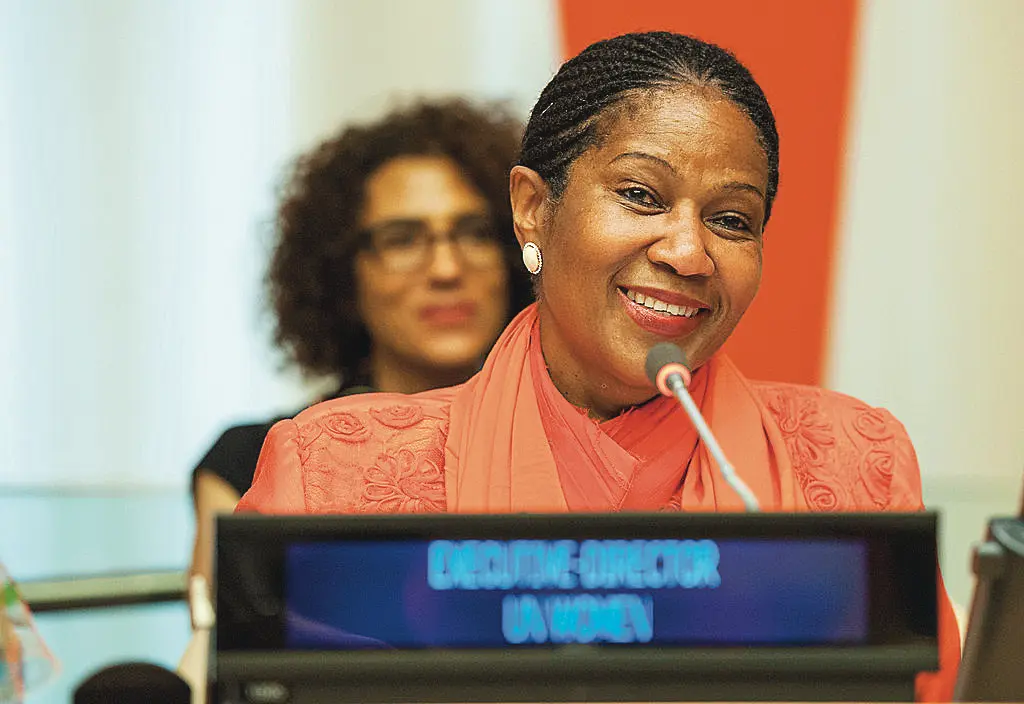
The late US Supreme Court Justice Ruth Bader Ginsburg said that in 2009. Few people lived those words as fully as Dr Phumzile Mlambo- Ngcuka, who died on 20 November at the age of 71. She became South Africa’s first woman deputy president in 2005, and from 2013 to 2021 she led UN Women, where she spent eight years pressing governments and companies around the world to bring women to the tables where decisions are made. As the country mourns her, South African institutions would do well to read Ginsburg’s words as a test they have yet to pass, and to honour Mlambo-Ngcuka’s legacy by passing it.
We have made real gains. Our Constitution and decades of activism have opened doors that were bolted shut a generation ago. Yet in the public service and in business, women remain underrepresented where it counts most: at the tables where budgets are set and priorities chosen.
We usually discuss this as a question of fairness to women. It is that. I want to make a harder-nosed argument. An organisation that draws its leaders from half the talent pool and hears from only some of the perspectives in the room will make poorer decisions. Gender diversity is a question of leadership quality, and it should be governed as one.
Why the mix of voices matters
Leadership teams built from people with different backgrounds and life experiences see a problem from more sides. They ask questions a homogeneous group would not think to ask, and they notice risks that others walk past. When a team must solve complex problems or respond quickly to change, that range is an asset. A board or executive committee in which everyone shares the same assumptions is efficient right up to the moment those assumptions turn out to be wrong.
This matters most in the public sector, where a single policy choice can shape the lives of millions of people. Decisions about transport, health, policing, housing or schooling land differently on women and men. A government that wants to serve all its citizens well needs women helping to frame those decisions from the start, instead of being consulted once the framework is settled.
How far we still have to go
Globally, the picture is sobering, and it is getting worse. As at 1 January 2026, the Inter-Parliamentary Union and UN Women counted only 28 countries with a woman as head of state or government, while 101 countries had never had one. Women held 22.4% of cabinet posts heading ministries, down from 23.3% two years earlier.
South Africa has done better than most, but the numbers show how far there is to go. Women’s share of the public service’s Senior Management Service rose from 42.4% in 2019 to 45.6% by early 2025, according to Statistics South Africa and the Minister of Public Service and Administration. That is progress worth acknowledging. It is also below the 50% target Cabinet adopted as far back as 2006, and at roughly half a percentage point a year, parity will not arrive on its own. In August 2026, the Public Service Commission told Parliament’s women’s caucus plainly that the country was still not meeting its targets.
The wider economy lags further behind. The Commission for Employment Equity’s latest annual report, covering 2025, found that women held 29.3% of top management posts across all reporting employers, although they make up 45.7% of the economically active population. In the private sector the figure was 27.6%; in government it was 35.9%. Local government fares little better, with women holding roughly a third of mayoral posts and between 30% and 39% of senior management posts in municipalities.
A seat without a voice
Numbers tell only part of the story. Having women in the room is the beginning of inclusion. Its substance lies in whether those women shape what happens there, helping to design policy and strategy and sitting in judgment when results are evaluated.
Most of us have seen the alternative. A woman is appointed to a committee whose real decisions are made elsewhere, in informal conversations she is not part of. She is asked to chair the transformation sub-committee and is absent from finance and strategy. Her contributions are noted in the minutes and quietly set aside. On paper, the organisation is diverse. In practice, nothing has changed.
Organisations that take inclusion seriously behave differently. They listen to dissenting and unfamiliar views and give them weight. They build deliberate pathways into leadership, through mentoring and sponsorship, so that capable women are ready when senior posts open. They develop the next generation of leaders on purpose, and they create cultures in which a junior colleague, of whatever gender, can challenge a senior one without fear.
Beyond the tick box
Too often, diversity becomes something organisations count rather than something they build. The employment equity report is filed, progress against targets is recorded, and the culture that kept women out in the first place carries on undisturbed. When inclusion is treated as compliance, it produces the appearance of change and little more.
Lasting progress needs policy, leadership and culture pulling in the same direction. Policy sets the expectation. Leaders must model it through whom they appoint, whose views they seek, and whom they hold accountable when targets are missed. Culture is where the outcome is finally decided, in the everyday habits of promotion decisions and informal networks.
Who benefits
When women take a full part in leadership, the gains reach well beyond the organisations concerned. Governance becomes more representative of the society it serves, and institutions earn more of the public’s trust. Public policy is shaped by a wider set of experiences and is more likely to work for the people it is aimed at. And young women, in classrooms and lecture halls across the country, see that the top jobs are within their reach. That last effect is easy to underrate. Ambition is shaped by example, and a generation that sees women leading will expect to lead.
This is why gender diversity cannot be parked as a women’s issue for women to resolve. It is a governance question for every board, and a leadership question for every person who chairs a meeting or signs off an appointment in a country that needs all of its talent.
Opening the door
The quality of a decision often depends on who was invited to help make it. Talent and the capacity to lead are distributed across our whole population. The institutions that do best will be those that go looking for them everywhere and then create the conditions in which they can be heard and acted upon.
The question in front of South African leaders is no longer whether women belong where decisions are made. The Constitution settled that. The question is how much longer our institutions are willing to leave talent untapped, and what that is costing all of us.
Dr Vathiswa Papu-Zamxaka is the deputy vice-chancellor for research, innovation and engagement at Tshwane University of Technology.