


South Africans feel the cost of a broken logistics system long before they ever see a port.
They feel it when a factory cannot get parts. When a farmer loses an export order because a ship sailed late. When a small business waits weeks for components. When medicine is stuck at sea. When food and goods cost more because moving them costs more.
That is the quiet, daily tax of inefficiency. And it is getting heavier.
Logistics now costs South Africa 14.6% of GDP, its highest share since 2003.
Let us be frank about what that means: we are paying more to move less, more slowly, and less predictably than our competitors. No serious trading nation can build prosperity on that foundation.
This is why logistics reform is not a technical project tucked away in Transnet. It is an economic survival project. It is about whether South Africa can trade, produce, export, and create jobs in a world that does not wait for us.
Reform has a clear purpose: strong public authorities for roads, rail, and ports, and capable operators competing and investing on shared infrastructure. Public control of the strategic asset. Private discipline in the operation. Accountability for performance.
But let us be equally frank: reform will not be judged by structures, agreements or announcements.
It will be judged by what a freight customer experiences on a Tuesday morning. Does the ship berth on time?
Does the container move? Does the train arrive? Does the cost fall?
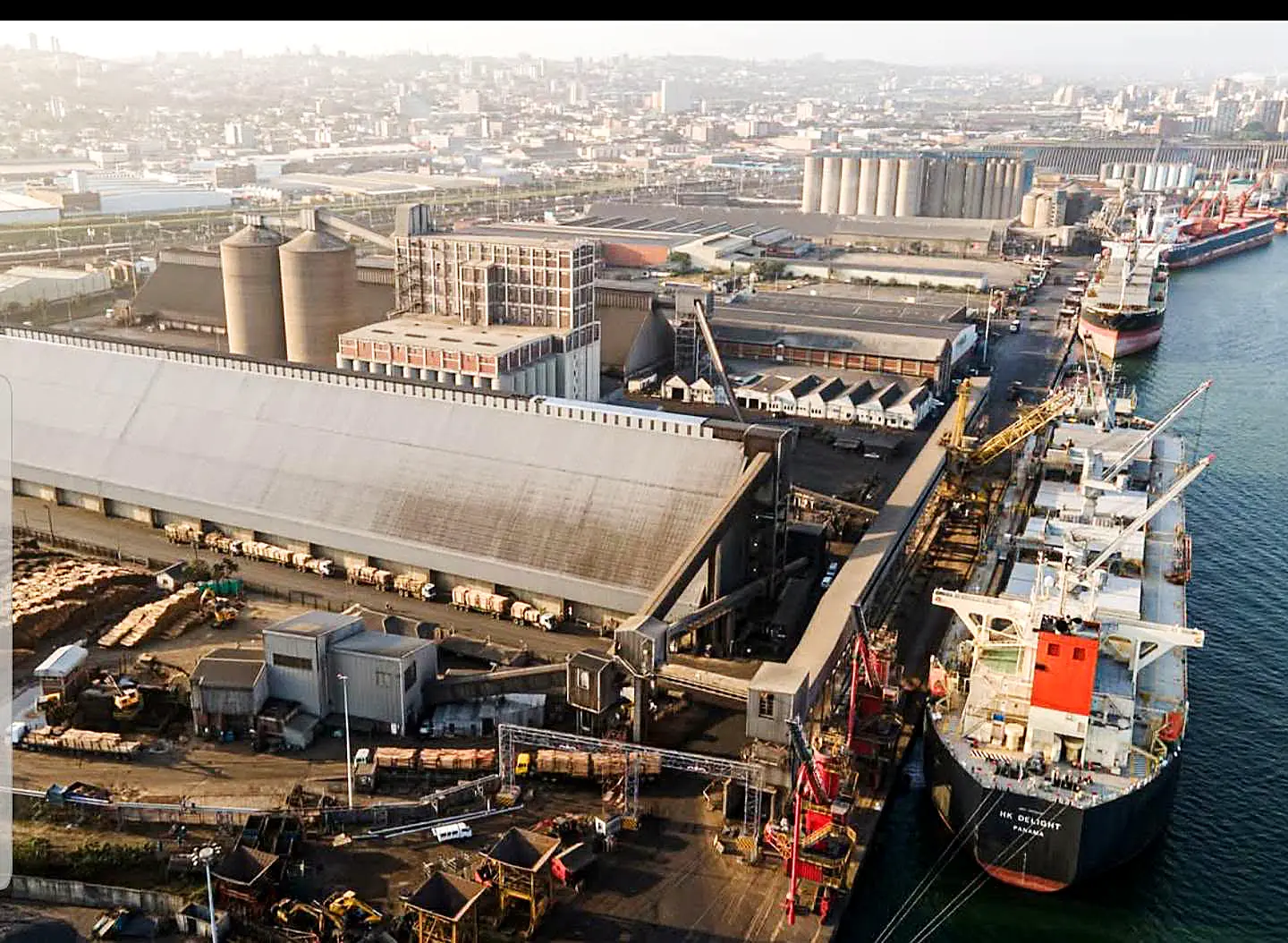
On that test, Durban is the front line.
The Port of Durban handles about 60% of South Africa’s container volumes. It is not just a South African port. It is a regional gateway for Southern Africa.
When Durban works, exporters reach markets, imports flow, factories run, and jobs are protected. When Durban fails, the whole country pays.
The Durban Gateway Partnership at Pier 2, between Transnet and International Container Terminal Services Inc. (ICTSI), was meant to prove that a new model could work: global expertise, modern technology, and serious investment in equipment, under a licence with clear performance obligations.
The early months showed what is possible. Throughput and productivity improved. Then came the hard lesson. In August 2026, a port operating system upgrade, combined with the withdrawal of ageing equipment, hit the terminal hard, just as volumes peaked in October.
Gains were reversed quickly.
Congestion grew. Ships waited. Customers lost confidence. I will not pretend otherwise.
That is the honest record, and South Africans deserve an honest record.
What matters now is not the excuse. It is the response.
The turnaround: what is happening at Durban now.
We have moved from monitoring the problem to managing it daily.
1. A war room is driving decisions in real time
The National Ports Authority has established an operational war room involving shipping lines, the port authority, and terminal operators.
This is not a committee that meets to note progress. It is an operational centre that identifies blockages, assigns responsibility, and clears them the same day.
2. Essential cargo has been prioritised and cleared
Transnet, working with Durban Gateway Terminal, has cleared and released all 23 priority pharmaceutical containers that were on vessels in South African waters. That mattered.
It was about medicine reaching people who needed it, and about proving that the system can prioritise lifesaving cargo when it must.
3. Pressure is being taken off Durban across the network
Transnet is drawing on capacity elsewhere to reduce pressure on Durban. That includes additional berthing capacity at Pier 1, Berth 102 for geared vessels, improving crane availability, diverting vessels to Ngqura where possible, and increasing the movement of containers to Gauteng by rail.
The backlog is being cleared steadily. It is not yet cleared. But the direction is improving, and ship waiting times have begun to fall.
4. Equipment is arriving, not just promised
New handling equipment has begun arriving, including reach stackers and empty handlers from ICTSI, with further deliveries of straddle carriers continuing into the first quarter of 2027.
Transnet has also fast-tracked four new mobile harbour cranes, three for the Point terminal in Durban and one for Cape Town, due to arrive in January 2027.
Equipment alone does not fix a port. But without equipment, no plan can succeed.
5. Accountability is being enforced, not deferred
The National Ports Authority is focused on the accountability provisions of the Pier 2 licence. Both TPT and ICTSI have been placed on notice to deliver immediate improvement. Performance will be monitored closely over the next three months.
Let me be clear: partnership cannot mean diluted responsibility. Transnet, as partner and shared equity holder, must be held equally to account alongside ICTSI.
If performance does not improve, serious consequences will follow. A licence is not a shield. It is an obligation.
Reform must serve the public, not just the port
Private participation can bring capital, technology, and expertise. It must never become a way to transfer public assets into private profit without public benefit.
Workers, industry, and government must share in modernising this system. The outcome must be a stronger national logistics network, safer operations, and lasting value for South Africa, not simply a change in who operates a terminal.
That means investment that stays.
Skills that grow. Performance that lasts.
The test ahead
South Africa’s economic recovery depends on moving goods efficiently. That is not rhetoric. It is arithmetic. Lower logistics costs mean more competitive exports, more investment, more factories running at full capacity, and more jobs.
The question before us is straightforward: will reform lower the cost of trade, restore confidence among exporters, attract investment, and support jobs?
If Durban becomes a reliable regional gateway again, the benefits will reach far beyond the quayside.
They will reach the farm in Limpopo, the factory in Gauteng, the small exporter in KwaZulu- Natal, and the household trying to make ends meet.
If reform fails to improve everyday performance, the whole economy will continue to pay the price.
We have chosen reform. Now reform must deliver.
That is the standard I will hold the system to and the standard by which I expect to be judged.
Barbara Creecy is the Minister of Transport