

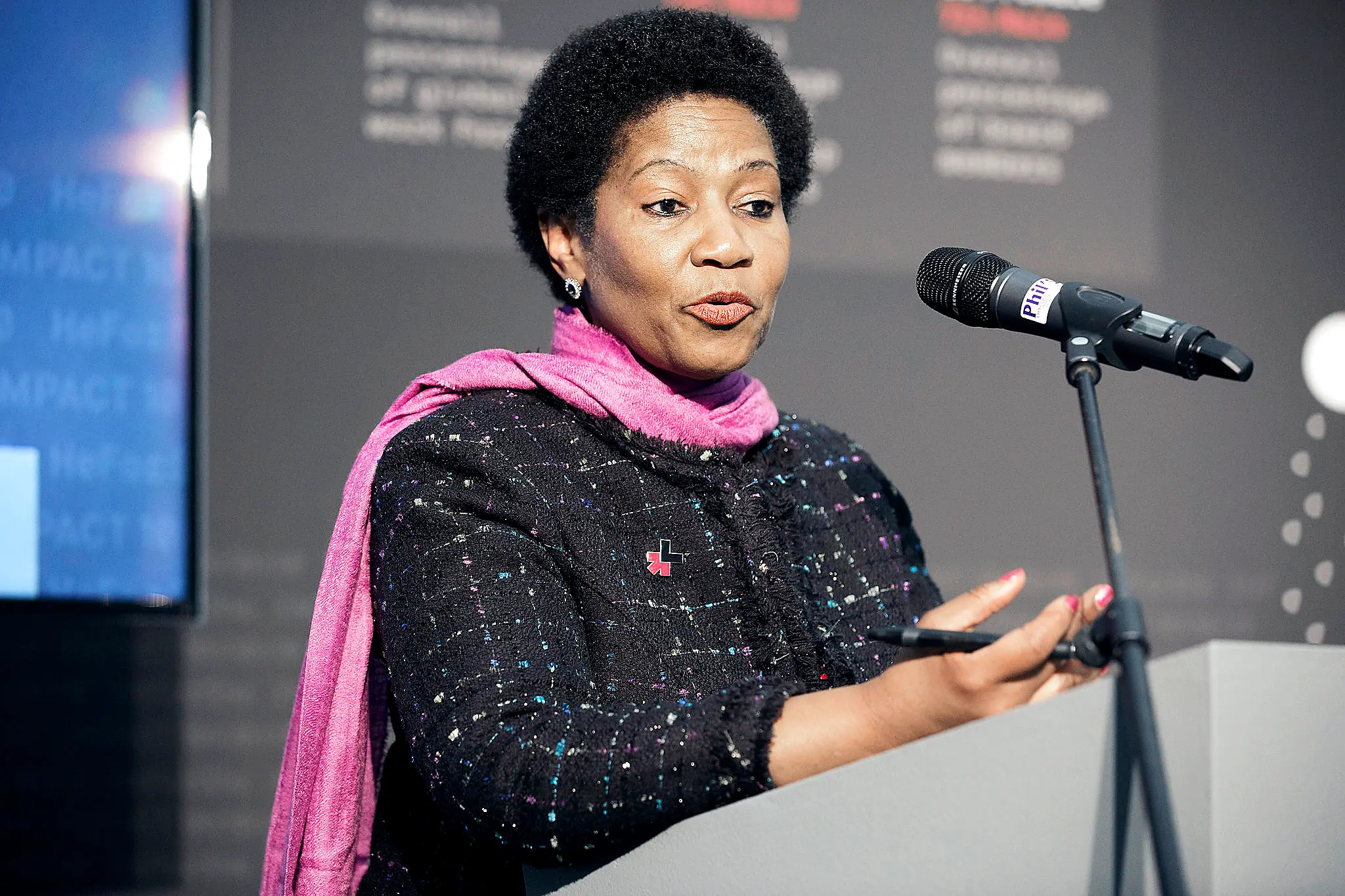
There are leaders who occupy positions of authority, and there are leaders who change the course of history. Dr Phumzile Mlambo-Ngcuka belongs firmly in the latter category.
South Africa mourns the passing of an extraordinary patriot, trailblazer and transformational leader whose impact will be felt for generations to come.
While many will rightly remember her as South Africa’s first female deputy president, a champion of women’s rights and a global advocate for gender equality, those of us in the mining industry have particular reason to reflect on her remarkable legacy.
She fundamentally changed who could participate in the sector and who could aspire to lead it.
For more than a century, mining has been the bedrock of South Africa’s economy. However, before the advent of democracy, it was also one of the country’s most exclusionary industries.
Black South Africans were largely excluded from ownership, leadership roles and meaningful participation in the sector, while control of mineral resources and economic opportunities remained concentrated in the hands of a few.
It is against this background of exclusion that the Freedom Charter of 1955, had as one of its core economic propositions that the mineral wealth beneath the soil shall be transferred to the ownership of the people, South Africans.
In the first decade of our democratic dispensation, the responsibility for turning that ambition into law fell to Dr Mlambo-Ngcuka.
As minister of minerals and energy from 1999 to 2005, she led a defining period in the transformation of South Africa’s mining industry.
She understood that the country’s political liberation would remain incomplete if the ownership, leadership and benefits of one of its most important industries continued to reflect the inequalities of the past.
Among her most significant contributions was the leadership she provided in shaping the Mineral and Petroleum Resources Development Act (MPRDA) of 2002.
The Act recognised South Africa’s mineral resources as the common heritage of all its people, placed them under the custodianship of the state and created a new framework for broader and more equitable participation in the industry.
The MPRDA also provided for the Broad-Based Socio-Economic Empowerment Charter for the South African Mining Industry, commonly known as the Mining Charter, published in 2004 as South Africa marked the first decade of its democracy. The mining charter created a framework through which black South Africans could participate more meaningfully in an industry from which they had been systematically excluded for decades.
This was not only an intervention in the historic economic architecture of the country; it was an act of economic justice.
It is worth remembering that Mlambo-Ngcuka and others involved in negotiating this landmark instrument faced considerable resistance from those who had benefited from the status quo and had little interest in broadening ownership or creating meaningful opportunities for black South Africans to participate in and benefit from the country’s mineral wealth.
The opposition was so intense that an early draft of the Charter was leaked, triggering significant market uncertainty and sending mining stocks into a tailspin.
Rather than retreat in the face of criticism, Mlambo- Ngcuka responded with conviction. She moved to officially release the Mining Charter and remained steadfast in driving its implementation, despite sustained resistance from powerful interests determined to preserve the existing order.
Mlambo-Ngcuka also understood that the transformation of mining would be incomplete if women continued to be excluded from the very places where the industry’s wealth was generated.
For generations, mining was regarded as a man’s domain. Women were legally excluded from underground work through discriminatory laws, institutional practices and deeply entrenched beliefs about their place in the industry.
The International Labour Organisation’s Underground Work (Women) Convention of 1935 stated bluntly: “No female, whatever her age, shall be employed on underground work in any mine.”
Although South Africa denounced the convention in 1996, the removal of a legal prohibition did not automatically dismantle the attitudes, barriers and workplace practices that continued to keep women out of underground mining.
Under Mlambo-Ngcuka’s leadership, the mining industry began taking meaningful steps to change that reality.
The Mining Charter had as well set a target for women to constitute at least 10% of the industry’s workforce within five years.
As a result, women increasingly entered spaces that had for generations been closed to them, challenging long-held assumptions about who belonged in mining and who could lead within it.
What had once been unthinkable gradually became possible, opening the way for thousands of women to build careers across the sector.
Today, nearly 100 000 women work in South Africa’s mining industry, accounting for more than 19% of the workforce. That represents a remarkable transformation from the early 2000s, when women made up only 3% of employees in the sector.
I count myself among those whose professional advancement was made possible, in part, by the transformation agenda she championed.
I reflect on my own journey, from joining the mining industry as a non-executive director at Harmony Gold 25 years ago, to becoming the first woman president of the Minerals Council of South Africa in its 131-year history.
Today, serving as Chair of Anglo American South Africa, I recognise that none of this happened in isolation. It was made possible, in no small measure, by the courageous reforms championed by Phumzile Mlambo-Ngcuka and by a generation of leaders who believed that South Africa’s mineral wealth should create opportunities for all its people.
Of course, progress remains unfinished, but the increased number of women participating in mining today at all levels of leadership and professional sectors stands as powerful evidence of how far the industry has come.
None of us should lose sight of the commitment of those who helped make that progress possible.
Many of us who entered mining leadership during the democratic era are beneficiaries of doors that Mlambo-Ngcuka helped open.
Unsurprisingly, her transformational leadership prowess and commitment to equality would define her career far beyond South Africa’s borders. Whether as deputy president, executive Director of UN Women, or a global advocate for equality, she consistently challenged systems that limited opportunity and human potential.
Mlambo-Ngcuka always believed that competence and talent know no race or gender; they simply need to be matched with opportunity and preparation.
What distinguished her leadership was a profound belief in the inherent potential of every person to grow in their fullest potential.
Her passing invites us to reflect not only on what she accomplished, but also on the responsibility we carry to protect and advance the gains for which she worked.
The best tribute we can offer is not simply to remember her as a pioneer, but to continue the work she helped set in motion: building a mining industry that reflects the diversity, talent and aspirations of our country; one in which women are not merely present, but have equal opportunities to lead, own, influence and prosper.
Dr Phumzile Mlambo-Ngcuka opened the mine gates to many who had long been excluded from the opportunities.
A generation of professionals, entrepreneurs and leaders, many of them women, has walked through those gates because she had the courage and conviction to push them wide open.
This was no easy feat. The development of the Mining Charter was perhaps her most difficult undertaking, facing significant resistance. Through her persuasive and inclusive leadership style, however, she brought together government, labour and industry behind a shared vision for a more representative and inclusive mining sector.
Her legacy endures in every woman who goes underground at the start of a shift, and in every young South African who believes there is a place for them in this industry.
As she would say: “There is always the right woman and the right man for any job.”
For that courage, we all owe her a lasting debt of gratitude.
Lala ngoxolo, MaMlambo. Rest in peace.
Nolitha Fakude is the chair of Anglo American South Africa and former President of the Minerals Council of South Africa.