

Every election season ends the same way. The posters come down, the coalitions are counted and the potholes remain. For investors, the question after these local government elections is not who won. It is whether the taps will run.
As a lawyer who advises investors on projects across South Africa and the continent, I see the same pattern again and again. Capital is ready to move. What stops it is often a shortage of water, electricity and regulatory certainty. If I had to reduce the post-election to-do list to three words, they would be: maintenance, money and mandate.
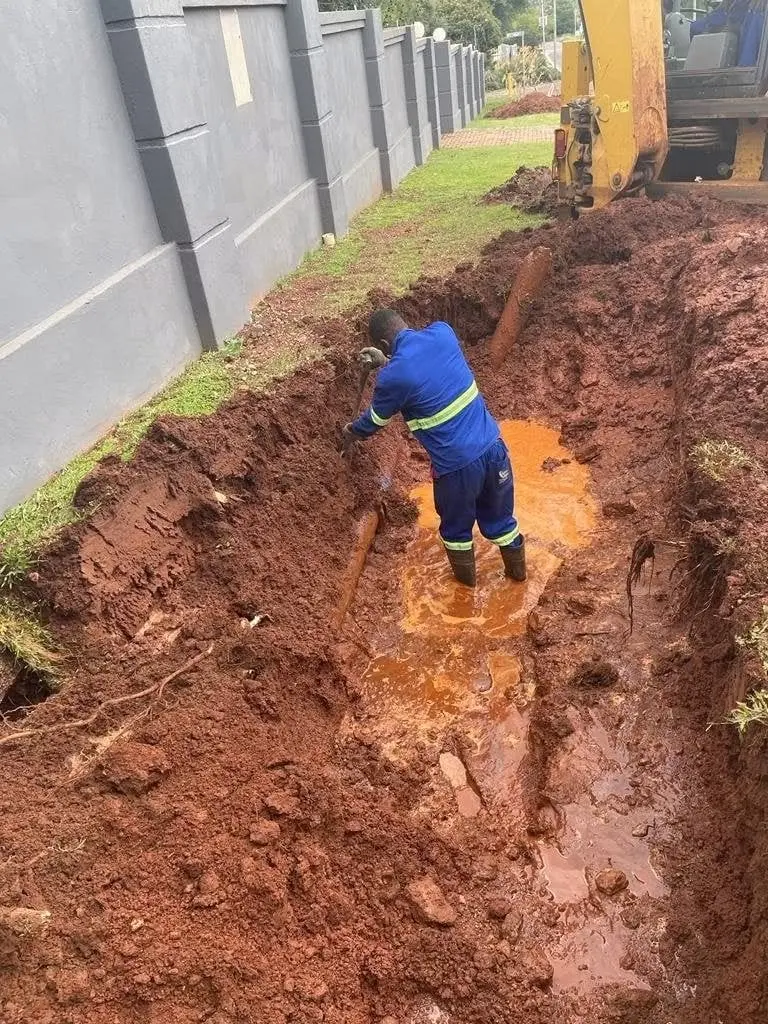
Start with maintenance because that is what investors feel first. Many municipalities lose close to half their treated water to leaks and illegal connections before it is billed. A large share of wastewater treatment works are classed as high or critical risk. Electricity distribution networks fail even when Eskom has power to supply. The first fixes are: repair the leaks, substations and treatment works and stop raiding maintenance budgets to pay for everything else.
But maintenance alone will not do it. Our metros have grown rapidly on infrastructure built decades ago. The government’s National Water and Sanitation Master Plan, published in 2018, estimated that the country needs to invest around R90 billion a year in water and sanitation, with a funding gap of roughly R33 billion a year. You cannot maintain your way into new capacity.
That brings me to money. New infrastructure needs serious, sustained investment but money is not only about bigger transfers from the Treasury. Municipalities must collect what they are owed, through working meters and accurate billing, and break the debt spiral with Eskom and the water boards.
Water and electricity should be ring-fenced as properly run utilities, so that what they earn is reinvested in them. That also makes them bankable. A well-run, ring-fenced utility can borrow, issue bonds and partner with private investors, as some metros have shown. Municipalities must spend the infrastructure grants they receive, which means filling vacant engineering and technical posts.
Finally, mandate. Coalition politics has made many of our metros unstable, with mayors changing repeatedly. Investors cannot plan around a revolving door. Yet infrastructure is one of the few issues every party agrees on, which makes it a natural basis for a multiparty compact that survives a change of mayor.
Nationally, recent procurement and partnership reforms need to be implemented quickly so that private capital can flow into municipal projects alongside public finances.
The US passed a bipartisan infrastructure law in 2021, in one of the most polarised political climates in the world. Our councils can manage a compact.
Getting this right matters even more because of what is coming in 2027. Global geopolitics should sit at the top of every investor’s risk matrix for Africa. And it cuts both ways.
On the upside, geopolitical tension has created unprecedented demand for Africa’s critical minerals. This is important for South Africa’s and many other African economies that are dependent on commodities. Defence, clean energy and high-tech industries all need our minerals and the major powers are competing to secure supply. I do not expect the tension to fade, so demand will probably be structural rather than temporary.
On the downside, the same instability drives up fuel prices. Most African countries import refined fuel, so when oil prices rise, transport, food and electricity costs follow almost immediately. Volatility also slows investment decisions. When prices swing, investors delay committing capital, which is the investment our economies need most.
For South Africa, I will be watching three things. First, trade: the loss of Agoa preferences takes effect in January 2027. The question is whether relations with the US stabilise or deteriorate further and how quickly we deepen access to other markets.
Second, politics: the new municipal coalitions will be tested on service delivery. The ANC’s elective conference at the end of 2027 will shape the governing coalition before the 2029 national elections.
Third, delivery: whether reforms in energy, logistics and infrastructure translate into results people can see.
These threads meet at the municipal level. A mine needs water. A processing plant needs reliable power. A logistics hub needs roads that hold.
The mineral opportunity will not land in a town where the substation keeps tripping. Decay this severe needs municipalities, Treasury and the private sector working together.
The year 2027 will reward investors who build geopolitical risk into their planning and who can tell short-term volatility from long-term opportunity. It will also reward the municipalities that do the unglamorous work first.
The votes have been counted. Now fix the pipes.
Methembeni Moyo is head of the Africa Practice at NSDV Law.