

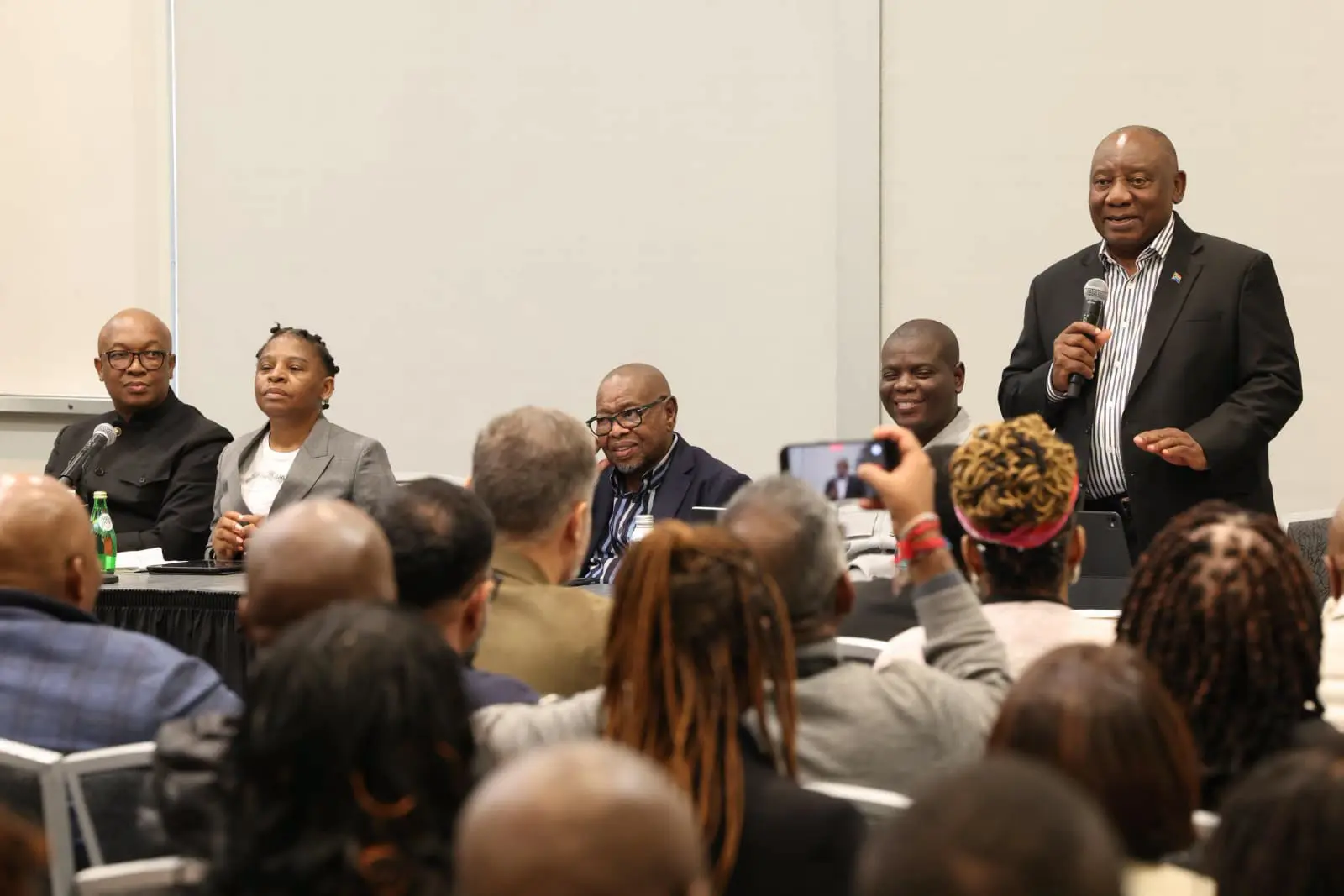
President Cyril Ramaphosa's recent visit to Silicon Valley raises an important question about South Africa's ambitions in artificial intelligence (AI); do we understand what it takes to build national AI capabilities, or are we confusing exposure to technological innovation with the actual work of developing them?
There is little dispute about the need for South Africa to accelerate its investment in AI. The technology will increasingly shape economic competitiveness, public administration, national security and industrial development. Countries that fail to develop domestic capabilities risk becoming consumers of technologies shaped by foreign commercial interests, technical architectures and geopolitical priorities.
The presidential visit was therefore not inherently misguided. International partnerships, investment and exposure to advanced research ecosystems are important. However, the approach raises questions about strategic preparation, the composition of the delegation, the value of the engagements and the outcomes secured.
The reported delegation of approximately 300 participants, including eight Cabinet ministers, public servants, business representatives, academics and students, warrants scrutiny. Whilst broad participation in national technology development is desirable, different constituencies have different learning requirements. Technical workshops and familiarisation programmes could have been undertaken by specialists and administrative officials, with findings presented to Cabinet. Some of the engagements appeared more appropriate for technical delegations than for ministers, let alone the President.
The Presidency should not become an administrative training institution. Presidential authority and time should be reserved for strategic negotiations, political direction and securing commitments that advance national interests.
Exposure is not capability.
Before undertaking an international engagement of this magnitude, the government should have established what South Africa already possesses, what it lacks and what it needs to develop. This requires a comprehensive national AI readiness assessment conducted by a multidisciplinary team comprising computer scientists, data specialists, public administration experts, economists, legal scholars, cybersecurity professionals and specialists in industrial policy and human rights. Universities, science councils, relevant government departments, business and civil society should contribute.
The assessment should examine six interconnected areas.
First, institutional readiness, also determining which public institutions have the mandates, skills and resources to develop, procure and oversee AI systems? What accountability arrangements exist and where are institutional responsibilities fragmented?

Second, data sovereignty, ascertaining the quality, ownership, accessibility and governance of public-sector data? How will the government ensure compliance with the Protection of Personal Information Act (POPIA), protect sensitive information and retain meaningful control over how data is processed and transferred?
Third, infrastructure to gauge what computing capacity, data centres, cloud services, connectivity and energy resources are required? Investment should be informed by identified needs rather than assumptions that expensive infrastructure automatically produces AI capability.
Fourth, human capital and research to determine where the shortages in AI engineering , data science and cybersecurity are? How can universities, technical institutions and research organisations develop and retain expertise?
Fifth, industrial development for discovering where AI could strengthen domestic capabilities in agriculture, mining, manufacturing, healthcare, logistics and energy? What opportunities exist for technology transfer, local enterprise development and commercialisation?
Sixth, defence and national security. The Department of Defence, SANDF and Armscor must contribute to assessing AI's implications for military capabilities, intelligence, cyber defence and emerging security threats. Defence research institutions should be integrated into the national innovation ecosystem, particularly in developing dual-use technologies such as robotics, autonomous systems, sensors and advanced communications. South Africa must also develop positions on military AI, human control over the use of force and accountability under international humanitarian law. Technological sovereignty includes the ability to evaluate, adapt and maintain critical defence technologies rather than depend entirely on foreign suppliers.
These assessments should inform a cost national AI capability strategy, supported by clear institutional responsibilities, measurable targets and implementation timelines.
The government must also establish appropriate AI governance arrangements. Public-sector AI deployments should undergo risk assessments, with stronger safeguards for systems affecting access to social protection, healthcare, education and other essential services. The government should maintain an inventory of AI systems, establish human oversight and ensure that citizens have accessible avenues for redress. Procurement contracts must address auditability, interoperability, data portability and intellectual property to avoid dependence on opaque technologies and restrictive foreign vendors.
The objective should not be technological isolation. It should be strategic interdependence: developing sufficient domestic capacity to participate in global AI ecosystems without surrendering policy autonomy.
Singapore's National AI Strategy 2.0 and its 2026 update demonstrates the importance of coordinating research, infrastructure, talent, industry and government adoption. Estonia's AI strategy similarly illustrates how public-sector applications can be connected to research, education and institutional development. These countries offer lessons in systematic preparation, not blueprints to be copied.
South Africa's own policy experience makes this preparation even more urgent. The withdrawal of its draft National AI Policy following the discovery of fictitious references exposed weaknesses in policy research and verification. A country struggling to produce a credible policy framework should prioritise institutional competence and research integrity before embarking on expensive international learning exercises.
The Presidency should disclose the actual public expenditure, sponsorship arrangements and measurable outcomes of the visit. Private-sector sponsorship does not remove the need for transparency or safeguards against commercial influence over national technology priorities.
The President's role should be to convene institutions, secure strategic research and investment partnerships, mobilise resources and hold departments accountable for implementation. Technical assessments and workshops should be undertaken by appropriately qualified teams.
South Africa does not lack AI ambition. What it needs is the institutional readiness, governance frameworks and domestic capabilities to translate that ambition into national value. We do not need to see the future through the eyes of Silicon Valley. We need the capacity to shape our own.

Fundiswa Skweyiya-Gushu is a public policy researcher and governance leader, a former Armscor board member, a Stanford University fellowship alumna and a PhD candidate researching AI governance to shape accountable technology stewardship.