


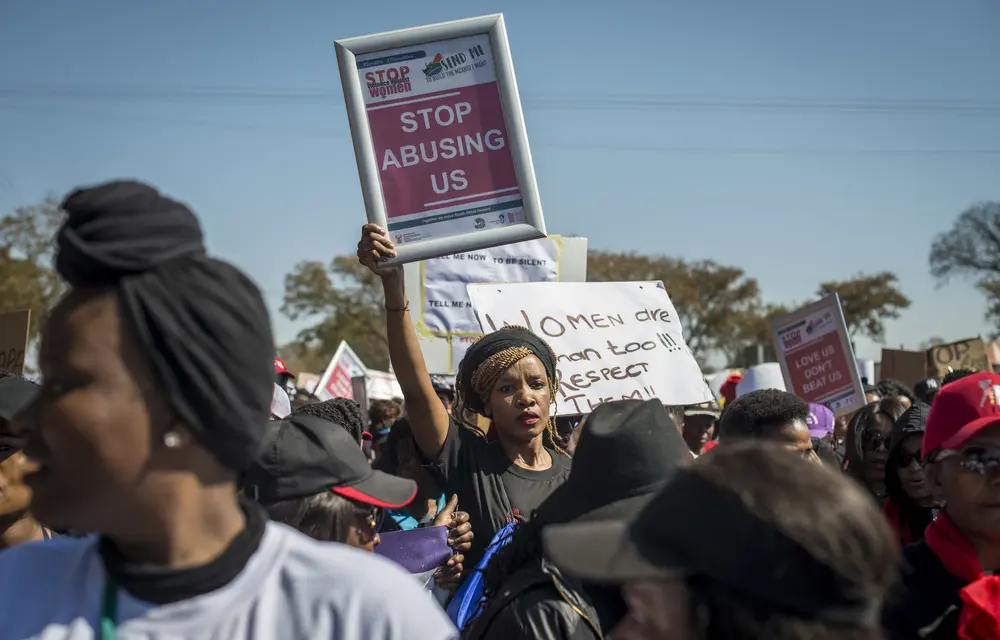
With all eyes on the coalition talks and the push to form municipal administrations across the country, it is easy to take our eyes off the ball in other matters pertinent to society, like the fight against gender-based violence.
The annual 16 Days of Activism for No Violence against Women and Children campaign, marking its 27th anniversary, kicked off on Wednesday and will run until 10 December.
There is no greater truth than the argument that this should be a 365- day campaign. Sixteen days is not enough to drive the message home regarding toxic masculinity.
This year’s theme, “Letsema: Men, Women, Boys and Girls Working Together to End Gender-Based Violence and Femicide (GBVF)”, is thoughtfully inclusive as it takes forward the G20 outcomes.
The devastation GBVF wreaks on our social fabric is far-reaching and if we are to mobilise against the scourge, it is only logical that we have all hands on deck.
No one should be left out of the dialogue. The goal is noble: to mobilise at local, national and international levels to eliminate all forms of gendered violence.
Let us begin at the local level where the recent elections offer instruction.
During a televised address on GBVF in September, around the time of the spate of women killings in Ekurhuleni, President Cyril Ramaphosa called on municipalities to eliminate dark, unsafe public space and erect street lights and safe spaces.
Municipalities have their own social upliftment programmes, which are carried out collaboratively with the SAPS. The good news, especially in the aftermath of the local government elections, is that data affirms that women make up 33.6% of elected councillors. These are people who, in a phrase, “wear the shoe, feel the pinch”. They know the damaging effects of GBVF all too well.
IEC chair Mosotho Moepya said earlier that the Economic Freedom Fighters recorded the highest proportion of female candidates, at 46.2% in the local government elections.
GBVF is not a one-party fight. Women across the political party spectrum will stand ready to take up the cudgels on behalf of the victims of this societal malady. They are best suited to lead us in this fight.
The Commission for Gender Equality says it facilitates gender mainstreaming and gender and development initiatives with the department of cooperative governance and traditional affairs, South African Local Government Association and municipalities.
The Commission for Gender Equality would welcome the opportunity to work with the new cohort of councillors on gender norms as prevention education “so that they may be able to influence policies and be capacitated with prevention strategies as leaders of society”.