


As artificial intelligence, digital platforms and rapidly evolving technologies reshape the way societies receive and share information, strategic communication is becoming an increasingly important pillar of diplomacy, governance and national resilience.
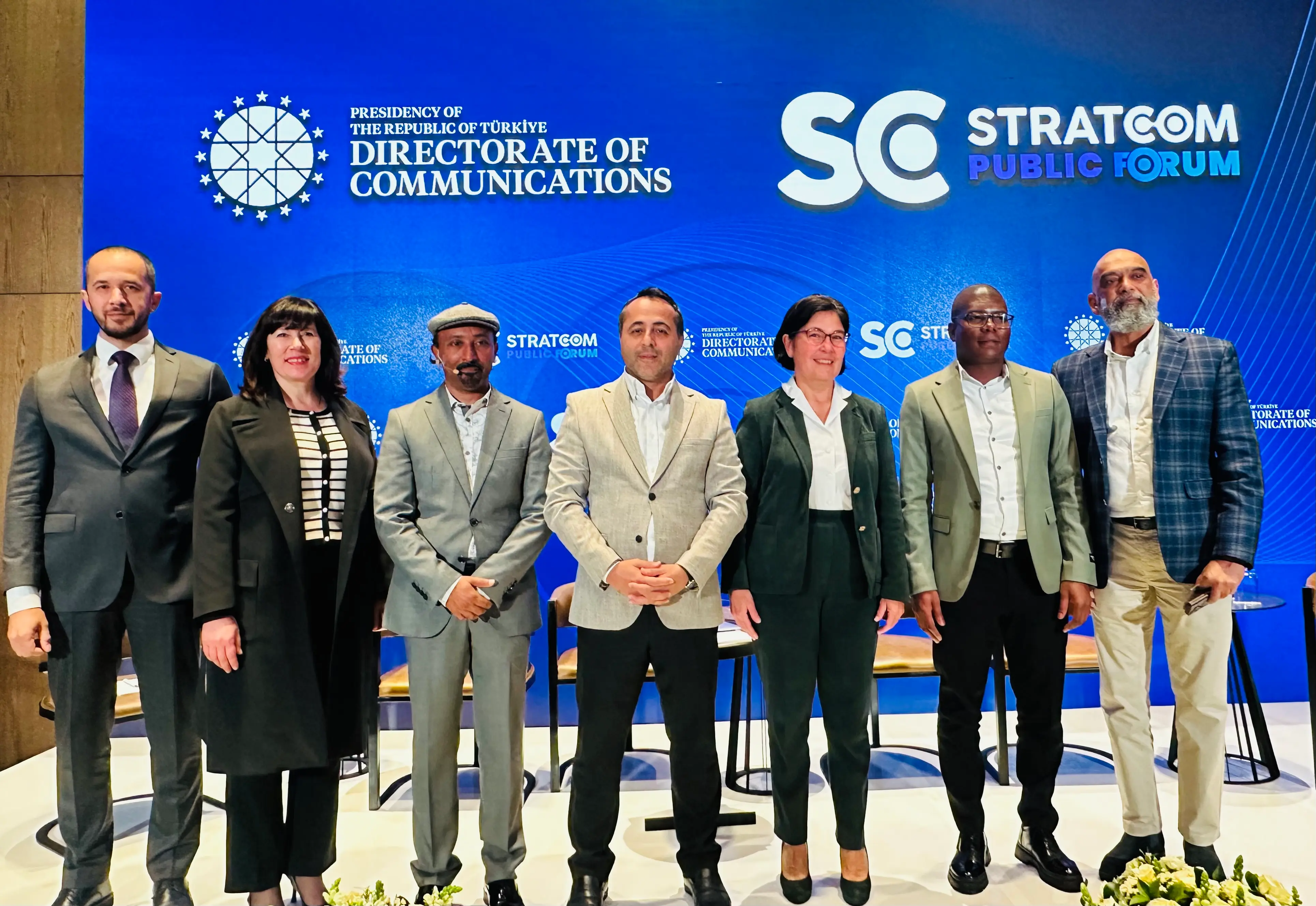
This was the focus of a high-level panel discussion held at the Marriott Hotel in Melrose Arch, Johannesburg, as part of the Stratcom Public Forum series organised by the Presidency’s Directorate of Communications of Türkiye. Under the theme “Türkiye–South Africa Strategic Communication Partnership: Building Capacity in Artificial Intelligence, Crisis Communication and Countering Disinformation,” the gathering brought together diplomats, communication specialists, academics and other stakeholders to explore shared challenges and opportunities.
The programme opened with a video presentation highlighting disinformation as a global threat that transcends borders and requires international cooperation. It emphasised that protecting the integrity of information and strengthening public trust are shared responsibilities in an increasingly digital world.
In a message to participants, Türkiye’s head of communications for the presidency, Burhanettin Duran, stressed that the nature of national and international power is changing. Economic and military strength are no longer the only measures of influence. The ability to shape narratives, communicate rapidly and credibly, engage global audiences and preserve trust has become equally significant.
He warned that digital transformation presents both unprecedented opportunities and new vulnerabilities. Algorithms increasingly influence what societies see, consume and share, while manipulated content can shape perceptions before governments and institutions have had an opportunity to respond.
Duran noted that the world is experiencing both a “crisis of truth” and a “crisis of communication”, requiring countries to move beyond traditional approaches and develop stronger international cooperation. He said the Stratcom initiative, launched by Türkiye in 2021, has evolved into an international platform bringing together policymakers, communication professionals, academics and experts from more than 50 countries.
A key message of the Johannesburg gathering was that South Africa’s experience and perspective are essential to this international conversation. Speakers emphasised the potential for the two countries to exchange expertise and develop practical mechanisms for cooperation.
Ambassador K Nilvana Darama Yıldırımgeç highlighted the opportunities and risks presented by AI-generated content, deepfakes and synthetic media. She stressed the importance of preparedness, verification, digital literacy and stronger coordination between governments, media, academia, technology companies and civil society.
The discussion, moderated by Dr Tunç Demirtaş, explored practical proposals including joint training and crisis simulations, information-sharing mechanisms, early-warning systems and a repository of disinformation cases. Participants also discussed the importance of establishing clear communication protocols during crises, ensuring that information is accurate, accessible, consistent and delivered quickly.
Turkish MP Professor Abdurrahman Babacan emphasised that speed and accuracy should not be viewed as competing priorities. He proposed stronger institutional coordination, regular updates to the public and clear identification of official sources during emergencies.
The academic perspective was equally important. A speaker from Wits University cautioned against allowing AI to replace human critical thinking. He argued that education must teach people not merely to use technology, but to learn through and with it, ensuring that digital tools enhance rather than diminish human reasoning, creativity and judgement.
The Johannesburg forum ultimately demonstrated that the future of strategic communication cannot be addressed by technology alone. It requires trust, human intelligence, institutional cooperation and international partnerships.
As Türkiye and South Africa explore deeper cooperation in AI, crisis communication and countering disinformation, the partnership has the potential to become a model for mutual learning and stronger information resilience — helping ensure that technology serves society while truth remains at the heart of communication.