


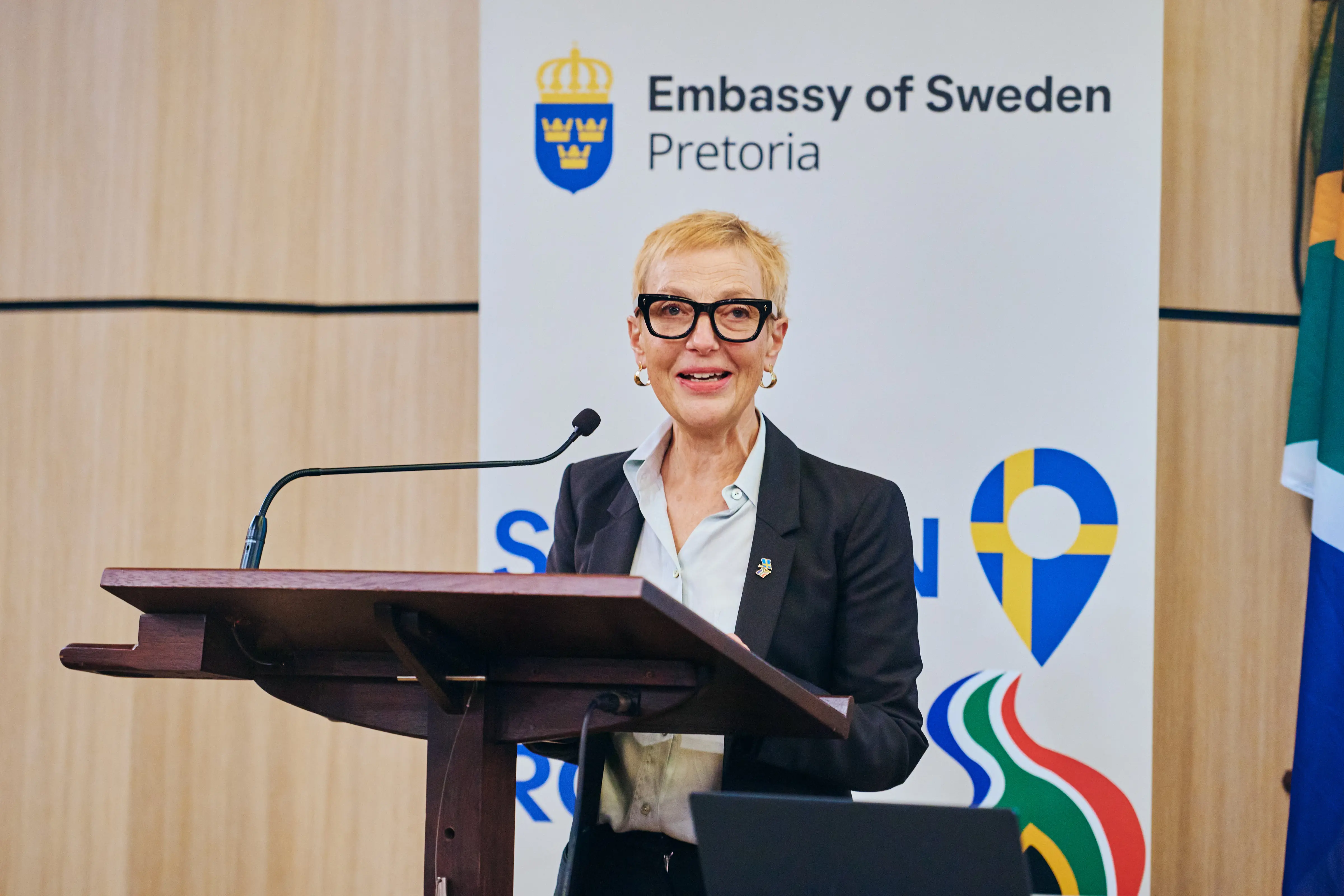
The Embassy of Sweden, in partnership with the University of KwaZulu-Natal, hosted the Sweden on the Road: Gender-Responsive Climate Action Edition at UKZN's Westville Campus.
The youth-centred dialogue brought together parliamentary leaders, diplomats, academics, researchers, students and development practitioners to examine the intersection of climate change, gender equality and sexual and reproductive health and rights (SRHR).
The programme featured a keynote address by National Assembly Speaker Thoko Didiza, as well as contributions from Sweden's ambassador to South Africa Anna Karin Eneström, SADC Parliamentary Forum secretary-general Boemo Sekgoma and UKZN deputy vice-chancellor for research and innovation Professor Anil Chaturgoon.
"Through Sweden on the Road, we are taking the embassy and Sweden beyond Pretoria to engage directly with young South Africans across the country," Eneström said. "This initiative is about investing in the next generation and strengthening the bonds between South Africa and Sweden for years to come."
The dialogue took place against the backdrop of climate-related shocks across Southern Africa. Floods, droughts, heatwaves and other extreme weather can damage healthcare facilities, roads and supply chains, disrupting access to contraception, maternal healthcare, adolescent health services and support for survivors of gender-based violence.
Women, girls, adolescents and marginalised communities often face the greatest consequences, particularly when displacement and pressure on public services increase social and economic vulnerabilities.
For Sweden, climate resilience and SRHR are therefore inseparable. Building resilient communities requires health systems that can continue providing essential information, care and support during emergencies. "Ultimately, climate action and SRHR are about people, dignity and resilience," Eneström said.
"Every person should have the knowledge, services and freedom to make decisions about their own body and future, including during times of crisis."
A panel discussion, titled Beyond the Floods: Protecting Rights, Health and Dignity in a Changing Climate, brought together experts from the health economics and HIV and Aids research division at UKZN and the World Resources Institute. The discussion considered how climate change affects communities in practice and how policy, research and development programmes can respond more effectively.
Students were placed at the centre of the engagement. Through an interactive policy-brief drafting session, participants contributed recommendations intended to inform South Africa's positioning before the COP31 climate negotiations.
The event reflected the embassy's commitment to ensuring that young people help shape policies that affect their lives. Their lived experiences, research and ideas are essential to developing climate responses that protect health, advance gender equality and uphold human rights.
The programme also included Electionville, an educational floor game in which participants assumed the roles of local councillors and navigated the complex choices involved in democratic decision-making. The activity encouraged students to consider how competing priorities are negotiated and how inclusive governance can produce more responsive public policy.
Sweden and South Africa share a relationship founded on solidarity, democracy, human rights and social justice. It continues through political and multilateral cooperation, trade and investment, academic exchange, innovation and development cooperation. Initiatives, such as Sweden on the Road, seek to bring the partnership to life for a new generation while creating platforms for young South Africans to connect with opportunities in research, education, entrepreneurship and international cooperation.