


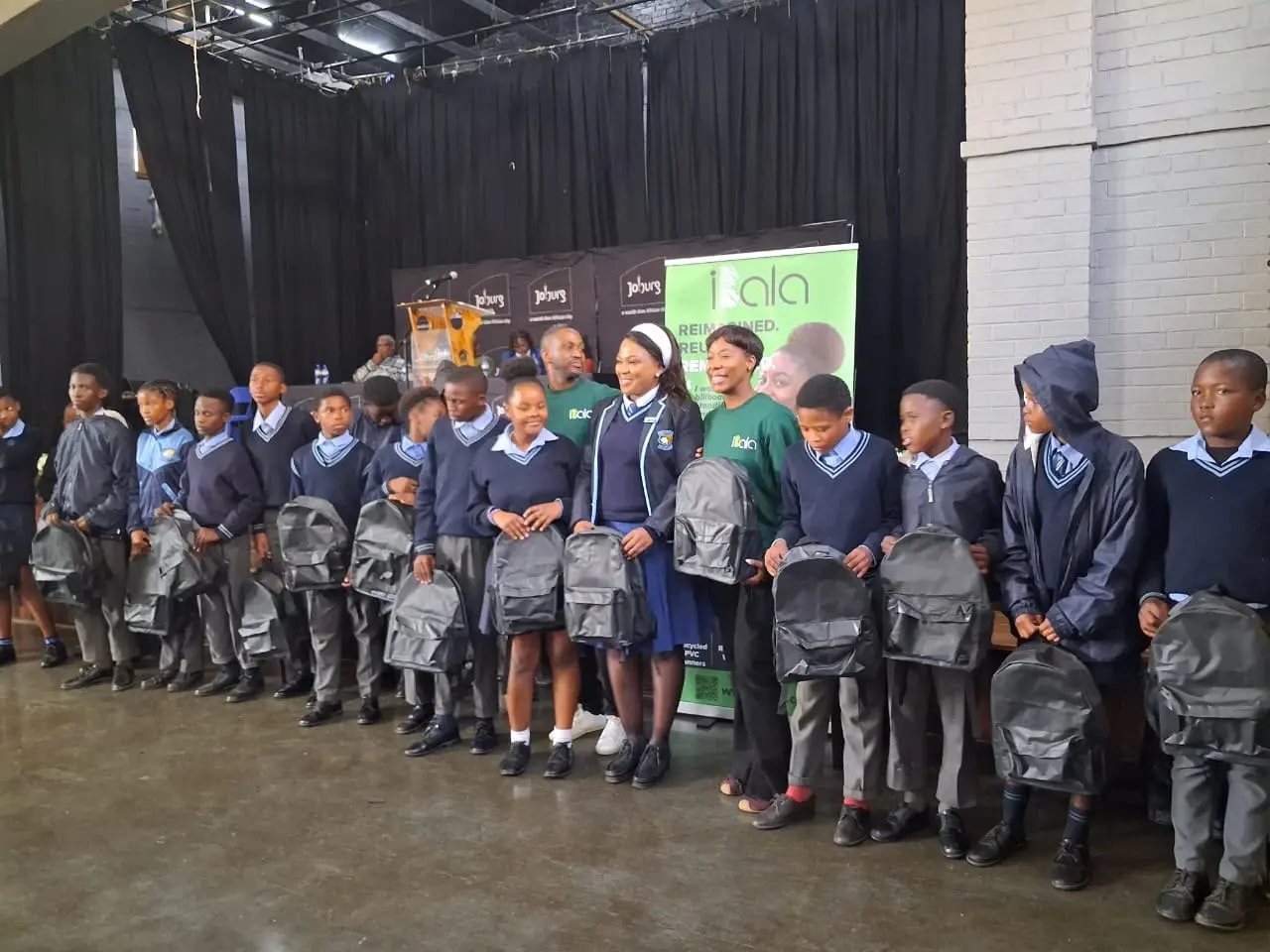
As South Africa prepares to mark 50 years since the 1976 Soweto Uprising, a schoolbag handover at Uncle Tom's Community Centre in Soweto linked questions of education, unemployment and environmental sustainability.
On Friday, 12 June, Page 82 Media's corporate social investment arm, Ibala, donated 100 schoolbags made from recycled PVC advertising banners to learners from KwaNtsikana Junior Secondary School. The handover took place during a Youth Month event hosted by the City of Johannesburg's Library and Information Services, which brought together community members, faith leaders, local government representatives, learners and people who witnessed the events of June 1976.
The initiative forms part of Ibala's effort to reduce waste generated by advertising campaigns while creating employment opportunities through the local production of upcycled goods. Used PVC banners collected from businesses, municipalities and event organisers are repurposed by South African workers into durable school and conference bags rather than sent to landfill sites.
“We wanted to create a bag that does more than carry books; it tells a story,” said Zama-Africa of Page 82 Media. “Every day, these learners walk to school carrying a reminder that something people see as waste can be turned into something valuable. It shows them that their community cares about their future and the journey they are on.”
The choice of venue added another layer of significance to the handover. Located near sites associated with the 1976 uprising, Uncle Tom's Community Centre hosted an event that reflected on the role of young people in shaping South Africa's future. While the issues facing learners today differ from those faced by learners 50 years ago, speakers at the event pointed to ongoing challenges, including poverty, unemployment, rising living costs, and unequal access to opportunities.

For Ibala, the project is intended to address more than one problem. Besides keeping durable PVC material out of landfills, the initiative supports local manufacturing and provides practical assistance to learners. The bags are produced by South African women and men, creating income-generating opportunities in communities where unemployment remains high.
The bags handed to learners were all black in colour, a deliberate design choice by the organisation. Unlike the colourful advertising banners from which they were made, the uniform bags were intended to promote a sense of dignity and equality among learners. Their waterproof, weather-resistant material also helps protect books and school supplies during daily trips to and from school, particularly during heavy rain.
Parents, teachers and community members welcomed the donation, with several noting the financial pressure many households face. For some families, replacing schoolbags and other essentials can be an additional burden in an already strained household budget. The donation was therefore received not only as a symbolic gesture, but also as practical support.
A youth leader attending the event said the initiative demonstrated how the spirit of June 16 can be applied to contemporary challenges. By connecting environmental responsibility with educational support, the project encouraged young people to think creatively about solving problems in their own communities.
The handover also highlighted a growing interest in projects that combine environmental goals with social development. As South Africa continues to grapple with unemployment, waste management and educational inequality, initiatives such as this one suggest that solutions can emerge from partnerships between the private sector, communities and public institutions.
As discussions about youth empowerment continue during Youth Month, the project offers one example of how discarded materials can be repurposed to meet community needs while creating economic opportunities. In doing so, it demonstrates how small interventions can contribute to broader conversations about sustainability, dignity and investment in the country's young people.