


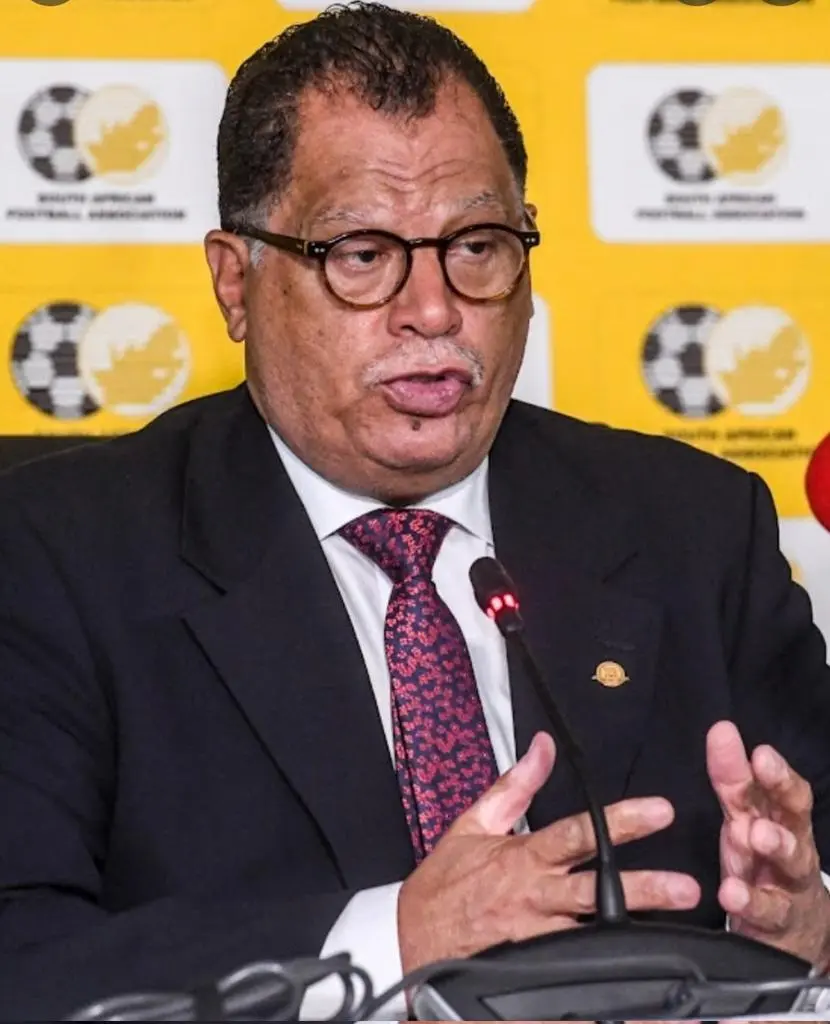
Dr Danny Jordaan has been re-elected as president of the South African Football Association (SAFA), securing a decisive victory over challenger Sandile Zungu in an elective congress marked by controversy and high tension.
Jordaan received 157 votes while Zungu, the AmaZulu FC owner and businessman, obtained only 82. The result, announced on Saturday, 12 September 2026, confirms Jordaan’s fourth term at the helm of South African football’s governing body. The association stated simply that “Dr Jordaan is re-elected as the SAFA President.”
The election at the congress in Midrand brought to a close weeks of intense campaigning. Jordaan, who has led SAFA since 2013, faced what many observers described as his most significant challenge in over a decade. Zungu campaigned on a platform of improved governance, greater accountability, stronger grassroots and school football, and renewed focus on women’s football. Jordaan’s supporters, organised through the Football Transformation Forum, emphasised continuity, experience and the recent performances of the national teams.
The process leading up to the vote was far from smooth and can fairly be described as chaotic. In the days before the congress, SAFA reported that several delegates had received death threats and faced harassment and intimidation, prompting heightened security at the venue. Allegations of vote-buying and financial inducements circulated, with claims that cash had been offered to influence regional delegates. There were also disputes over the legitimacy of some regional structures some of which were ultimately barred voting due to obscure disqualification reasons.
Further controversy arose from an error in an information pack circulated by SAFA’s leadership that contained incorrect extracts from the association’s statutes. This prompted accusations of constitutional manipulation, an apology from the chief executive Lydia Monyepao and a police complaint from at least one official. Legal challenges seeking to interdict or postpone the congress were also launched in the period leading up to the vote, though the elective congress proceeded as scheduled. Lobby groups such as Save Our SAFA had called for change, while some associate members expressed dissatisfaction at exclusion from proceedings.
Despite the turbulence, delegates delivered a landslide majority for the incumbent. Jordaan, who turns 75 this month, has now extended his leadership of SAFA into a period that will run until 2030. His previous terms have included both successes, such as the organisation of major events and national-team qualifications, however there has also been persistent criticism over governance and administration. He continues to face ongoing legal proceedings related to fraud allegations stemming from 2024.
Zungu’s challenge highlighted growing calls within parts of the football community for renewal after more than 13 years of Jordaan’s presidency. The businessman had secured some regional and provincial support, including backing from figures who had previously considered contesting the top post themselves. Ultimately, however, the weighting of votes toward SAFA’s 52 regional associations proved decisive in favour of the incumbent.
The result gives Jordaan another mandate at a time when SAFA faces scrutiny over its finances, internal processes and the broader development of the game in South Africa. Stakeholders including FIFA, CAF and government representatives were among those invited to observe the congress. Attention will now turn to the composition of the new National Executive Committee and the practical priorities Jordaan’s leadership will pursue in the years ahead.