


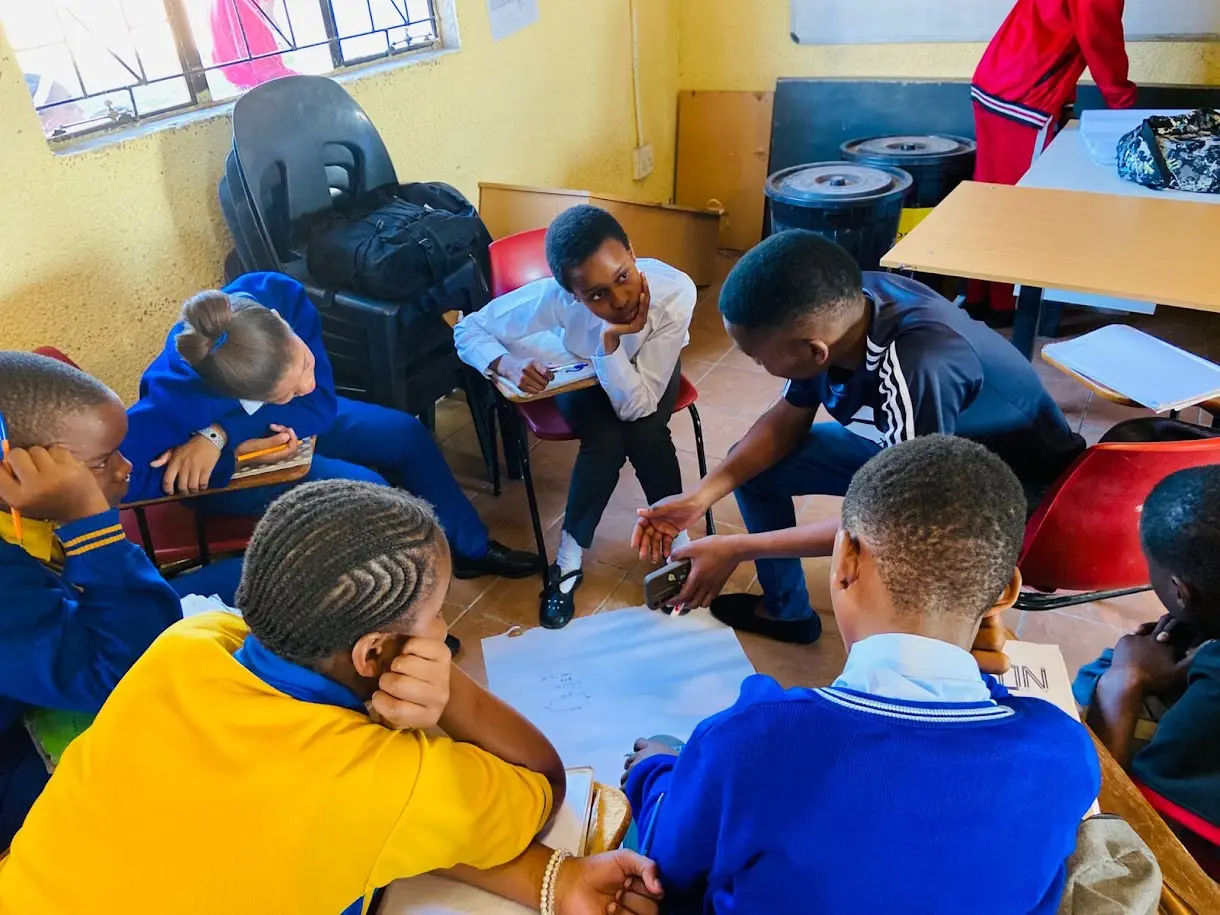
For many parents, the end of the school day brings another set of questions. Has my child eaten? Have they finished their homework? Are they somewhere safe? Is there someone who can help them if they are struggling with their schoolwork?
These questions may seem ordinary but for millions of South African families, they point to a much bigger problem. A child's opportunity to learn does not depend only on what happens inside a classroom. It is also shaped by what happens when they leave it.
For some learners, going home means having a quiet place to study, access to electricity and the internet, a parent or caregiver who can assist with homework and enough food to get through the evening. For others, the afternoon brings responsibilities, unsafe surroundings, overcrowded homes and limited access to the resources that make learning possible.
This is where the conversation about education needs to become bigger. Improving schools and supporting teachers are essential, but what happens after the school bell rings also deserves attention.
The scale of South Africa's education challenge makes this particularly important. According to the Zero Dropout Campaign's 2025 report, approximately four in every 10 learners who enter Grade 1 do not make it through to Grade 12. The report estimates that while about 1.2 million children enter Grade 1 each year, only around 650,000 reach matric. The loss of learners becomes particularly pronounced after Grade 9.
Dropping out is rarely the result of one difficult day or a single decision. It can follow years of falling behind, struggling to understand lessons, missing school, dealing with financial pressures or gradually losing the belief that completing an education is possible. For learners already facing these challenges, additional support can make a difference.

After-school programmes are often mistaken for places where children simply wait for their parents to finish work. However, quality programmes offer much more than supervision. They provide academic support, sport, arts and cultural activities, mentorship, life skills and opportunities for children to develop socially and emotionally.
Charlene Petersen Voss, executive director of The Learning Trust, says the distinction lies in the opportunities available to learners and the purpose behind them. "Aftercare keeps children safe and supervised, while quality after-school programmes add structured learning and development opportunities, including academic support, sport, arts and culture, life skills and mentorship."
Importantly, not every child discovers their strengths through traditional classroom learning. A learner who struggles with mathematics or reading may find confidence on a sports field, through a creative activity or by developing a positive relationship with a mentor. "A learner who struggles in the classroom may discover a strength through sport or the arts and begin to see themselves as capable," Voss says.
These experiences are not simply distractions from academic work. Sport can teach teamwork, discipline and resilience, while creative activities can give children an opportunity to express emotions they may struggle to communicate in other settings. They can also create a sense of belonging, particularly for young people growing up in communities where safe spaces and positive activities are not always readily available.
Some programmes also respond to needs that extend beyond education. Practitioners may notice when a child is struggling emotionally, follow up with families or connect learners with social workers and other support services. In some communities, programmes provide meals, food parcels, uniforms and stationery.
Voss says these interventions are important, particularly in communities affected by poverty, violence and limited resources. "Programmes cannot resolve poverty or violence alone, but by combining practical assistance with academic, social and emotional support, they strengthen the network around each child and open pathways to new opportunities."
There are encouraging examples of what this support can look like. Soweto Basketball Academy combines sport with academic support and life skills, while the Butterfly Art Project uses therapeutic art activities to help children express themselves and develop coping strategies for difficult experiences.

However, it would be misleading to suggest that after-school programmes can solve South Africa's education crisis on their own. Evidence from existing initiatives points to improvements in areas such as academic performance and learner engagement, but more long-term research is needed to establish their direct impact on school dropout rates.
There is also the question of access. Voss says The Learning Trust's Catch-Up Coalition, working with government and the Presidential Employment Stimulus through the Social Employment Fund, has helped recruit more than 18,000 unemployed people as after-school practitioners. These practitioners reach approximately 100,000 learners, compared with the roughly 10 million learners attending quintile 1 to 3 schools.
The difference highlights how much work remains to be done. Reaching more children requires sustained funding, trained practitioners, learning materials, safe facilities, and cooperation among government, schools, community organisations, and businesses.
This is the conversation behind the annual Lights On After School campaign, led by The Learning Trust and YearBeyond. Now in its seventh year, the 2026 campaign carries the theme "Switched On! Ready to Learn. Ready to Play. Ready to Grow", drawing attention to the importance of learning, play and development beyond formal school hours.
Parents should not have to choose between worrying about their children's safety and worrying about whether they are getting the support they need to learn. Every child deserves a place where they can ask questions, make mistakes, discover their abilities and feel encouraged to keep going.
The school bell may signal the end of lessons, but it should not signal the end of our responsibility towards the children who need them most.