In hot water: Umgeni Water can legally charge Siza Water
(above) more than it charges municipalities.
Residents living within the iLembe district municipality on the KwaZulu-Natal north coast are likely to face a massive water price increase after Umgeni Water Amanzi won its constitutional court battle to charge the private company providing them with water nearly five times more than it charges municipalities.
The constitutional court last month ruled in favour of Umgeni, which had, along with the minister of water and sanitation, appealed earlier rulings of the supreme court of appeal and the high court, declaring the 41.4% increase imposed on Siza Water unlawful.
While an agreement between Siza and Umgeni means that this year’s increase is limited to 5%, the 2022 upward revision may be as much as 35%, if Umgeni goes ahead with its plan to recoup funds spent “cross-subsidising” Siza by maintaining infrastructure in the iLembe district municipality.
The order has serious implications for residents of the upmarket resort areas of Zimbali, Ballito and Shaka’s Rock, as well as in rural areas around them, as Siza will pass the tariff increase on to them.
It may also have implications for water supply to the area once the 30-year agreement expires in 2029.
Siza took over the provision of water supply to residents of iLembe from the municipality in January 1999 and holds the 30-year agreement with it and Umgeni Water, which had previously supplied iLembe.
In terms of the agreement, the company would supply water to the area between the Umvoti River and the Tongaat River, including the upmarket Ballito and Zimbali resort areas, Umhlali, Shaka’s Kraal, Shaka’s Rock, Salt Rock, Sheffield Beach and Tinley Manor, as well as informal settlements and rural communities inland of the coastal belt.
The municipality had assigned to Siza its rights under an existing bulk water supply agreement it had concluded with Umgeni, which supplies municipalities in the province with water.
Umgeni continued to charge Siza at the same rate as the municipalities it services until 2014, when the entity adopted a costing model which levied an 8.3% increase on municipalities and 41.4% on Siza.
Siza objected to what it believed was discriminatory treatment and pricing. Umgeni approached then minister of water and sanitation, Nomvula Mokonyane, to approve the increase. Mokonyane instead reduced the tariff hike to 37.9%.
Siza went to the high court, which ruled in its favour and set aside the tariff increase.
Umgeni and Mokonyane approached the supreme court of appeal, which ruled in favour of Siza in 2020.
Mokonyane’s successor, Lindiwe Sisulu, appealed the ruling at the constitutional court, which handed down its judgement on 23 July this year. The court dismissed Sisulu’s appeal against the lower court rulings, but upheld Umgeni’s appeal, saying the entity had set out to eliminate what amounted to the cross-subsidisation of Siza, and save around R10-million a year, which it had a right to do.
However, the court found that the minister of water and sanitation had erred by approving a water tariff increase as she had no legal right to do so. The minister’s role, the court said, was to table any amendment to water tariffs in parliament.
“The approval by the minister… relates to the minister of finance, as defined in the Management Act, and not the minister of water and sanitation, who purportedly approved, in a reduced percentage, Umgeni’s tariff,” the court said.
“It is the minister’s task to present the tariffs to parliament, not to approve them,”’ the court said.
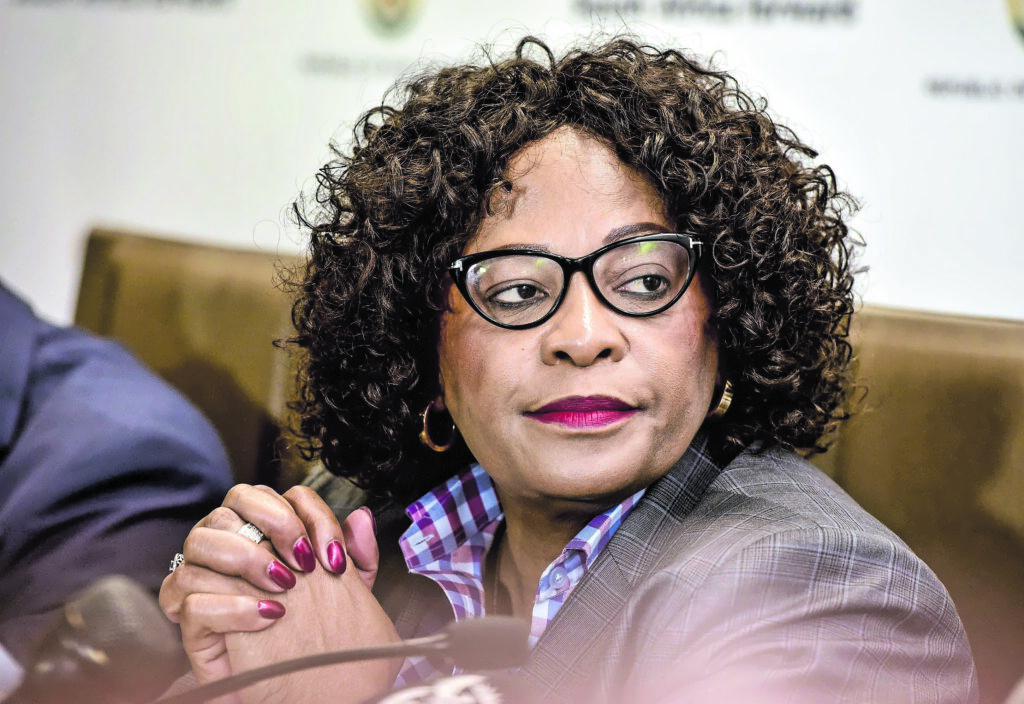 Former minister of water
and sanitation Nomvula
Mokonyane. (Image: Ntswe Mokoena)
Former minister of water
and sanitation Nomvula
Mokonyane. (Image: Ntswe Mokoena)
Siza managing director Shyam Misra said the company was “currently considering our options” on the judgment which he said had a “material financial impact” on it.
Charging the company a higher rate than Umgeni levied on municipalities would impact on consumers, Misra said, adding that it was looking at ways to keep the costs down.
Umgeni had increased the tariff it charged Siza by 5% with effect from 1 July this year because of the court action, which meant that any further increase could only take place in a year’s time.
“Bulk water cost is a direct pass through cost in our cost reflective tariff formula. We deemed such an increase unreasonable and irrational and hence took to the court for relief as it would have directly impacted on our customers,”’ Misra said. “We are still exploring options on how to cushion this impact on the end user.”
He said the judgment would not impact on the 30-year agreements beyond pushing up the costs.
“Siza Water has a 30-year concession contract with the iLembe district municipality. This judgment, save for the severe impact that such could have on the consumers, does not have any other impact on the contract,” he added.
Umgeni corporate stakeholder manager Shami Harichunder said Umgeni was relieved that the court had finally resolved the matter and ruled that it had the right to differentiate in its tariff structure to address the issues of cross-subsidising Siza.
The court had concurred with Umgeni’s reasoning in implementing the tariff system, which was developed to ensure funding for infrastructure maintenance and rollout, Harichunder said.
Umgeni was studying the court’s finding around the approval of tariff increases, and would take the necessary steps to ensure that this was taken into consideration when further increases were set annually in the future.
“Umgeni Water will continue to maintain its cordial relationship with all of its customers and that it also continues to meet all of its obligations contained in bulk supply and service level agreements it has with its customers,” Harichunder said.
Tariffs were structured to include all future projected costs, including operational administrative costs and costs associated with ensuring that water is properly treated and when supplied, is safe to drink.
Kamogelo Mogotsi, the spokesperson for the new Water and Sanitation Minister Senzo Mchunu, undertook to comment but had not done so at the time of writing.
[/membership]