Rooted: The Setsoto Service Delivery Forum was formed in Ficksburg in the Free State, and won 22.88% of the votes, coming second to the ANC. The forum fielded candidates for all 33 council seats and will play an important role in local government.
Photo: Oupa Nkosi
Were South Africans left with no other option, or are they ready to change the political discourse by putting their votes behind independent candidates?
In an historic win in this year’s municipal election, the Cederberg Eerste Residents Organisation (CE) trumped the governing Democratic Alliance by garnering 28% of voters’ support compared to the DA’s 21%, in the Cederberg local municipality in the Western Cape. The ANC won 35%.
The Setsoto Service Delivery Forum (SSDF) won 22.88% in the Setsoto local municipality in the Free State, while the Lekwa Community Forum received 19.43% in the Lekwa local municipality in Mpumalanga province. Both came second to the ANC. In the Northern Cape, the Siyathemba Community Forum received 39.67% of the votes in its local municipality.
The SSDF was formed in Ficksburg, the town that gained infamy in April 2011 when police officers killed activist Andries Tatane, 33, in full view of television news cameras during a service delivery protest. Despite Tatane’s killing being broadcast, seven police officers, who were arrested on murder and assault charges, were acquitted in 2013.
A decade after Tatane’s death, SSDF fielded candidates for all 33 available council seats, including 17 wards and 16 proportional representation seats. Its candidates were among an unprecedented more than 900 independents who contested this year’s municipal elections nationwide.
“People are ready,” says Paul Berkowitz, director of civic and social organisation The Third Republic, responding to whether citizens demanding better service delivery in their communities are now prepared to put their support behind independent candidates.
Mmusi Maimane, chief activist at the One South Africa Movement (OSA), an umbrella body for independent candidates and groupings, said he was delighted that candidates who did not win still received a more votes than their opponents from more established small parties such as the Congress of the People, the African Christian Democratic Party, and in some cases Patricia de Lille’s Good Party.
Had OSA been a fully-fledged party instead of an umbrella movement, “we would have been the fifth biggest party” in the country based on the numbers, said Maimane.
The results of the local government elections, suggest that some South Africans could indeed be ready for a new political alternative, with independent candidates and groupings showing a 0.59% growth in support, according to the latest results.
In KwaZulu-Natal, just under 100 000 people voted for independents, followed by Limpopo with 75 688 and the Eastern Cape with 73 263 votes.
Berkowitz notes that there were more independent candidates and parties competing than ever before.
“You can see some success in the results,” he says as he points out gains made by independents such as the Hendrina Residents Front in Middelburg, the New Arisen Movement in Mfuleni, south of Johannesburg, and regions in Mpumalanga. The list goes on.
Berkowitz is convinced their showing in 2021, even under tough campaign conditions due to the Covid-19 pandemic, suggests more independents will come to the front over the long term.
“It was a difficult election to campaign and there wasn’t a lot of time. Also, election campaigning is difficult. It is different from doing good community work. You need resources, and money and volunteers to get the vote out to tell people you’re running,” he said.
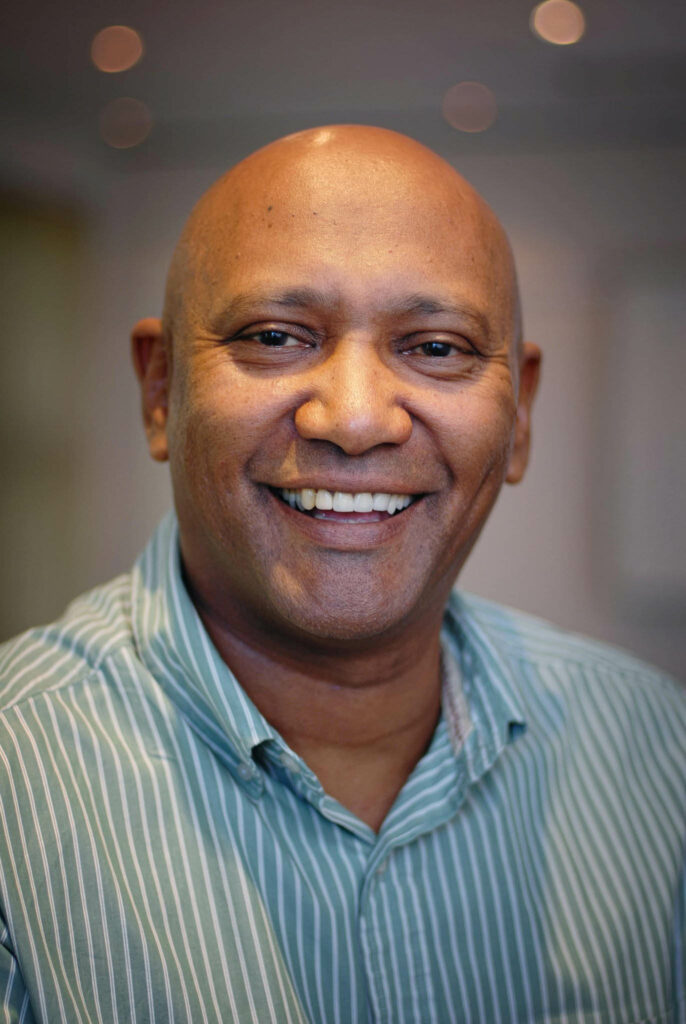 Ruben Richards
Ruben Richards, who leads CE, told the Mail & Guardian that after receiving its registration letter, the residents grouping had just eight weeks to campaign and “tell people they exist” over a vast landscape of 8 000 square kilometres.
Richards is a commercial farmer who facilitated discussions about service delivery between community leaders, business leaders and municipal officials in Clanwilliam, also in the Cederberg municipality, in 2020. From there on, a group of concerned citizens approached Richards to stand in the local government elections.
Richards says those who want to govern with the movement need to agree with its simple approach to life; a “very simple one” that “the interests of the residents come first, not the ideology of the party”.
“It is really difficult when parties are entrenched in particular ideologies. We are not a political party. We are a community organisation. So we dance to a different drum beat,” says Richards.
“We should all have the same interests at heart, and that is service delivery to everybody.”
After defeating the incumbent party by seven percentage points, CE will play an important role in governing the Cederberg municipality. In addition to bringing a positive change to basic service delivery, Richards wants “a change within”.
“It starts with the voters … to get a sense of self worth and identity that manifests itself outwardly in terms of pride of place,” he said.
“Often people say we want better roads and sewage management and so on. But the fact of the matter is, the residents have tolerated the incompetence and the lack of delivery of the ruling party. The question is, why have we tolerated it for so long?”
Berkowitz believes there is a need for both politicians and communities to do more. Citizens have a responsibility “to be involved politically, and to educate, empower themselves and to know who’s working in the area”.
However, he acknowledges that even activists in communities who are trying to get their ward councillors to act find it tough going, “so I completely understand why it’s difficult for maybe the average South African to be involved”.
Richards, for his part, says now that independents are in the “governance stratosphere”, service delivery must happen, adding: “More importantly, the inside of the voters also has to change to become more engaged citizens in our democracy.”
[/membership]