Debt burden: Standerton was once a pleasant town to live in but now the municipality is technically insolvent. Photos: Delwyn Verasamy
You don’t have to go searching for the troubles that curse the citizens of Standerton, the small town on the banks of the Vaal River in Mpumalanga.
Standerton is plagued by frequent blackouts, nicknamed Lekwa-shedding after the town’s municipality. Sewage seeps into the streets, which are cratered like the surface of a far less hospitable planet.
It may be difficult now to understand why anyone would choose to live there, but Standerton once resembled a comfortable place to settle. The Vaal promised that water for the town’s maize fields would never be in short supply. And when Eskom built its Tutuka power station in Lekwa, about 30km from Standerton, it too became a sign of an abundant future.
Today these two landmarks seem only to mock the townspeople, especially Tutuka. The power station has become emblematic of Eskom’s decline — helped along by municipalities such as Lekwa, which have leaned too heavily on a power utility already crumbling under the weight of its own deficiencies.
Eskom plays a large part in Lekwa’s financial struggle. At the end of March last year, the municipality was R1.3-billion in debt to the utility, which is also unable to supply it with the electricity it needs.
Lekwa was in the constitutional court last week, challenging Eskom’s bid to appeal a judgment ordering it to supply more power to the municipality than it has budgeted for. Constant fluctuations in Lekwa’s power supply has ravaged the municipality’s poorly maintained infrastructure, forcing many to rely on generators or sit in darkness for nights on end.
But some, like Johann Mettler, who the treasury appointed as Lekwa’s administrator a year ago, point out that the municipality’s problems do not begin and end with Eskom.
Corruption and poor governance have wrecked Lekwa from within, leaving it hamstrung in its mandate to serve its people and make good on its obligations to Eskom and its list of other creditors. And although the town has a new sheriff, in the form of a newly elected coalition leadership, the catastrophic mismanagement of Lekwa will take years to reverse.
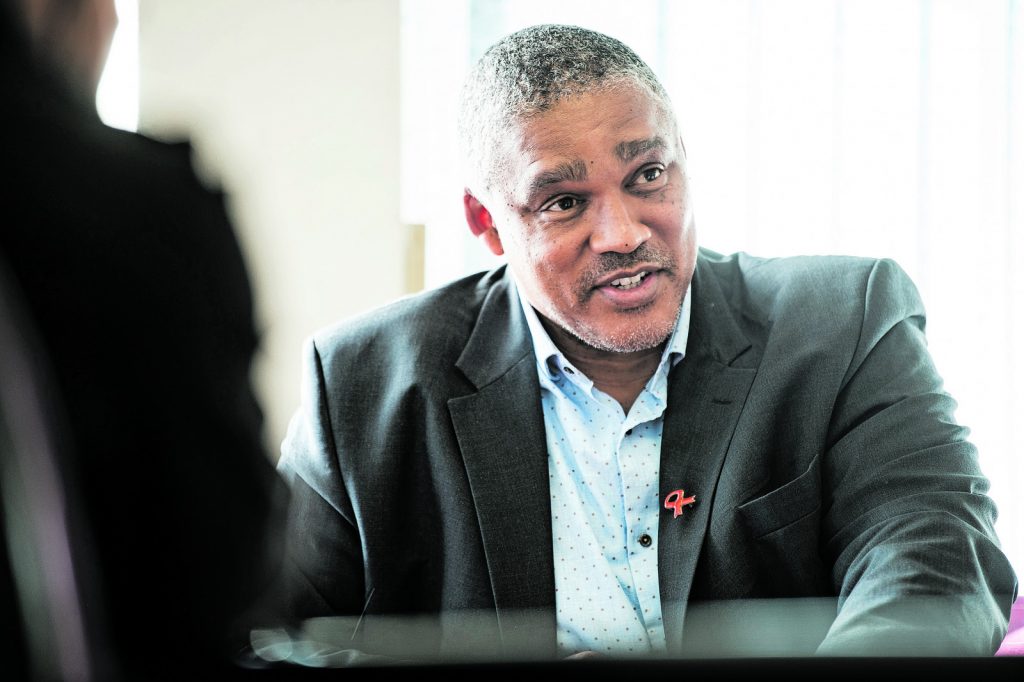 Finances: Johann Mettler, who the treasury appointed as Lekwa municipality’s administrator, points to corruption and poor governance
Chicken or the egg
Lekwa’s service delivery woes boiled over in 2018, when Astral Foods approached the Pretoria high court in its efforts to get the national government to intervene in the municipality.
The poultry giant, which is also Lekwa’s largest employer, won, forcing the treasury to draw up a financial recovery plan for the municipality that would be enforced by the provincial executive.
After three years, the Mpumalanga government had failed to implement the plan and the national government had to step in again. In May last year, the cabinet dissolved the municipal council and Mettler was appointed Lekwa’s administrator.
Astral Foods had every reason to force the government into action. In a municipality with an unemployment rate just north of 27%, Astral is too big to fail.
Goldi Chickens, the group’s primary processing plant, is located along the R50, the route that connects Mpumalanga to Gauteng. Like most other thoroughfares in Standerton, the R50 is pocked by countless potholes, making it a treacherous route for the trucks that travel between Goldi Chickens and Astral’s other operations.
Inside, where the air is heavy with the odour of simmered entrails, Goldi Chickens’ workers labour to maintain the equilibrium of the plant’s demanding production line. Water and electricity disruptions threaten to throw this undertaking off balance. When the electricity infrastructure fails, water can’t be pumped.
At the height of Astral’s struggle with the municipality, Goldi Chicken went almost a week without water, vital to maintaining hygiene at a plant that slaughters thousands of chickens a day.
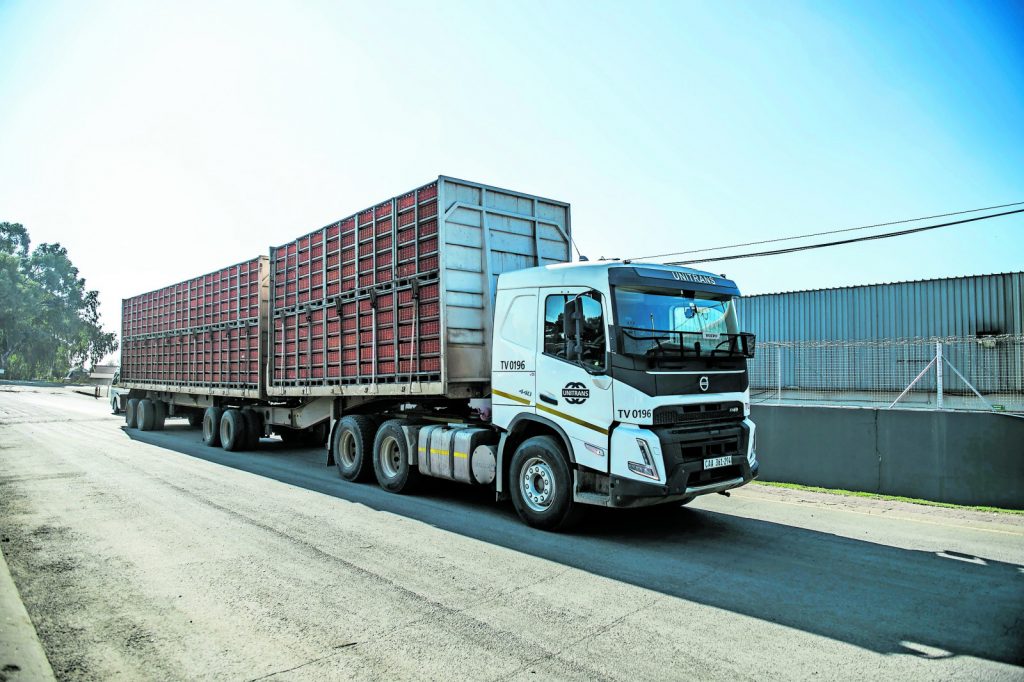 Rescue: Astral Foods, the largest employer in Lekwa, won a court order forcing the treasury to draw up a recovery plan for the municipality
At any point in time, Goldi has about 24-million birds on the floor, which need to be fed and watered. This means that every moment that passes when slaughtering can’t happen, the company loses money keeping chickens alive.
In its 2017 annual report, Astral Foods said feeble municipal infrastructure had played havoc with a number of the group’s manufacturing and processing facilities. It also noted that businesses have to come up with measures to mitigate the risk posed by “cash-strapped Eskom and the ailing electricity infrastructure, predominantly in control by municipalities”.
A year later, load-shedding reared its head again, after two years of respite. Since then, blackouts have become even more frequent, with 2021 marking the worst year of load-shedding on record. That year, electricity and water disruptions cost Astral Foods R29-million.
The company has poured millions into becoming less reliant on municipal services, taking some of the pressure off Eskom. As poor service delivery continues to plague its Standerton operations, a fact that was flagged in Astral Foods’ recent interim report, the group has earmarked R120-million on becoming self-sufficient.
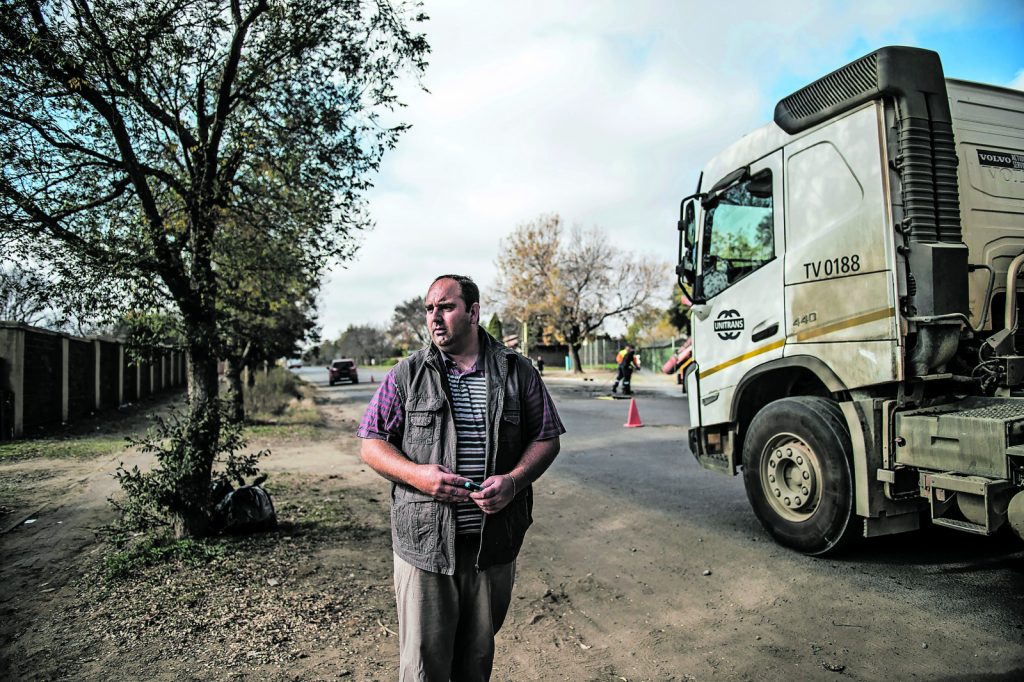 Desperation: Corné Stoltz, a Freedom Front Plus councillor, got involved in politics to help turn Lekwa municipality around
‘Enough is enough’
The collapse of Lekwa’s infrastructure and service delivery were the result of a series of failures by the municipality’s former leadership, Mettler said.
Mettler, who met the Mail & Guardian at his office at Lekwa’s municipal building, casts an imposing figure. He towers over the other two men at the meeting, Lekwa’s acting municipal manager, Lebina Tsotetsi, and Dawie Mocke, from the treasury’s municipal finance improvement programme.
The administrator painted a picture of a municipality in which good governance had gone out the window.
“There were multiple failures on that front, exacerbated by incompetence, managerial incompetence — like serious managerial incompetence. With that goes the mismanagement of funds, not paying, being unaccountable … People can get away with anything,” Mettler said.
“All of those factors then conspire in such a way that Astral says ‘enough is enough’.”
Many of these failures are detailed in Mettler’s final report on Lekwa’s financial recovery, submitted last September. According to the document, there was evidence of weak internal capacity in the municipality, which hamstrung any efforts by the administrator to carry out his interventions. Mettler’s term as Lekwa’s administrator officially ended when the new leadership came in.
“Staff are politicised and the executive management team is relatively young, inexperienced, with many facing the prospect of disciplinary action and possible criminal prosecutions,” the report states.
Mettler was previously the municipal manager of Nelson Mandela Bay metro municipality after it was taken over by a multiparty coalition in 2016.
Lekwa’s financial woes run deep. The municipality is, according to Mettler’s report, technically insolvent. Lekwa’s liabilities exceed its assets by R741-million.
Mettler said that last November, Mocke approached him and was “white in his face”. Mocke had discovered that the municipality had, for years, been charging far less for services than they cost. With Mettler and his team set to leave Lekwa totally in the hands of the new administration this month, it remains to be seen whether this misalignment will be corrected.
According to Mocke, over the past five years the municipality’s outstanding arrears have accrued substantially. Lekwa’s debt accrues R6-million to R7-million in arrears every month, Mettler noted.
Lekwa’s large debt to Eskom has been a stumbling block in the municipality’s efforts to get the utility to supply it with more electricity. Lekwa’s current energy requirements exceed the municipality’s notified maximum demand, the contractually agreed-upon amount of energy that Eskom can supply before the system is put in jeopardy. When the municipality exceeds this, the power goes out.
Large chunks of Lekwa’s budget will have to be ring-fenced to pay its creditors. This means money that might otherwise be used to fix infrastructure cannot be touched. The municipality typically spends as little as 1% to 2% of its income on repairing and maintaining infrastructure, according to Mettler’s report.
If the financial recovery plan is properly implemented — factoring in the inevitable electricity tariff increases that will hit ratepayers — it will be five years before Lekwa has more money coming into its account than leaving it.
Until then, any grand schemes that Lekwa’s new leadership may have to improve the municipality cannot happen.
“Generating cash was what we were focusing on. You have to generate cash before you can plug the holes in the street. Without cash, you can’t even source diesel to put into the vehicles,” Mettler said.
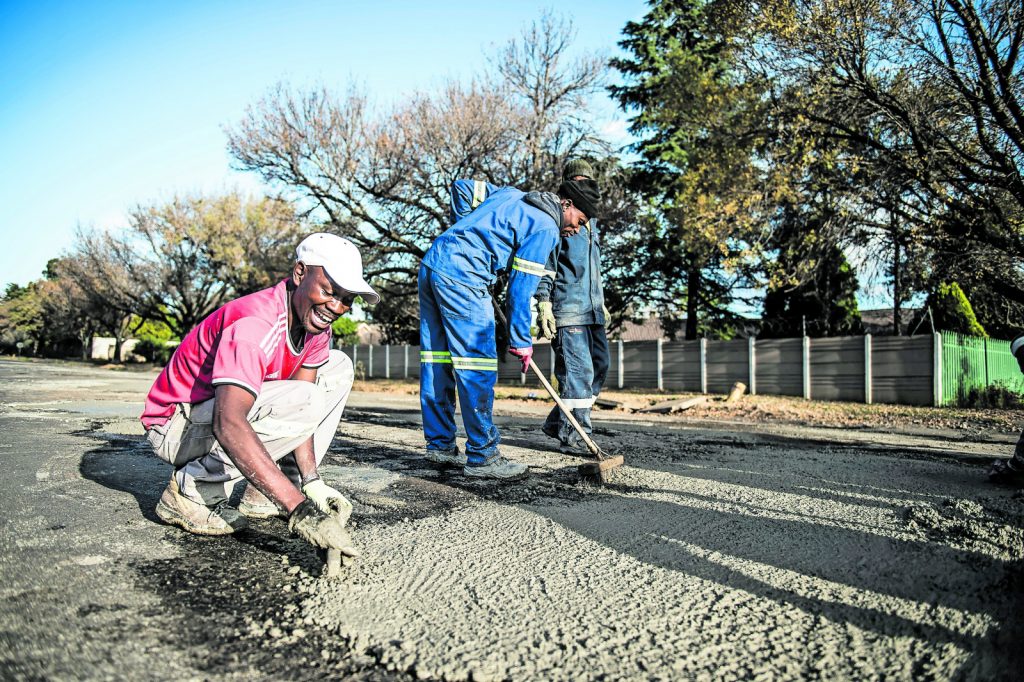 The provision of services is so poor that residents fix problems such as potholes
Turnaround
Standerton’s new mayor, Louis Thabethe, hasn’t let Lekwa’s dire financial straits knock his confidence about the new leadership’s ability to turn the municipality around. He was elected last year to lead Lekwa’s first non-ANC council in almost three decades.
Addressing residents in May about Lekwa’s hollow-cheeked budget, Thabethe warned that winter would test the municipality’s already frayed spirit. The meeting was held at Standerton’s Eskom hall.
Thabethe said the municipality’s electrical infrastructure is so run down it is difficult to even know how to go about fixing it. Lekwa’s new leadership plans on putting up water and electricity meters and dealing with illegal connections to ensure that the municipality has more revenue coming in.
Speaking to the M&G, Thabethe insists that residents have welcomed the municipality’s new leadership and the changes they plan to implement. “But the community is dissatisfied with the municipality for obvious reasons. The community does not trust the municipality. That is what we have to work on — turning any optimism from the community into a positive.”
During M&G’s visit to Standerton three weeks ago, residents blocked the R23, which connects Sakhile township and the city centre, with burning tyres.
Thabethe made his mayoral bid last year as the leader of the Lekwa Community Forum (LCF). The forum’s supporters gave it a clear mandate: dislodge the ANC from power. When the ANC failed to win an outright majority, the LCF formed a coalition with the Democratic Alliance, Economic Freedom Fighters, Freedom Front Plus and the African Transformation Movement.
This is not the first time Thabethe has served as Standerton’s mayor. He occupied the position two decades ago when he was an ANC member.
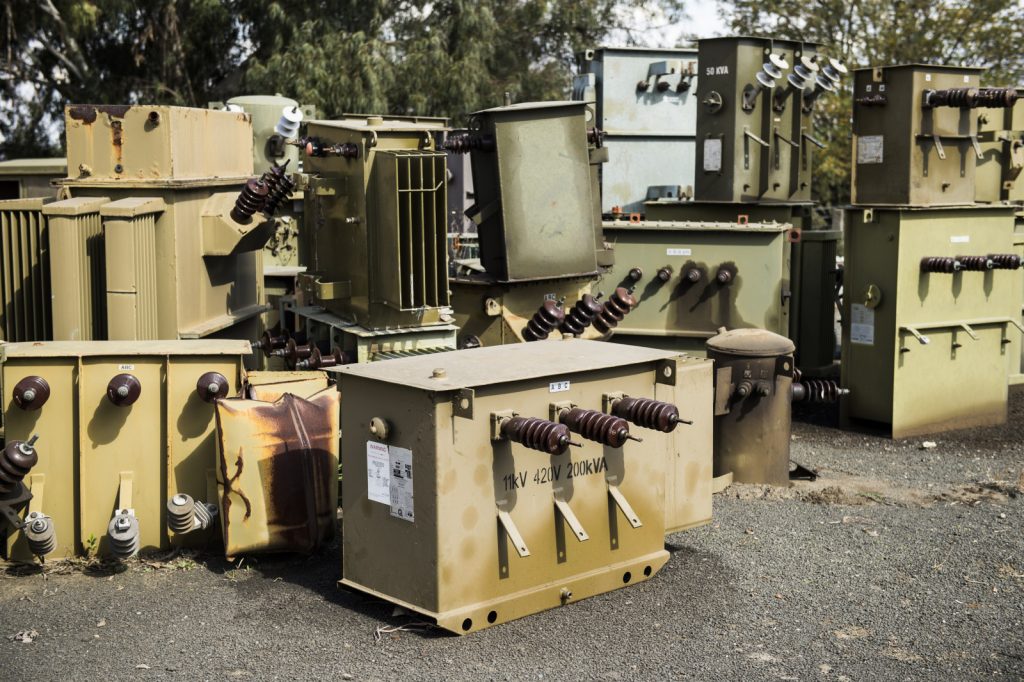 Decay: Evidence of this is everywhere, from broken power transformers
‘We will fight’
The ANC’s presence in Lekwa led to political instability in the council, as well as widespread corruption, Thabethe said. But, just because a new guard has taken over does not mean that these two factors have disappeared.
“I don’t think that has been corrected all of a sudden. It is still there. We are still experiencing glimpses of some political interference. And then there are some members of the African National Congress who have accepted that there were mistakes that happened in the past. They are willing to work with anybody to change the prospects of this municipality,” Thabethe said.
“But you still get those who are still longing for the old days …. You can’t deal with the old system overnight. Because there were beneficiaries of that system. But I won’t allow that to divert us from the main objective of turning around the prospects of this municipality.”
Decay: Evidence of this is everywhere, from broken power transformers and municipal vehicles to sewage running in the streets
The municipality’s leadership has a near-impossible task ahead of it. Not only does Lekwa have almost no money to speak of, the municipality’s management team is still in tatters.
According to Tsotetsi, the acting municipal manager, about 50% of positions in the municipal offices are vacant. The municipality is looking for a permanent municipal manager. But it is also still saddled with a number of bureaucrats left over from the former ANC regime.
“It’s a mammoth task. A mammoth task. I’ll be honest with you,” Thabethe said. “Because while you want to fix the municipality, fix the administration, you also have a community that is in need of services.”
Corné Stoltz watches on as a team of workers furiously sweep away the debris that has collected in the craters on Dr Nelson Mandela Drive. Stoltz, a councillor from the Freedom Front Plus, has lived in Standerton all his life and has seen it turn into “a ghost town” under the former leadership’s watch.
Like others, Stoltz only got involved in politics because he was fed up watching the town deteriorate. The councillor is also a local businessman, with several guesthouses in Standerton.
Stoltz pointed out that Lekwa has not received enough money, in the form of capital grants from the government, to sustain it, a fact that is confirmed by the report on the municipality’s financial recovery.
“It makes it very hard for us. But we won’t sit down,” he said, raising his voice above the dull hum of the asphalt mixer.
“They left us with billions of rands of debt, money that we must pay back. All that money is ring-fenced to pay back Eskom. So locally, there is no money … But if government doesn’t assist us, the local people and businesses will stand together and we will fight. We won’t give it back to the ANC.”
[/membership]