Local plant-based food pioneer has been drawn into a dispute with the department of agriculture, which has a beef with how meat alternatives are labelled
“I hope South Africa will see that there is space for all of us — and that we all want to work together,” says Tammy Fry, co-founder of the Fry Family Food company. “This is not about fighting anyone. This is about collaborating and moving with the times.”
Fry’s, the South Africa plant-based meat alternative manufacturer with international reach, was recently pulled into a dispute with the department of agriculture, which is clamping down on the labelling of meat alternatives.
Speaking to the Mail & Guardian last week, the company’s co-founder discussed the department’s heavy-handed approach to an industry that she says is key to achieving more sustainable food production.
In a letter to producers and retailers of meat alternatives, the department noted that a number of these products had been labelled “vegan nuggets”, “plant-based meatballs” and “vegan BBQ ribs”, for example. These names, the department contended, were “prescribed for processed meats”.
A long road
Fry’s, which got its start more than 30 years ago, hit out at the move.
“We have been doing this for a long time and I have no doubt that the good that comes from plant-based burgers, mince or nuggets, to name but a few, drastically outweighs the concerns of the meat industry stakeholders, who are clearly looking to protect their interests through regulatory exclusion,” Tammy Fry said in a statement.
The idea that a plant-based lifestyle would eventually be trendy wasn’t factored into the decision to start the company, Fry told the M&G, “We really just started making plant-based meats for our own needs as a family. It was more about the passion we had for the environment and for animals.”
Her father Wally Fry developed the first products, soy burgers and sausages, in the family’s kitchen.
“At the time,” Tammy Fry says, “there were almost no vegans and very few vegetarians.”
South Africa’s Hindu community, some of whom adhere to a strictly vegetarian diet, became the company’s first large consumer base. In the last decade or so, Fry says, the company’s products have gained a far wider appeal.
“We’ve seen this explosion of plant-based meats in the world.”
According to a 2021 report by Bloomberg Intelligence, the global plant-based alternatives market could swell to $162-billion in the next decade from $29.4-billion in 2020. The Bloomberg analysts expect the sales growth for plant-based meat and dairy alternatives to outpace conventional products.
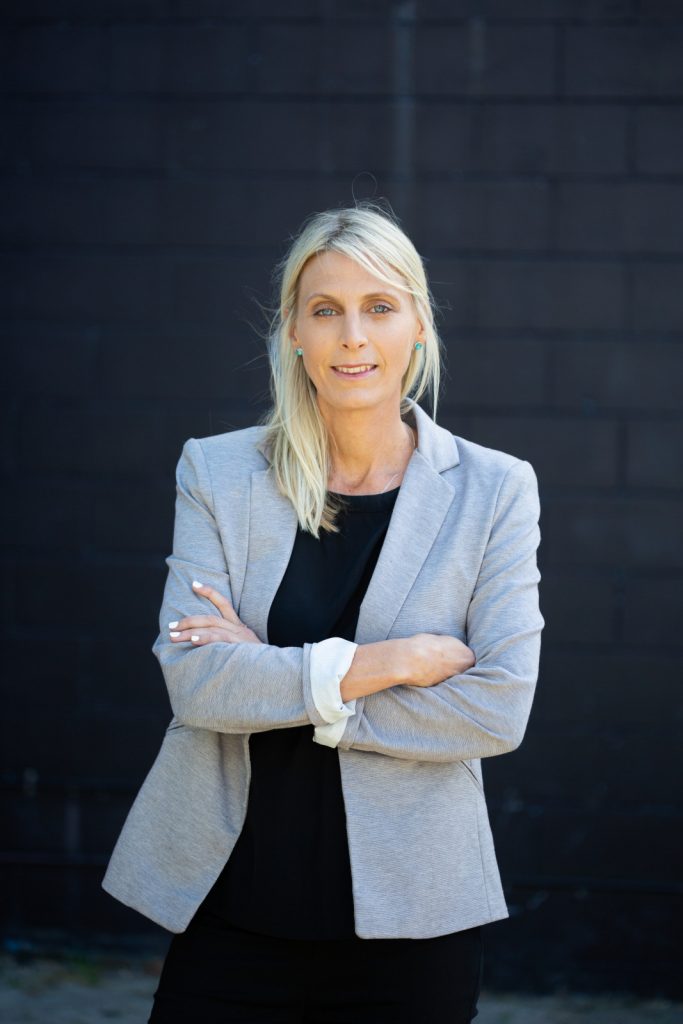 Tammy Fry
More space
Fry’s products, which are manufactured in Durban, are sold by supermarket chains and other retailers in 28 countries.
Despite perceptions that South Africa is far from being the plant-based heartland, Fry — who now lives in Australia — says the country is actually “almost ahead of the game”.
“There is more space in South African retailers for plant-based products than there is in Australia or the UK. When you walk into a Checkers or a Pick n Pay or a Spar, there is more space allocated to plant-based meats than you would find in Australia,” she says.
“We might have more brands but we only have one fridge door … So South Africa is actually quite lucky.”
There are fewer plant-based brands on South African shelves because of the price tags attached to them, Fry says. A two-pack of burgers from popular US brand Beyond Meat cost R129.99 at Woolworths, while two Fry’s Big Fry Burgers will set you back about R86.99 at Pick n Pay.
While the company’s international reach affords it economies of scale, manufacturing plant-based meat is still a costly endeavour.
“We are a niche category. We still only have a very small percentage of the protein space … We don’t have the same scale of production as, say, a chicken producer would have.”
Despite plant-based meats representing only a small slice of the market, producers like Fry’s have faced push back from regulators all over the world, often with little success.
Setbacks
Fry’s and other brands have recently had to fend off an offensive in Australia, where its minister of agriculture David Littleproud has also taken the industry to task for its labelling practices.
In February, a senate committee inquiry report expressed the view that descriptors like “meat”, “beef” and “prawn” should be reserved for animal protein products only. But terms like “burger”, “mince”, “sausage” and “steak” were not considered problematic.
As recently as last week, French regulators prohibited the use of terminology traditionally associated with meat and fish to designate plant-based products.
“We’re definitely on the map and now, all of a sudden, we are starting to see these regulatory bodies starting to take action … I can only imagine it is because plant-based products are now more prevalent, on more shelves and in more faces,” Fry says, noting that there is no evidence to prove that plant-based labels are confusing to consumers.
“We are not out there to confuse or pretend that we produce meat. That is not what we are trying to do. It is not our business objective.”
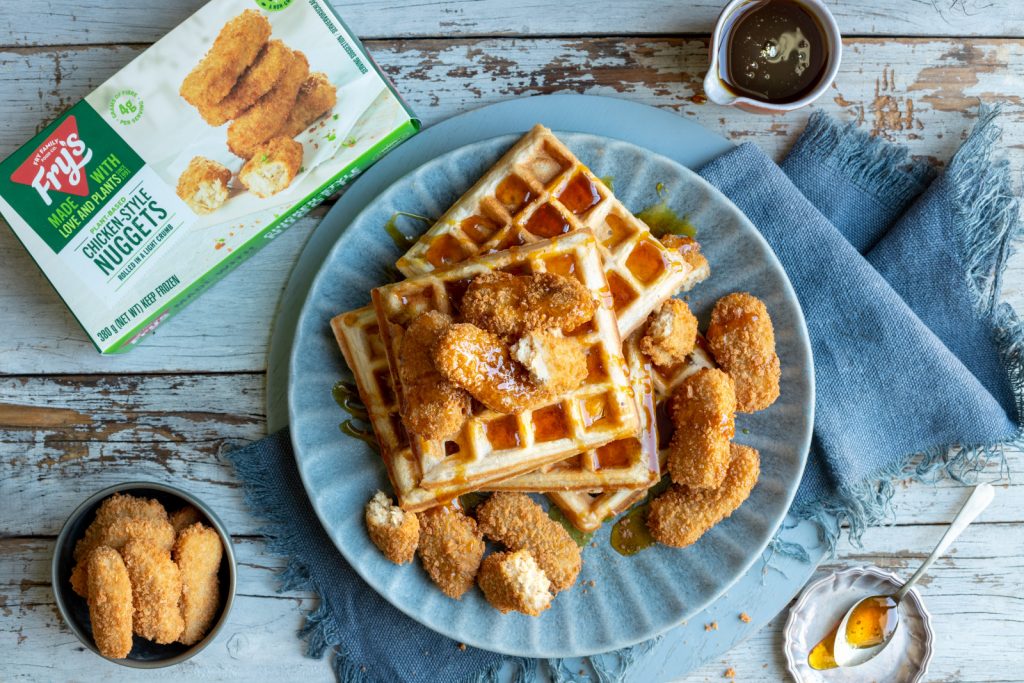
If Fry’s is forced to change how it labels its products in South Africa, it will have to create packaging that differs from its other markets. “That comes with enormous cost to the consumer … The other thing is that the operation becomes slow, because you have to stop-start processes. So, there’s inefficiencies in the system and, again, the consumer pays for those inefficiencies.”
The government, Fry says, should do what it can to support businesses like hers, which has 500 people working at its Durban factory.
“Our government should be so proud that we have a brand that is homegrown, that is proudly South African and that is playing in a very exciting, forward-thinking space, on the global stage — and is doing very well at it,” Fry says.
“We should be really proud of that, instead of trying to create more setbacks with something that’s not actually broken. We don’t have a problem. So I am not sure why we are creating one.”
[/membership]