The writer says Mining became an economic pillar because South Africa chose to develop it. Offshore oil and gas could do the same if we choose to.
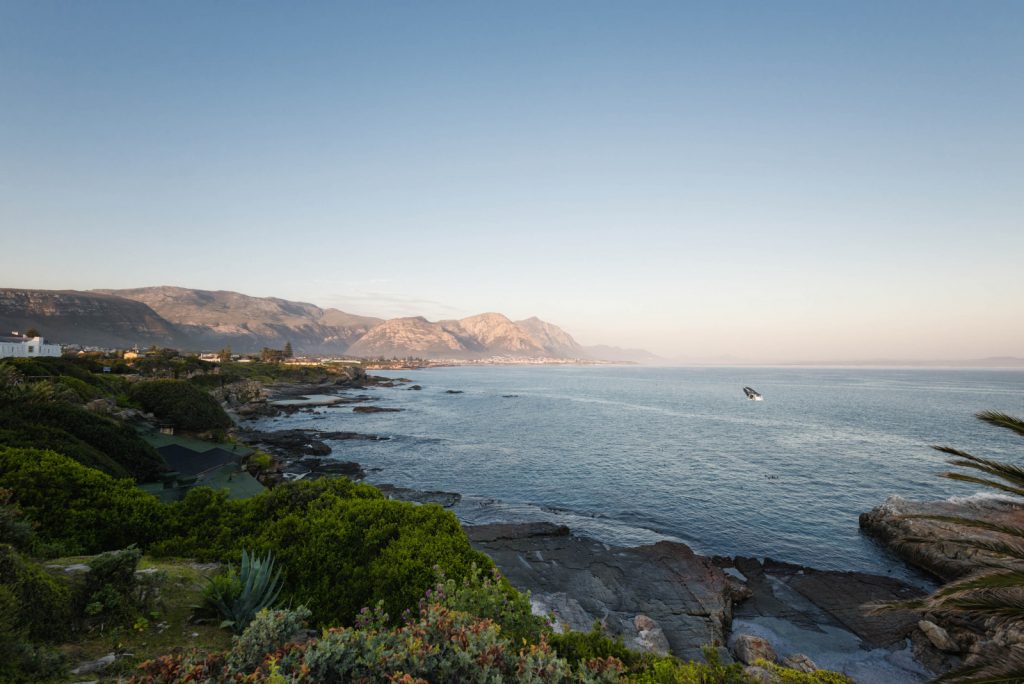
Several civil society organisations have opposed a planned project by TotalEnergies Exploration & Production South Africa (Teepsa) to drill exploration wells offshore on the southwest coast, near the world-famous whale hotspot of Hermanus.
Teepsa, together with its joint venture partners, Shell and PetroSA, holds an exploration right over Block 5/6/7. According to Teepsa’s draft scoping report, prepared by its environmental consultants SLR Consulting, two seismic surveys have been undertaken since the first granting of the exploration right.
“Based on an analysis of acquired seismic data, Teepsa is proposing to drill up to a maximum of five wells within an area of interest to further explore for hydrocarbons in the block,” it said.
It intends to drill in an area between Cape Town and Cape Agulhas, at depths ranging between 700m and 3 200m and is in the process of applying for environmental authorisation from the department of mineral resources and energy.
Nearly 11 000 people have signed an online petition to “stop the drilling of underwater oil wells near Hermanus, an important whale migration area”.
‘No need for natural gas exploration’
In his comments on the draft scoping report, Rob Fryer, the general manager of Whale Coast Conservation in Hermanus, described Teepsa’s environmental and social impact assessment process as “fatally flawed” because the need for, and desirability of, the natural gas exploration “have not been proven”.
The non-profit has recommended that the environmental and social impact assessment process be suspended until an independent panel of experts has performed an objective study that “clearly concludes that the development of natural gas resources is better economically, and is less risky operationally, than the immediate installation of renewable energy and energy storage technology”.
Fryer said: “Recent and ongoing technological developments in the renewable and energy storage fields, some of which are already being introduced in the latest Independent Power Producer contracts with Eskom, make recommendations contained in the 2013 draft Integrated Energy Plan, the 2014 Operation Phakisa publications, and even the 2019 Integrated Resource Plan, outdated and render those sources inappropriate as a basis for showing the need or desirability of natural gas exploration.”
The Green Connection, which also has submitted its comments on Teepsa’s proposed project, said, “Instead of starting new fossil fuel projects, which will contribute to carbon dioxide and methane emissions well into the future, South Africa should be focused on moving toward a just transition to renewable energy.”
Natural gas part of energy mix
On the necessity and desirability of the project, Teepsa’s draft report notes that South Africa is vulnerable to climate change.
“There is thus global concern for the need to reduce carbon emissions and achieve carbon neutrality by 2050. However, the rapid transition to carbon neutrality presents a potential risk to economic growth and sustainable development,” it said.
As such, South Africa had committed to a just transition in achieving net-zero emission and a climate-resilient society, whereby the need to reduce emissions is balanced with the need to grow the economy and create jobs.
“In this regard, government policy currently promotes the use of natural gas as part of the energy mix up to 2030 to serve as a transition to a carbon-neutral goal and provide the flexibility required to complement renewable energy sources.”
In the long term, if the exploration activities result in the discovery of commercially viable hydrocarbon deposits, “then these fields have the potential to make significant contributions to South Africa‘s energy security, help sustain and generate employment opportunities and support development by enabling participation by local businesses.”
Rich diversity of marine life
The draft report describes how the southwest coast supports a rich diversity of marine life, including sensitive benthic habitats and species; plankton; fish and sharks; turtles; seabirds and marine mammals, including whales, dolphins and seals.
“The area of interest is dominated by ecosystems rated as ‘least concern’, with only marginal overlap with the ‘vulnerable’ Cape Canyon habitat … The area of interest avoids all marine protected areas, but has a 5.4% overlap with critical biodiversity areas.”
It describes how tourism is a central activity in the Western and Eastern Cape, playing an important role in the economy of many of the towns along this coastal area, while several fishing sectors operate off the southwest coast, most of which fish inshore of the shelf break and “thus inshore of the area of interest for drilling”.
If the final scoping report is accepted, SLR Consulting and specialists will assess the potential impact, identify mitigation measures and prepare the environmental impact assessment report.
Significant ecological, biodiversity importance
In its comments on the project, the non-profit EMS Foundation said exploration and production were “intrinsically linked”. The decision-maker, it said, must be furnished with information, specifically in terms of the need and desirability aspects of the project, “which would allow him or her to determine whether it is necessary and desirable to permit the drilling of exploratory wells that would ultimately lead to production at a future time in an area of the ocean with significant ecological and biodiversity importance to SA as a whole”.
The scoping report, it said, confirmed that the area of interest for the exploration activities was located in an area of the ocean which includes critically endangered ecosystems and benthic habitats; is close to a significant number of marine protected areas, critical biodiversity areas and ecologically or biologically significant areas.
It is within cetacean migratory routes and breeding grounds and is within a measurable distance of the penguin colonies of Boulders and Robben Islands and the seal habitat on Seal Island.
This is “such that any worst-case scenario impacts, particularly a well-blow out, would have an ecologically damaging and irreversible impact on these marine protected areas, critical biodiversity areas and ecologically or biologically significant areas and all species which would thrive within these areas of the ocean”.
‘Predicted, unpredicted impacts, risks’
In its comments, the Wildlife Animal Protection Forum South Africa, said the Western Cape was heavily reliant on tourism as an economic activity and “the direct and indirect impacts of a drilling project along these coastlines will have detrimental effects” on tourism.
“Hermanus is considered the most well-known area in the country for whale watching and whale-related activities,” it said. “Drilling operations are known to affect whale populations by scaring them away, deterring them off their migration routes and affecting them physiologically. The impact on tourism if the whales of Hermanus were to be affected by this project would be of a significant magnitude.”
Fishing sectors in the area would be similarly affected, it said, including the large pelagic longline, tuna pole, demersal trawl and demersal hake longline.
“There are 68 communities that have been registered for small-scale fishing rights, comprising a total of 2 031 fishers, and while they are thought to be in-shore of the area of interest, the far-reaching effects of the proposed drilling cannot be known with complete certainty. This would, in turn, affect the income and livelihoods of these communities.”
[/membership]