The city of Cape Town is forging ahead with bringing independent power producers onto the grid. (Dwayne Senior/Bloomberg/Getty Images)
From next year, people living in Cape Town and Ekurhuleni could pay 30% less for electricity than other municipalities. The two metros are furthest along in the push to get power from independent power producers (IPPs).
This is on the backdrop of another Eskom tariff increase request submitted to the national energy regulator, Nersa.
Eskom has asked for a 38.1% increase in 2023-24 and 5.12% in 2024-25. Public comment has been open for a few weeks.
By November, it is expected that consumers will know how much more they will be paying for electricity as of 1 April 2023.
In January, Nersa granted Eskom a tariff hike of 3.46% a kilowatt hour, which resulted in Eskom imposing an 8.6% tariff hike for electricity on municipalities.
But this could be an issue of the past for those residents who live in certain municipalities. Research by Sustainable Energy Africa, which promotes the development of an equitable low-carbon, clean-energy economy in Southern Africa, shows that only 25% of municipalities are in a position to pursue power from IPPs.
Mark Borchers, the chief executive of Sustainable Energy Africa, a subsidiary of the South African Local Government Association (Salga), said most municipalities are struggling financially because of funds being mismanaged and excessive debts to Eskom. As a result the municipalities cannot pursue power procurement from IPPs.
Under pressure to reduce crippling bouts of load-shedding, Mineral Resources and Energy Minister Gwede Mantashe in 2020 gazetted amendments to the country’s energy regulations that would allow new generation capacity in the form of IPPs.
Although the amendments permit municipalities in good financial standing to develop local power generation projects, only 16% out of 230 municipalities — 21 didn’t submit their documents in time — achieved a clean audit, according to the auditor general’s 2020-21 report.
Because of mismanagement of funds and ever-escalating municipal debt to Eskom, many municipalities have struggled to get IPPs to help them produce their own electricity.
Borchers said another 25% of municipalities do not have the internal capacity to establish or manage the generation processes but can achieve the required capacity through support from the government.
He added that the remaining 50% of municipalities are not in a state to handle any additional responsibility.
But the City of Cape Town and City of Ekurhuleni are fairly stable and quite far along in the power producing programme. Those who live in these areas can look forward to paying less for electricity and may have more stable power than the rest.
Through the IPPs, the two municipalities want to add an additional 700 megawatts (Ekurhuleni) and 300MW (Cape Town) to their grids.
Through Ekurhuleni’s IPP programme, which was launched in 2017, 47 independent power producers have been appointed through a “request for proposals” process.
“The city has signed 90% of the required power purchase agreements with these IPPs, with three IPPs busy with grid integration studies now and then having letters of intent to fund from investors in place.
“The estimated start of constructions for some of the IPPs is December this year and January next year, while the first-generation units from these projects will be online in 12 months’ time,” Borchers said.
He added that Ekurhuleni can present a new revenue stream opportunity for itself and other local government authorities.
“This will enable the metro to create jobs and also alleviate the power pressure on the grid.”
Hendrik Raedeni, the city’s chief engineer, said the metro had sufficient capacity for the IPP programme, which will be used to give enough power to the distribution grid. “Ekurhuleni comprises nine towns, each with an independent distribution grid. The City of Ekurhuleni hopes to save just under R14-billion through this programme, which would have otherwise been paid to Eskom over 20 years.
“The programme will help to ensure more affordable energy for customers. We have managed to avoid power losses as no long transmission lines were involved, created jobs and mitigated against climate change,” Raedeni said.
The City of Cape Town has also been on track to producing its own electricity and has been approved to produce 300MW through IPPs.
When programmes come online residents will benefit from a reduction in municipality rates.
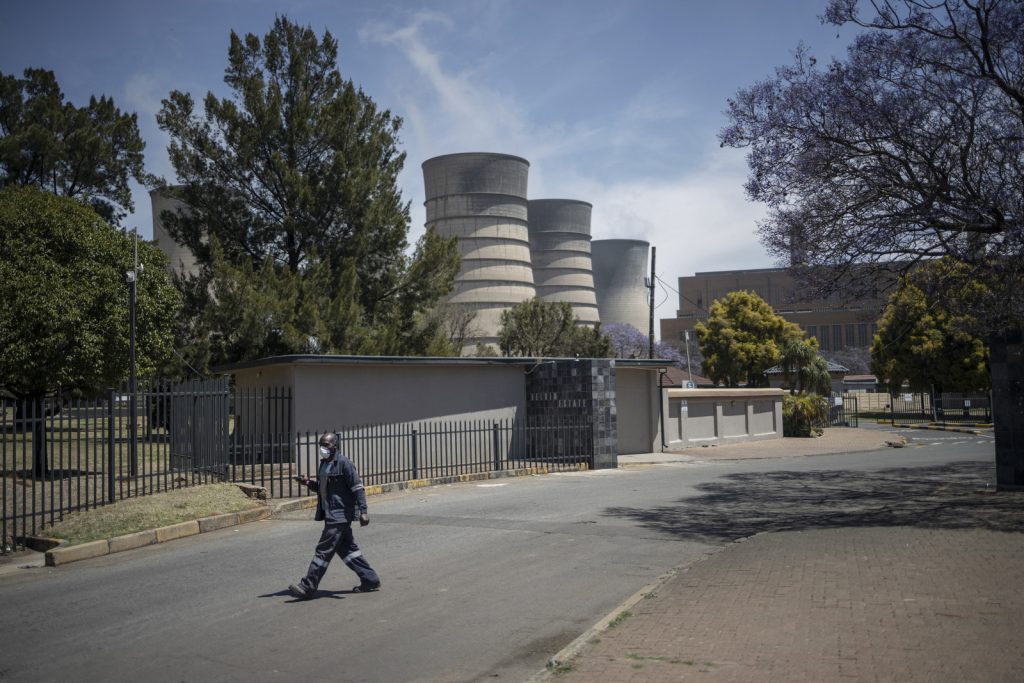 The city of Ekurhuleni is also forging ahead with bringing independent power producers onto the grid. (Michele Spatari/AFP)
According to Borchers, Cape Town is ahead in procuring power from IPPs compared with other municipalities in the Western Cape.
Cape Town launched its IPP procurement programme to improve energy security, realise energy cost savings and help achieve clean energy commitments.
Selected projects will enter into a 20-year power purchase agreement with the city.
“The city has made great strides in using IPPs, and they have been able to take more than 75% clients from Eskom, which shows the programme is working. Due to the City of Cape Town’s stable position, other municipalities can buy power from its grid and produce electricity for their municipality,” Borchers said.
Johannesburg is not as far ahead as Cape Town and Ekurhuleni regarding power from IPPs. Johannesburg falls into the 25% of municipalities with the capabilities to start procuring.
In May, during the Energy Indaba, mayor Mpho Phalatse said the metro would open its process to IPPs before the end of the year.
But other metros, such as Tshwane, eThekwini, Nelson Mandela Bay and Buffalo City, owe Eskom too much money to pursue independent power.
Borchers said that if municipalities were more equipped, “residents would receive a relief in high tariffs and experience less load-shedding as Eskom’s power grid would not be overburdened.”
The eThekwini metro sent a request for information last year to add 400MW to Durban’s grid. It has received 100 project proposals.
The city’s energy office said: “The scale of 400MW is more than sufficient to mitigate at least stage four load-shedding in the eThekwini metropolitan.”
The City of Tshwane has been struggling with its R10-billion debt, which has caused a delay in its bid to get electricity from IPPs.
As a result, residents have suffered long hours of power outages, with Eskom refusing to turn the power back on.
Earlier this month, the power utility threatened to switch the city off for failing to pay on time.
Daryl Johnston, the MMC for utility services and regional operations in Tshwane, said last month that the city had no requirements or policy for households and businesses using solar power but residents were not allowed to feed electricity back into the grid.
“We are working on the city’s by-laws on this matter which should allow for feeding electricity back to the grid,” he said.
Tshwane is not the only municipality with a huge debt. eThekwini owes Eskom R12.8-billion, Nelson Mandela Bay owes R7.7-billion and Buffalo City R3.5-billion. They are all in varying stages of seeing what is available on their local menu of renewable energy, which places them in the low 50% of municipalities that are incapable of taking on IPPs.
Polokwane local municipality owes the power utility R1.7-billion; Mangaung metropolitan municipality has also been placed in the 50% because of its R4.7-billion debt to Eskom.
Other municipalities in the Western Cape struggling to sign on IPPs because of the large amounts of money due to Eskom include Beaufort West, Cederberg, Kannaland and Matzikama (Vredendal). Combined they owe Eskom nearly R256-million, the MEC for local government, environmental affairs and development planning, Anton Bredell, told parliament.
Salga’s head of energy, Nhlanhla Ngidi, says municipalities will not switch to independent power producers at the same time, because of various factors including being financially unstable and not having people with the skills required such as capable engineers.
“We are positive that with our support that we are providing, eventually we will have more than 50% of municipalities ready to buy power from IPP quite soon.”
But the dismal state of South Africa’s municipalities has become a concern for investors and residents. The auditor general’s report said rampant corruption and mismanagement at many municipalities resulted in a lack of funds and increasingly poor service delivery.
[/membership]