


Jeered: ANC chairperson Gwede Mantashe was prevented from speaking at labour federation Cosatu’s 14th national congress. Photo: Felix Dlangamandla
The ructions in Cosatu, and the sabre rattling against the ANC by some unions and the South African Communist Party (SACP), raise important strategic possibilities for those on the left.
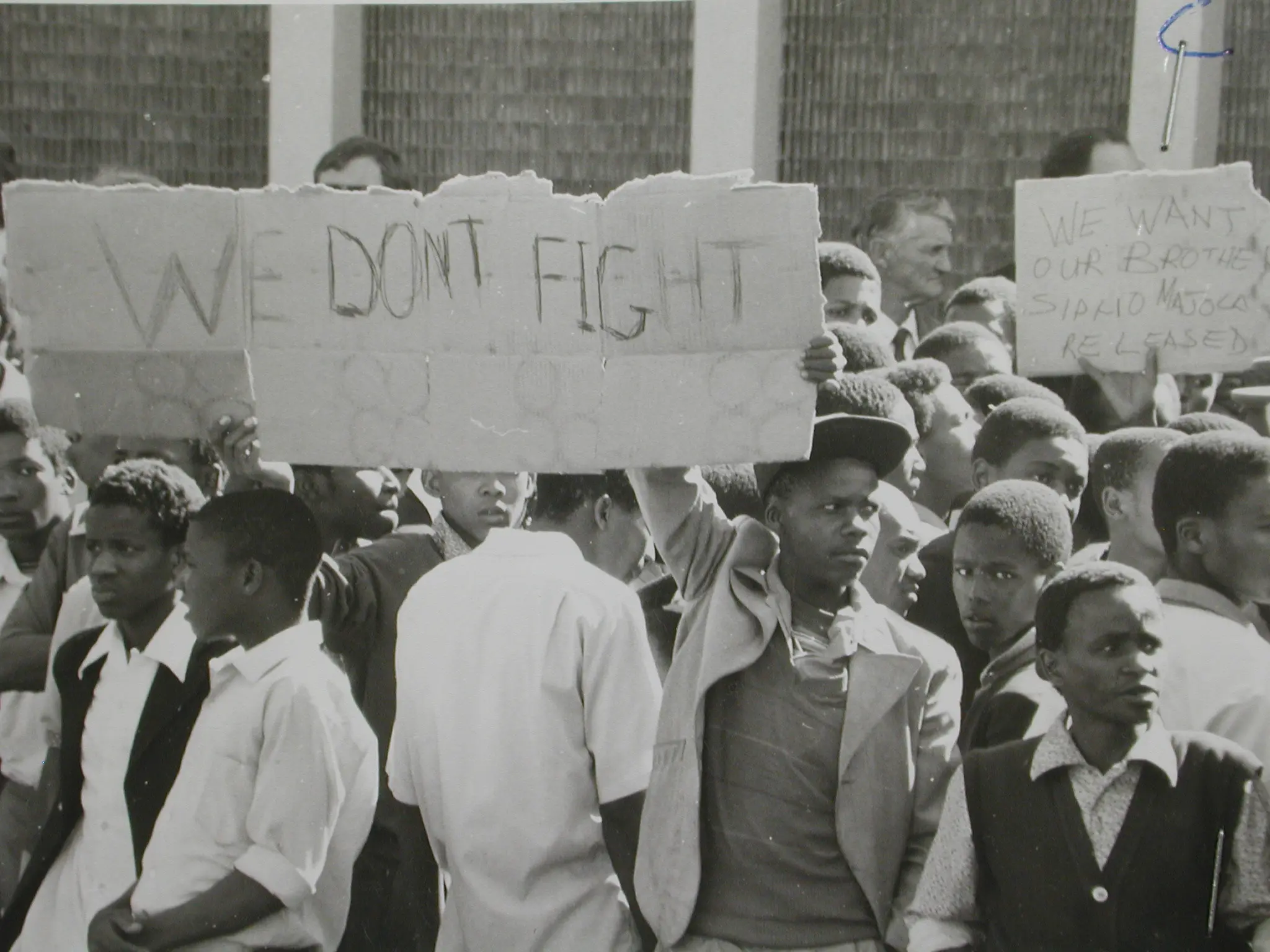
In the 1970s and 1980s there was an often acrimonious debate among “workerists” and “populists”. The former thought the labour movement should remain independent of the national liberation movement to ensure that working class politics was not cooped by national elites. The latter believed that a united struggle against apartheid under the authority of the national elites was in the collective interest.
The “workerists” were dismayed when trade union federation Fosatu, which retained its political independence, was replaced by the ANC-aligned Cosatu in 1985.
For a while the populists seemed vindicated because Cosatu became a powerful force that did far more to bring down apartheid than the largely failed armed struggle.
But today it is the “workerists” who seem to be vindicated because the ANC’s failures to advance the interests of the poor and the working class could hardly be more stark.
The ANC never produced a figure such as Lula da Silva or Evo Morales, and South Africa is now more unequal than it was at the end of apartheid.
In the early years after apartheid, Trotskyist intellectuals, with Adam Habib in the forefront, argued strongly that Cosatu must break from the ANC and begin to develop an independent pro-working class politics with a view to forming a workers’ party, possibly along the lines of the Workers’ Party (PT) in Brazil.
But the ANC was able to keep Cosatu in the fold, with top jobs for former union officials playing an important role in sustaining the alliance. The SACP was also bestowed with cabinet positions for its leaders keeping the whole of the left that had emerged from the Congress tradition under ANC control.
To its credit, the left did exercise some autonomy for a period and played an important role in opposing Thabo Mbeki’s devastating Aids denialism. But Blade Nzimande and Zwelinzima Vavi destroyed the credibility of the Congress left when they joined the “Zunami”.
The labour movement collapsed into an all-time low when Vavi said that he would “shoot and kill for Zuma”.
The xenophobic and arguably Islamaphobic comments that he made some years later, as well as his support on Twitter for the judicial coup against Lula in Brazil, continued the collapse in the political credibility of the labour movement.
Today the labour movement is fragmented with the Association of Mineworkers and Construction Union and the National Union of Metalworkers of South Africa (Numsa) out of the Congress alliance. With the breakdown in the relationship between Vavi and Numsa’s Irvin Jim, the South African Federation of Trade Unions is a paper tiger because, without the active support of Numsa, its largest union, it has no power.
This was made clear with the failure of the recent Vavi fronted “national shutdown”. Cosatu is internally divided with its general secretary, Zingiswa Losi, said to be pro-Ramaphosa while most of the affiliates are hostile to the president’s failed administration. A key exception is the notoriously gangsterised teachers’ union, South African Democratic Teachers Union, which remains pliant.
The weakness of the labour movement is not all self-inflicted. The catastrophic levels of deindustrialisation and unemployment, and the mishandling of the Covid-19 pandemic by the ANC, are not of its making.
But that weakness is not just a problem for the working class, and the unemployed who stand to gain from a challenge to both factions of the ANC, which both serve the interests of different factions of the elite.
It is also a problem for broader society. The electricity and water crises seem likely to push the ANC below 50% of the vote in the next election. The most likely outcome of that will be an alliance between the Economic Freedom Fighters (EFF) and the ANC as the latter seeks to hold on to power. That would inevitably strengthen the kleptocratic wing of the ANC.
As other commentators have observed, if the EFF could loot VBS Mutual Bank while out of power it is terrifying to think what they could do with direct access to the levers of state power. The other less likely possibility is that a coalition of right-wing parties, led by the Democratic Alliance and ActionSA, come to the fore with disastrous results for the working class and the poor.
South Africa desperately needs a mass-based left party. In the absence of a charismatic figure along the lines of Jeremy Corbyn or Bernie Sanders the only viable possibility for a left party to emerge is, as happened with the PT in Brazil, from the existing mass base. These are Cosatu, the SACP, Numsa and Abahlali baseMjondolo.
This has previously been impossible because Abahlali baseMjondolo is bitterly opposed to the ANC, whose local politicians have allegedly been murdering its leaders at a terrifying rate.
Possibilities opened up when Numsa was expelled from Cosatu in 2015 as result of its hostility to Zuma. The SACP played an ignominious role in this.
But Numsa’s political party was launched just before an election, which was strategically unwise, and collapsed in the wake of its electoral failure.
Now the political space in the Congress movement seems to be opening up.
The SACP is under new and, for the first time in a generation, credible leadership and speaking about opposing the ANC at the polls. A powerful bloc in Cosatu is making similar noises.
We have heard this before. But this time the tenor of the hostility to the ANC seems different. If the SACP and the rump of Cosatu do break with the ANC, there will be a new possibility to unite the left across its four mass-based formations — the SACP, Cosatu, Numsa and Abahlali baseMjondolo.
This will not be easy to achieve but in view of the scale of the crisis the country faces and the risk that the ANC’s failure to win the next election brings, these four organisations would fail their members and society if they do not find a way to unite.
Now is the time for mature leadership. We may not have a clear candidate to become our own Lula, but we certainly need something like our own PT as a matter of the utmost urgency, and a process of developing unity, which would not be easy, but may generate a credible leader in time.
Imraan Buccus is senior research associate at the Auwal Socio-Economic Research Institute.
The views expressed are those of the author and do not necessarily reflect the official policy or position of the Mail & Guardian.
[/membership]