

/ 27 October 2022

Godongwana: Government can’t walk away from Eskom, Transnet

Medium Budget 2022
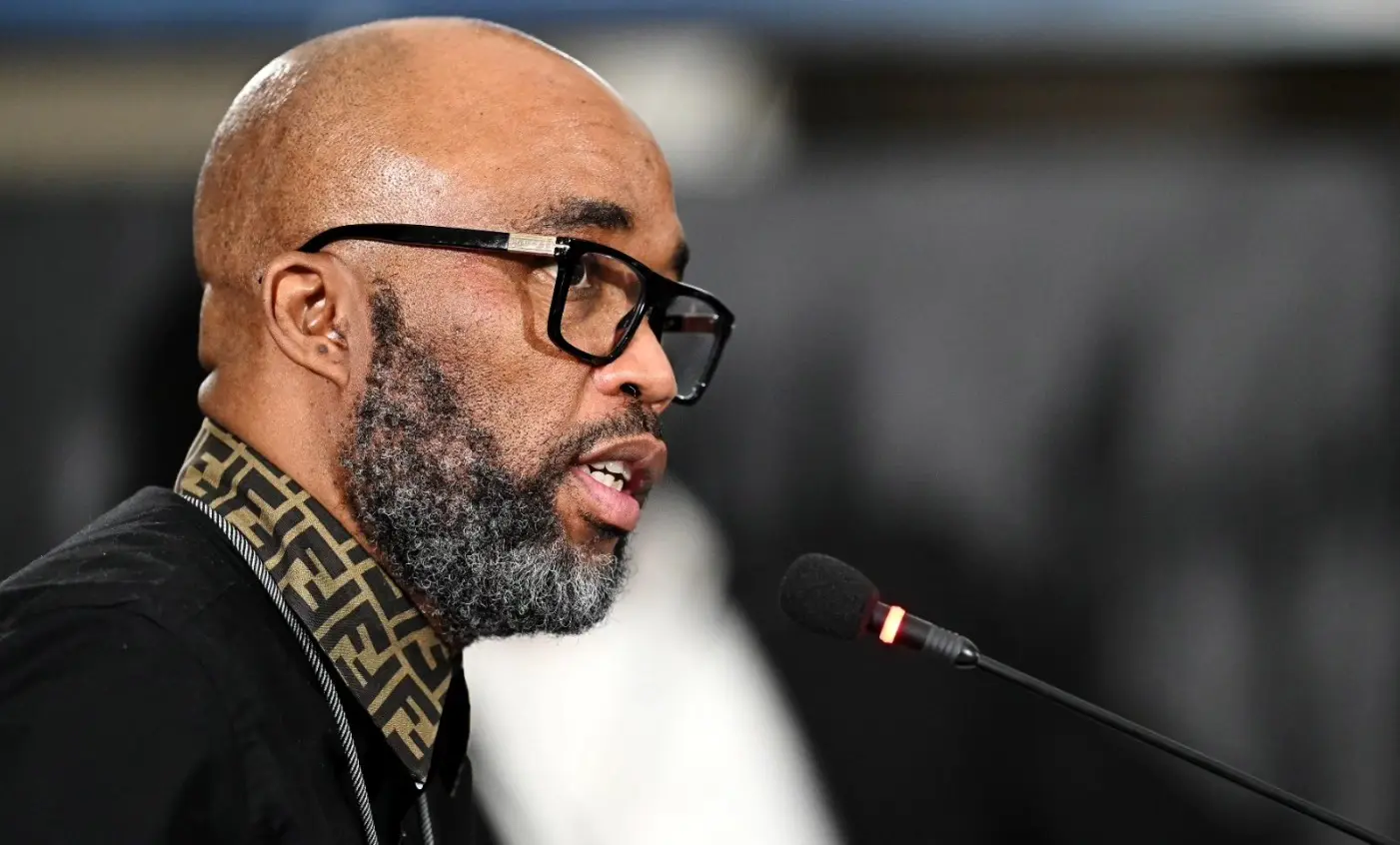
Finance Minister Enoch Godongwana. (David Harrison/M&G)

The medium-term budget policy statement again lays bare the dilemma at the heart of the government’s relationship with its state-owned entities — bail them out and they become a seemingly perpetual drain on the public purse. Wash your hands of them and risk them collapsing, dragging the economy down with them.

“If it were up to me, I would have walked away from Eskom,” Finance Minister Enoch Godongwana said in an interview with the Mail & Guardian on Thursday.

“But if you were asking the assets and liabilities team, which deals with markets every day, they would say, ‘Minister, you are posing a sovereign risk. You are between a rock and a hard place’ … Our contingent liability is such that we can’t walk away. If we allow them to collapse, it will drag the sovereign with them.”

On Wednesday, Godongwana confirmed that the government would take on a large portion, between a third and two-thirds, of Eskom’s staggering R392-billion in debt. The debt relief programme will lower the power utility’s borrowing costs, freeing up more money for much-needed maintenance.

The finance minister’s medium-term budget policy statement also allocated money to Transnet, which, like Eskom, has been a drag on the country’s already hamstrung economy. The state logistics company, which is crucial to exporting revenue-boosting commodities, is set to receive R5.8-billion, half of which will be used to repair and maintain freight locomotives.

Denel and the South African National Roads Agency also received bailouts, with the latter receiving the largest allocation — R23.7-billion — to settle its maturing debt and debt-related obligations.

Godongwana has caught some flack for doling out more funding to state-owned entities. It was only a year ago that he seemingly drew a line in the sand when no additional funding was allocated for state-owned entities in his 2021 medium-term budget policy statement. 

The market-friendly minister was praised for his hard-nosed approach to state-owned entities, which have benefited from more than R290-billion in state bailouts since 2013.

But, as this year’s policy statement points out, the fruits of the treasury’s fiscal consolidation efforts are put in jeopardy by the economic risks associated with too-big-to-fail state-owned entities such as Eskom and Transnet.

“Transnet is in the same position,” Godongwana said.

“It’s a monopoly. At the moment, no other company exists at that magnitude. Even if you’re going to bring in private sector players, they’re not going to solve your problems immediately. And if you don’t address those things … it will impact the economy. They have got to ramp up capacity.

“The whole mining sector has been choked. Eighty percent of Transnet’s revenue is from the mining industry. If you choke the mining industry, you choke other parts of the economy, including jobs and revenue.”

Before making fiscally painful bailout decisions, the treasury has had to consider whether the state-owned entities in question can be turned around and how crucial they are to the economy, Godongwana said.

The government’s fiscal consolidation policy was given a push by higher-than-anticipated inflation, which improved the pace of debt stabilisation, and by the commodity-driven revenue windfall.

A portion of the revenue windfall has gone towards cushioning the financial risks associated with struggling state-owned entities.

Understanding the risks that come with taking over Eskom’s debt, the government is putting strict conditions on the debt relief programme. 

The government will get an independent company to conduct an assessment of the utility’s operations before it attaches a specific number to the debt relief. The quantum that the government takes over will have to be sufficient to ensure that Eskom does not have to beg for another bailout in the future.

The promise contained in the medium-term budget policy statement is that, with the easing of fiscal consolidation, more spending can be directed towards restoring economic growth and critical public services.

Since 2007-08, South Africa’s public debt has risen sevenfold, from R577-billion to more than R4-trillion in 2021-22, according to the 2022 policy statement. As a result, payments on the interest for this debt exceed spending on essential services such as health and security.

Higher revenue allows the government to gradually restore the baseline budgets of departments key to the delivery of services, without making unaffordable permanent commitments, Godongwana noted in his speech to parliament on Wednesday.

The finance minister has been criticised for allocating even more money to state-owned entities and crowding out additional funding that could go to the police, healthcare and education.

“There has been in the past risk associated with state owned enterprises. A lot of money was shifted to them — and to grants. In the process, affecting the baselines of departments, cutting their budgets substantially … So what we are trying to do now is shift. But that shift is not going to be a quantum leap,” he said on Thursday.

“It is going to be a journey, bringing police back, for instance. We have not even reached the number of police we had in 2010 … We would have liked to have given 30 000 more police over the next two, three years, but pressures like the SRD [social relief of distress grant] came in.”

There is a tendency to focus on South Africa’s macroeconomic policies as drivers of growth, Godongwana said. But, what the policy statement hopes to indicate is that the government is now striving to get the basics right.

“No macroeconomic policy or fiscal policy can work in an environment when you don’t have electricity, when logistics are not functioning, when crime is so rife … Those key things are constraints. So what you need to do is focus on electricity … You need to get logistics correct. You have got to get crime levels down,” he said.

“Money alone won’t solve the problem. I accept that. My duty is to provide resources. Other people have got to solve the problem.”

[/membership]