Glaciers in a third of all World Heritage sites, including Africa’s last remaining glaciers, are “condemned to disappear by 2050”. (AFP)
Glaciers in a third of all World Heritage sites, including Africa’s last remaining glaciers, are “condemned to disappear by 2050”, regardless of efforts to limit temperature rise.
Fifty of the World Heritage sites are home to these large slow-moving masses of ice, representing nearly 10% of the planet’s total glaciered area. These include the highest (next to Mount Everest), the longest (in Alaska) and the few glaciers in Africa.
A new study by the United Nations Educational, Scientific and Cultural Organisation (Unesco) and the International Union for Conservation of Nature shows these glaciers have been retreating at an accelerated rate since 2000 because of carbon dioxide emissions that raise temperatures.
“Projections indicate that, regardless of the applied climate scenario, glaciers in all
World Heritage sites outside the polar ice sheets with glaciered areas less than 10km² may almost completely disappear by 2050,” the study said.
They include Africa’s glaciers on Mount Kilimanjaro, Mount Kenya and the Rwenzori-Virunga mountains as well as those in the Dolomites in Italy, the Pyrénées–Mont Perdu spanning France and Spain and the in Yellowstone and Yosemite national park in the United States.
If emissions are drastically cut to limit global warming to 1.5°C relative to pre-industrial levels, glaciers in two-thirds of World Heritage sites could be saved.
“This report is a call to action,” Audrey Azoulay, Unesco’s director general, said in a statement. “Only a rapid reduction in our CO2 emissions levels can save glaciers and the exceptional biodiversity that depends on them. COP27 will have a crucial role to help find solutions to this issue.”
Africa’s vanishing glaciers
Although Africa’s glaciers are too small to act as significant water reservoirs, “they are of eminent scientific and cultural importance and attract thousands of tourists every year”, the study said.
All glaciers in Africa are located in World Heritage sites, Tales Carvalho, the report’s lead author, told the Mail & Guardian. “Unfortunately, regardless of efforts to reduce greenhouse gas emissions, the disappearance of African glaciers in the years to come seems irreversible as they are now very small in size and are too much out of balance with the climate.”
Smaller glaciers tend to respond quicker to climate change. “We have seen in our report that the fastest-accelerating ice loss rates were found in sites with smaller glaciated areas,” he said.
These glaciers may have shrunk by more than 40% over the past 20 years, but Carvalho emphasised that these numbers must be taken with caution because “uncertainties are high when assessing small glacierized sites”.
“Given that these glaciers are now too small to provide substantial amounts of water resources, the implications of their disappearance will mainly be on cultural heritage and the tourism industry
“For those who have lived in the shadows of these mountains for millennia, and have developed a fascination and reverence to these glaciers which shine brightly during the dry season.
The tourism industry will also be affected, in particular people who depend on tourism.
“The tourism industry will have to adapt to these inevitable changes. Tourist agencies can still advertise, ‘You can visit … the highest mountains in Africa with glaciers. You can walk on the glaciers’. This will no longer be the case in the next couple of years.”
For Carvalho, the fate of Africa’s glaciers offers a warning for larger glaciers in other regions. This “should trigger a whole reflection on what will happen once they have disappeared so as to provide a baseline for the implementation of effective adaptive measures”.
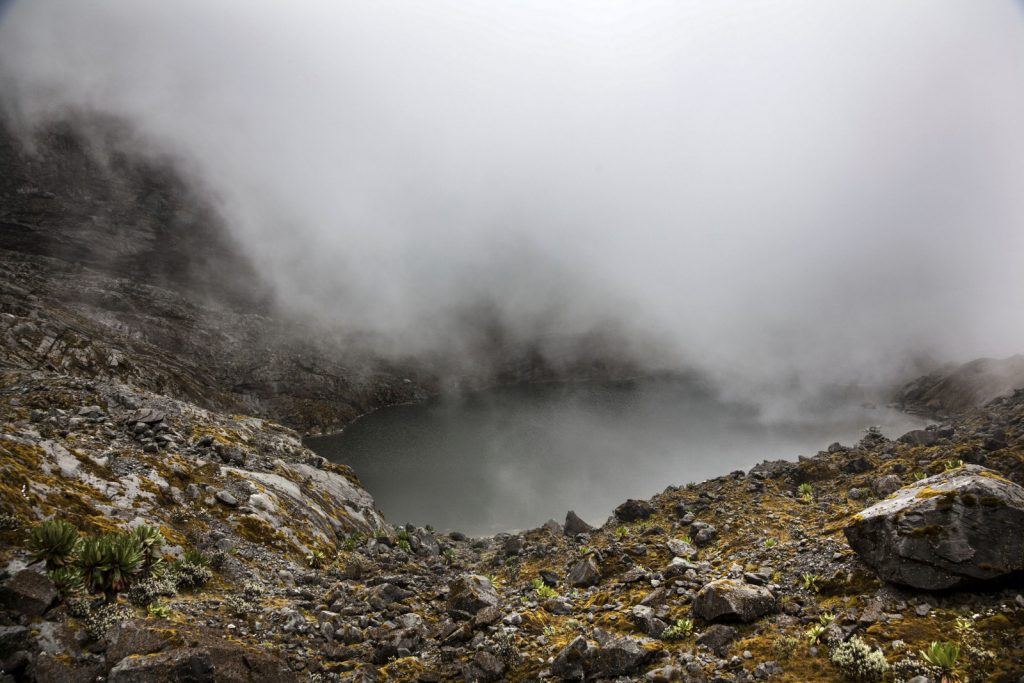 Africa will lose it’s remaining glaciers by 2050.
Sentinels of climate change
Glaciers are crucial sources of life on Earth; they are vital water resources for half of humanity for domestic use, agriculture and hydropower. They are sacred places for many people and they attract tourists.
They are also some of the most valuable indicators for understanding climate change, the report said. “Among the most dramatic evidence that Earth’s climate is warming is the retreat and disappearance of glaciers around the world. Closely observing and quantifying this phenomenon is essential to develop effective adaptation responses.”
About 18 600 glaciers have been identified in the 50 World Heritage sites, spanning an area of about 66 000 km². They lose on average about 58 billion tonnes of ice every year, which is equivalent to the total annual volume of water consumed in France and Spain.
“Assuming that all meltwater ultimately reached the ocean, ice loss in World Heritage sites caused about 4.5% of the observed global sea-level rise from 2000 to 2020 — some 3.22 millimetres,” the study said.
Complex climate risks
The study described how climate change impacts and risks are becoming increasingly complex and more difficult to manage. “Multiple climate hazards can happen simultaneously, and multiple climatic and non-climatic risks can interact, resulting in compounding overall risk and in risks cascading across sectors and regions.”
The devastating floods in Pakistan in August, which left almost a third of the country underwater, is reported to have been triggered by heavier than usual monsoon rains that “may have been enhanced by glacier lake outbursts … after a severe heat wave in spring”, the report noted.
Giant freshwater reservoirs
The annual melting of glaciers provides meltwater to downstream users for their daily lives, the report noted. “As temperatures rise because of climate change, the amount of meltwater that glaciers produce will increase and more water from long-term glacial storage will be released.”
But this increase is temporary. “Once a maximum meltwater contribution [peak water] is reached, annual runoff is then reduced as the glacier shrinks beyond a size where it is no longer able to produce a large volume of meltwater.”
In a future scenario, where glaciers continue to recede, “one can assume that most of the runoff will be concentrated in the wetter times of the year, while little to no base flow will be available during the dryer periods”.
“As such, glaciers might no longer be able to provide their buffering role in years of heat waves and drought. For many small glaciers in the Andes, Central Europe and Western Canada, peak water either has passed or is expected to occur within the next decade.”
In the Himalayas, annual glacier runoff is projected to rise until roughly 2050, and will steadily decline thereafter. The negative effects of the decrease in glacier runoff will be on agricultural production and food security and cause water stress “that could be exacerbated by increasing demand for water due to expanding farmland to feed a growing population”.
The report said these glacial retreats will negatively affect biodiversity and human societies.
In addition to drastically reduced carbon emissions, Unesco is advocating for the creation of an international fund for glacier monitoring and preservation. “Such a fund would support comprehensive research, promote exchange networks between all stakeholders and implement early warning and disaster risk reduction measures.”
[/membership]