President Cyril Ramaphosa. (Delwyn Verasamy/M&G)
After he survived calls from within the ANC to stand aside, the measure of the damage the Phala Phala scandal has inflicted on President Cyril Ramaphosa is likely to lie in the report due on the speaker’s desk by month’s end as to whether there is evidence of wrongdoing worthy of an impeachment inquiry.
That report, by a three-person panel headed by former Chief Justice Sandile Ngcobo, was due on Friday but the 30-day deadline has been extended to 30 November — one day before parliament is due to rise for its summer recess.
Speaker Nosiviwe Mapisa-Nqakula granted the extension in response to a request from Ngcobo sent on Tuesday. He said the panel had concluded it could not meet the deadline “given the amount of ground still to be covered” and required another fortnight to finish its work.
“The panel believes this amount of time is realistic taking into account the importance of the enquiry, the complexity, as well as the novelty of the nature of work involved.
“We consider our work to be extremely important to the members of the National Assembly, the president and the people of South Africa. This requires us to carefully consider all the information and submissions placed before us. We are mindful of the enormous expectations from the parties and the nation.”
It was, the letter continued, in the public interest that an enquiry of this nature be done scrupulously and with regard to all information placed before it.
The new deadline means the report will be submitted just two and a half weeks before the start of the ANC’s elective conference where a weakened Ramaphosa is seeking re-election, dodging the ammunition the theft of foreign currency from his farm has given factions trying to unseat him.
If the panel were to recommend an impeachment inquiry, the showdown is likely to go as Arthur Fraser planned when he reported Ramaphosa to the police in June and made the burglary at Phala Phala public knowledge.
The fact that parliament goes into recess on 1 December made room for political wrangling on the timelines it will follow in processing the report and this played out in urgent phone calls behind the closed doors of caucus meetings this week.
The rules of the legislature state that: “Once the panel has reported the speaker must schedule the report for consideration by the assembly with due urgency, given the programme of the assembly.”
It adds that the president must be informed of the scheduling and any decision on the report.
At the National Assembly programming committee on Thursday, opposition parties moved that the chamber must be convened in the first week of next month and ANC chief whip Pemmy Majodina smoothly proposed that the report go before the house on 6 December.
This was accepted by all but Economic Freedom Fighters (EFF) chief whip Floyd Shivambu, who suggested a single day might not suffice, because should the panel recommend an impeachment inquiry, this would require further steps that should not be left to the new year.
The vote on the report requires an ordinary majority. Opposition parties, in particular the African Transformation Movement (ATM), which tabled the impeachment motion, have warned that should the panel absolve Ramaphosa, they would take the report on review.
Legal minds note that while this is possible in theory, the applicants would have considerable hurdles to clear to make out a case. If ATM leader Vuyo Zungula were to make good on his threat, the matter is likely to land in the Western Cape high court.
It will be fodder for conspiracy theorists, given that Ramaphosa is officially applying his mind to a recommendation by the Judicial Service Commission to suspend the head of the division, Judge President John Hlophe.
The ATM, EFF and United Democratic Movement have made further submissions to the panel, for which the threshold of admission was that the evidence or allegations therein were not already public knowledge.
In his letter to the panel, United Democratic Movement leader Bantu Holomisa asked it to consider a letter Fraser purportedly gave to the Hawks on 23 June in which it is alleged that Ramaphosa was lying when he said that the money was the proceeds of game sales.
“You will see in the letter that one of the president’s closest advisers was ‘ostensibly instrumental in illegally bringing large sums of [US dollars] into South Africa for both he and the president after returning from trips he undertook on behalf of President Ramaphosa to various countries, inter alia including, Saudi Arabia, Qatar, Egypt, Morocco and Equatorial Guinea,” Holomisa wrote.
“This spine-chilling allegation, if true, shows that we are in much greater trouble than we thought if South African citizens can so easily transport foreign currency across our borders.”
This much has been whispered about in political circles for months.
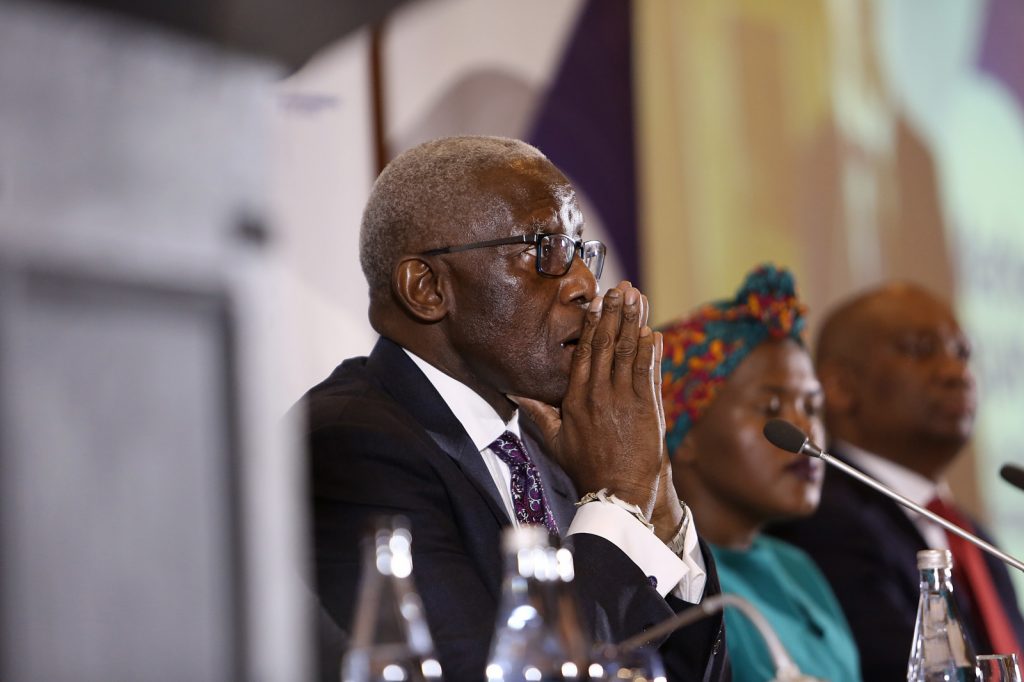 Probe: Former Chief Justice Sandile Ngcobo heads a panel on whether President Cyril Ramaphosa’s Phala Phala scandal demands an impeachment inquiry. (Alon Skuy/Gallo Images)
But the panel’s remit is a fairly restricted one. The rules state that it must inform the speaker whether there is sufficient prima facie evidence indicating that the president had committed a serious violation of the Constitution or the law, or committed serious misconduct, in which case it would recommend that parliament initiate a section 89 inquiry that may result in his impeachment.
While the process is similar to that under section 194, which resulted in the ongoing impeachment inquiry against suspended public protector Busisiwe Mkhwebane, it does not, despite further submissions, appear to have the same wealth of material at its disposal as the independent panel which found prima facie evidence of misconduct and incompetence on her part.
That panel, headed by retired constitutional court justice Bess Nkabinde, considered four main charges against Mkhwebane and a “multitude of sub-charges” brought by the Democratic Alliance. The panel ploughed through more than 9 000 pages, including the constitutional court findings on Mkhwebane’s 2017 Bankorp-Absa report, the court judgments relating to her report on the Vrede dairy farm scandal and the legal review of her Financial Sector Conduct Authority report.
It is perhaps worth remembering that it sought a 60-day extension to complete the task.
Senior opposition figures have privately expressed doubt that what is before the Ngcobo panel could lead to a recommendation that the president should face an impeachment inquiry and, this week, surprise that its work is going into overtime.
The panel sent questions to the president who responded on time, on Sunday.
In addition, Ramaphosa has now answered to the Hawks, whose inquiry into the charges pressed by Fraser is ongoing, the questions sent to him by acting public protector Kholeka Gcaleka as well as questions from the South African Reserve Bank.
The potential problem for him as far as the Reserve Bank goes lies in section 6 of the exchange control regulations, which states: “Every person resident in the republic who becomes entitled to sell or to procure the sale of any foreign currency, shall within thirty days after becoming so entitled, make or cause to be made, a declaration in writing of such foreign currency to the treasury or to an authorised dealer.”
Contravening the regulation carries a fine of up to R250 000 or a prison term not exceeding five years.
Ramaphosa’s assurance to the ANC that he derived no income from the game farm — not a farfetched claim since these ventures frequently have slim margins — can be read as him saying he did not fear trouble from the South African Revenue Service.
Even if he did, this would not be a public matter. The application of Pretoria high court judge Norman Davies’s ruling, which held that, in exceptional cases, the public interest could override the total secrecy on tax records, is suspended on appeal.
On the party front, the ANC’s integrity committee was deadlocked in deliberations as to whether Ramaphosa should take a leave of absence pending the finalisation of investigations into the Phala Phala matter. Its report finally came before the party’s national executive committee at the weekend. It made for robust debate, but no recommendation that Ramaphosa stand aside, thus leaving his fate in the hands of parliament.
[/membership]