President Cyril Ramaphosa. (Delwyn Verasamy, M&G)
President Cyril Ramaphosa has further consolidated his power in his presidency, but some of his key allies have been left out in the cold in his cabinet reshuffle announced on Monday night.
Insiders who have backed Ramaphosa were less than happy with his announcement of five ministers and deputy ministers in the presidency, most of whom were not their preferred choices.
Ramaphosa’s decision that legislation would be changed to to transfer certain powers and functions to the new electricity minister was also a hard pill for some of his allies to swallow.
Ramaphosa blindsided them during his State of the Nation address in February when he announced that he would create a ministry in the presidency responsible for electricity.
 (Compiled by Lineo Letaba)
It has been an open secret in the ANC that the president was failing to exert his authority over his most trusted lieutenants, Mineral Resources and Energy Minister Gwede Mantashe and Public Enterprises Minister Pravin Gordhan.
This was evident when the newly elected national executive committee (NEC) took Ramaphosa to task over the matter.
In February the Mail & Guardian reported that Gordhan and Mantashe, who were charged with the energy crisis, had made contradicting presentations during a special NEC meeting.
Those close to Ramaphosa have said the introduction of an electricity minister allowed the president to regain control of the energy recovery programme without removing the two ministers.
Ramaphosa also went against the ANC resolution that Eskom be transferred to the minerals and energy department, which would have effectively stripped power from Gordhan.
Ramaphosa has given the new electricity minister, Kgosientsho Ramokgopa, political powers and control over the energy action plan.
He said this would deal with the problem of fragmentation of responsibility across departments and ministers, which was “not conducive to a crisis response”.
Mantashe, who has a reputation for being a pitbull in defence of Ramaphosa, had downplayed the electricity minister as being nothing but a “project manager” to deal specifically with load-shedding.
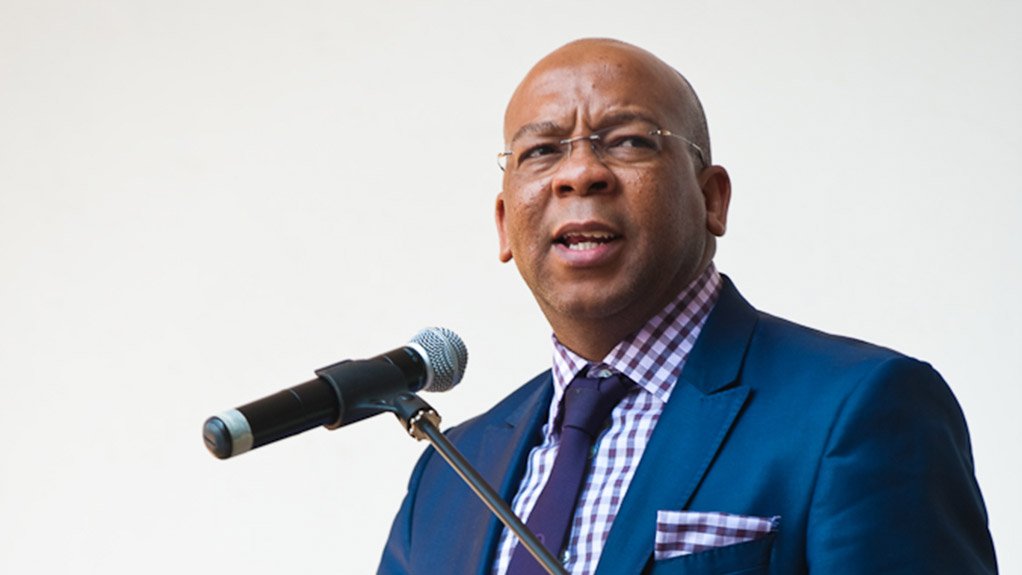 President Cyril Ramaphosa on Monday announced Kgosientsho Sputla Ramokgopa as the new minister of electricity who will focus on solving the power crises at Eskom.
But Ramaphosa has extended those powers.
He said the electricity minister will be expected to facilitate the coordination of the numerous departments and entities involved in the crisis response, work with the Eskom leadership to turn around the performance of power stations, and accelerate the procurement of new generation capacity.
This will mean Gordhan has limited access to the Eskom board and its executive.
The M&G recently reported how former Eskom boss André de Ruyter and Gordhan’s relationship had soured over the past two years. The former chief executive had been sidelined by the minister amid demands that power stations be run at maximum capacity.
The removal of Mondli Gungubele as Ramaphosa’s minister in the presidency is said to be the first signal that Ramaphosa is trying to rid himself of perceptions of being a puppet of the Eastern Cape leadership.
Gungubele is now the minister of communications and digital technologies. Those close to him said it was his request to be redeployed.
The M&G previously reported that Gungubele’s actions before the ANC December conference annoyed the party’s president. Gungubele and Derek Hanekom led the Renew22 campaign for Ramaphosa’s re-election, but some in the Ramaphosa faction refused to acknowledge them.
Gungubele was among those in the Ramaphosa faction who were campaigning for Senzo Mchunu to become his running mate, while provinces loyal to Ramaphosa were underwhelmed by this choice. The rift in the faction resulted in provincial leaders choosing to field their own candidates. The friction in the Ramaphosa faction left the deputy president position wide open for Paul Mashatile.
Gungubele is part of what has become known as the Chris Hani cabal, which consists of party chair Mantashe, Eastern Cape ANC chair Oscar Mabuyane, and Finance Minister Enoch Godongwana. The president relied on the Eastern Cape to assure his re-election as party president. He turned to the Chris Hani cabal on several occasions last year to outwit some of his detractors in the ANC.
Another ally of Ramaphoa who is alleged to be displeased with the cabinet changes is ANC secretary general Fikile Mbalula, whom insiders said had advocated for Zizi Kodwa to take over his position as transport minister.
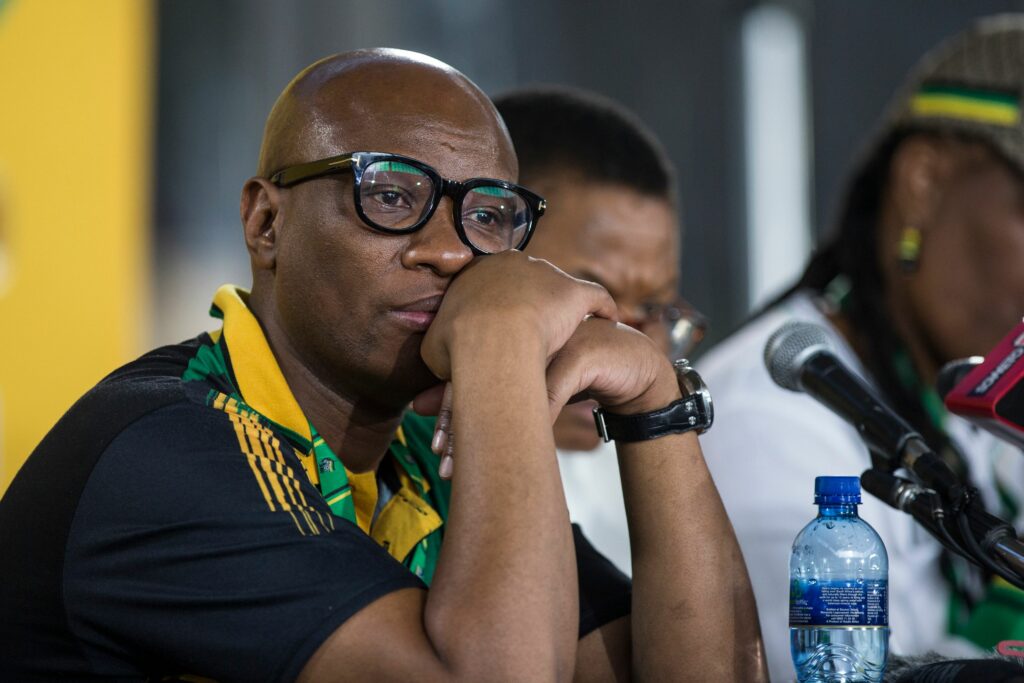 Zizi Kodwa is the new Transport Minister. (Wikus De Wet/AFP/Getty Images)
Kodwa was appointed as minister of sports, arts and culture, a far less significant portfolio in the cabinet.
Insiders who are privy to the appointment process said Ramaphosa had unilaterally decided on many of his cabinet and executives.
One insider said there was a meeting on Monday evening in an attempt to draw Ramaphosa away from his appointments, but with no success.
One appointment that Ramaphosa has made to appease his detractors is that of Nkosazana Dlamini Zuma, who had backed the opposition in the attempt to impeach the president in parliament over the Phala Phala scandal last year.
 Nkosazana Dlamini Zuma is now a minister in the presidency responsible for youth, women and people with disabilities. (Photo by Luiz Rampelotto/Pacific Press/LightRocket via Getty Images)
Dlamini Zuma has been moved from cooperative governance and traditional affairs department to the ministry of women, youth and persons with disabilities in the presidency.
This has been done to appease the ANC in KwaZulu-Natal, which some in the party believe would have felt aggrieved if she was fired. Ramaphosa needs a happy ANC in the province if he wants to retain KwaZulu-Natal in the 2024 elections.
Although Dlamini Zuma remains in cabinet, one ANC provincial executive committee (PEC) member from KwaZulu-Natal said it was a demotion, which the province would meet to discuss.
“We are not fools. We know what they are trying to do and we will not be silent,” the PEC member said.
Mashatile is believed to be at an advantage with the newly announced cabinet.
Insiders said Ramokgopa, Public Works Deputy Minister Bernice Swarts, Cooperative Governance Minister Thembi Nkadimeng, her deputy Parks Tau and the minister in the presidency for state security, Khumbuzile Ntshavheni, have ties to Mashatile.
Ntshavheni is a party heavyweight from Limpopo who backed Ramaphosa in 2017 and again in December. Another minister who is said to be close to Mashatile is Sihle Zikalala, who was appointed to the public works portfolio.
 Sihle Zikalala. (Reuters/Rogan Ward)
Ramaphosa’s reshuffle will probably draw the line in a battle for control for the future of the ANC. Although the party has five years to prepare for its next elective conference, there is already talk of who will take over from Ramaphosa.
This could happen sooner rather than later, should Ramaphosa be found wanting by state agencies investigating the Phala Phala matter.
In addition to appointing Ramokgopa as minister in the presidency responsible for electricity, and Ntshavheni in the state security role, Ramaphosa also appointed ANC second deputy secretary general Maropene Ramokgopa as minister in the presidency for monitoring and evaluation.
Dlamini Zuma, while an opponent of Ramaphosa, is effectively neutralised by her appointment to her new portfolio.
Ramaphosa appointed three new deputy ministers in the presidency — MP Nomasonto Motaung; North West interim provincial committee member Kenneth Morolong and Sisi Tolashe, a member of parliament’s standing committee on public accounts. He reappointed Pinky Kekana as deputy minister in the presidency for monitoring and evaluation.
Ramaphosa said the changes to cabinet were aimed at ensuring the government had the capacity and direction to implement the plans outlined in his State of the Nation address and in the February budget speech.
Major areas of focus would be “those issues that concern South Africans the most” — load-shedding, unemployment, poverty and the rising cost of living, as well as crime and corruption.
He said he was not “overhauling” the cabinet, which had just over a year left of its term, but was filling vacancies and making changes aimed at directing government more effectively “towards the areas that require urgent and decisive action”.
“All members of the executive have been directed to focus on those agreed actions that will make a meaningful difference now, that will enable real progress within the next year and that will lay a foundation for a sustained recovery into the future,” he said.
Ramaphosa had sought to balance the need for new skills and capabilities to drive the agenda outlined in the State of the Nation address with the “important task of ensuring stability and continuity in the work of government”.
While this increased the number of ministries in the short term, the presidency and treasury would develop a plan to rationalise the departments, entities and programmes going into the next administration, he said.
[/membership]