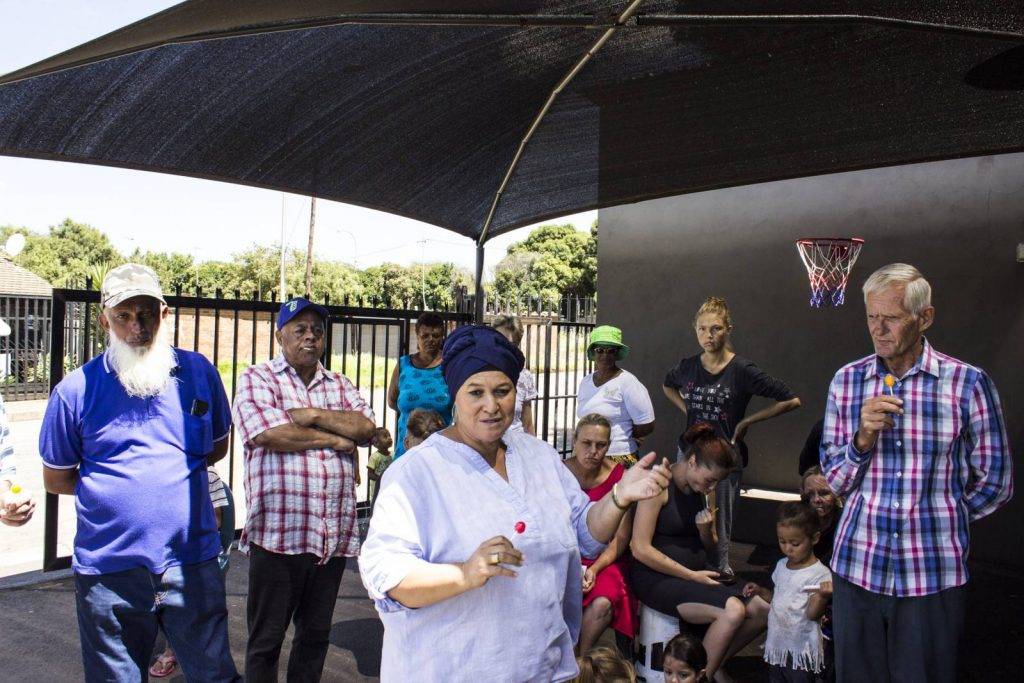
Ward councillor Ricky Nair has to deal with a litany of
woes. (Delwyn Verasamy/M&G)
It’s midday on Monday and the taps in Yola Minnaar’s kitchen in Vrededorp are turned wide open, but are bone-dry.
“You can see there’s nothing coming out,” she said, unsurprised. “It comes and goes. And if I say it comes, it’s not even for 10 minutes. It’s like they [Johannesburg Water] just give us a chance to fill our buckets and then it’s gone.”
For the past six months, the residents of Vrededorp — called Fietas by locals — and Jan Hofmeyer, near Brixton in Johannesburg, have battled major water shortages that have crippled other parts of Gauteng, driven by failing infrastructure, poor planning and load-shedding.
“I know there are other areas with the same problem, but ours is the longest,” said Minnaar gesturing to the water containers stacked in her yard. “It’s a norm for us now to live without water.”
Water tanks a lifeline
Before the outbreak of the Covid-19 pandemic, she was one of the first residents to have a water tank installed on her property. It’s filled by Joburg Water once a day and has been a lifeline for locals, many of them older residents, who stream in from 6am to fill their buckets, bottles and containers. “They scream in the morning for me to open up so they can get water.”
Minnaar worries how long people will endure these water outages. “They [Joburg Water] told us they are manipulating the system by switching us off. So they switch off when they now decide the water level is not okay. When they switch us back on, everybody will get water, but there’s not enough to push to us … We can’t wait for two to three years, until the new [Brixton] reservoir comes …
“Our ward councillor called a meeting with the mayor last Monday. He couldn’t tell us what is going on, he only told us about the new reservoir. In the meantime, we can sit without water, it’s fine.”
Her daughter-in-law and one-year-old grandchild recently contracted infections — the baby was admitted to hospital — apparently from bathing in the water from the water tank, which she had boiled. “The doctor told me ‘please don’t put the child in the bath.’”
 Water worry: Locals use Yola Minnaar’s water tank to fill their containers. (Delwyn Verasamy/M&G)
No water for two years
For the past two years, the Caroline Street home for older people has been without water. “But for the last six months, it’s been really really bad,” said Myra de Kock, 81. “We used to get water during the night but at 6am, it went off. Now we don’t get any water, not at night, and not during the day.”
Four water tanks have now been installed, which are filled daily by Joburg Water. For the residents, it’s a painful struggle to walk and collect water, as the ground of the facility slopes uphill.
“Our residents are starting to fight among themselves because of the water,” said George Potgieter, 72. “If you aren’t going to bathe nicely, you are going to get sick sooner or later. Already, we’re starting to scratch and all that. There’s no running water. You’ve got your big bucket of water, you fill it up for your hands and face but it’s dirty already, you’ve got to keep on using it everyday.”
Some pensioners told how heating the water they collect has doubled their electricity bills. Amina Kolla, 67, who is asthmatic, pays people R30 to R40 to collect water for her daily, which is drawn from her meagre old-age pension. “At my age, how can I carry 20 litre buckets, not once but twice a day and more? It hurts your hands and your back.”
Minnaar relayed how an older woman recently approached her in tears because she couldn’t take her tablets. “Most people can’t buy bottled water, they don’t even have money for bread,” she said. “Can you imagine all these poor old people with runny tummies and vomiting and there’s no water?”
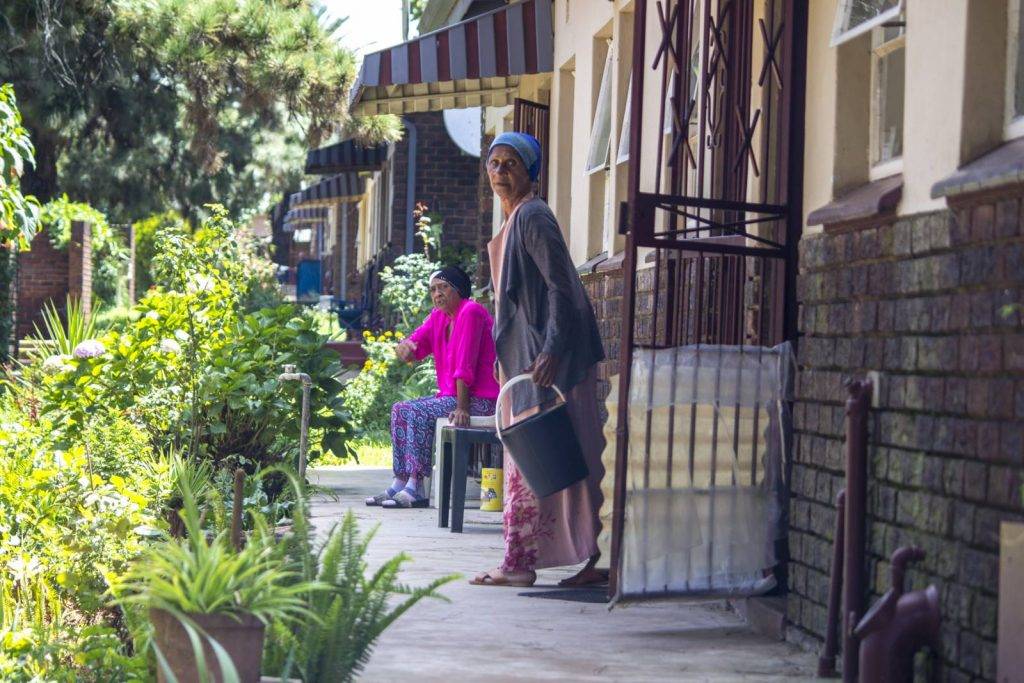 Pensioners battle to collect water. (Delwyn Verasamy/M&G)
‘We’re being sabotaged’
A week ago, Sylvia Patrick developed a double hernia from hauling buckets for her family. “You can’t clean yourself or the kids properly because you have to save as much as you can for the day,” her daughter-in-law, Veronica Fouche, said. “One day you have water, the next day you don’t, or you get it for 10 minutes and then it’s gone for weeks and weeks. You can’t live like this.”
The area’s poorest children have to take their own two-litre bottles, filled with water, to creche, while the local soup kitchen is battling to prepare food and wash pots and dishes.
Mike Omar, 73, couldn’t shower for five months until he visited his mother in Durban. “Next week is Ramadan and it will be the third Ramadan that we don’t have water … We’ve gone to the old days, the farm days, to what it was before, the bucket system for toilets.
“This is what Fietas has come to now. I feel we’re being sabotaged because we fall under low-class people, that this is what they take us as. I want to know exactly what is the way forward because we’re not getting proper answers,” he said.
Last year, the area’s residents staged protests over the water crisis. “Two weeks ago, they wanted to take to the streets and threatened to burn tyres. I said, no let’s not burn, let’s wait, thinking it’s going to be sorted out, but now I agree. I think we’ve had enough,” said Minnaar.
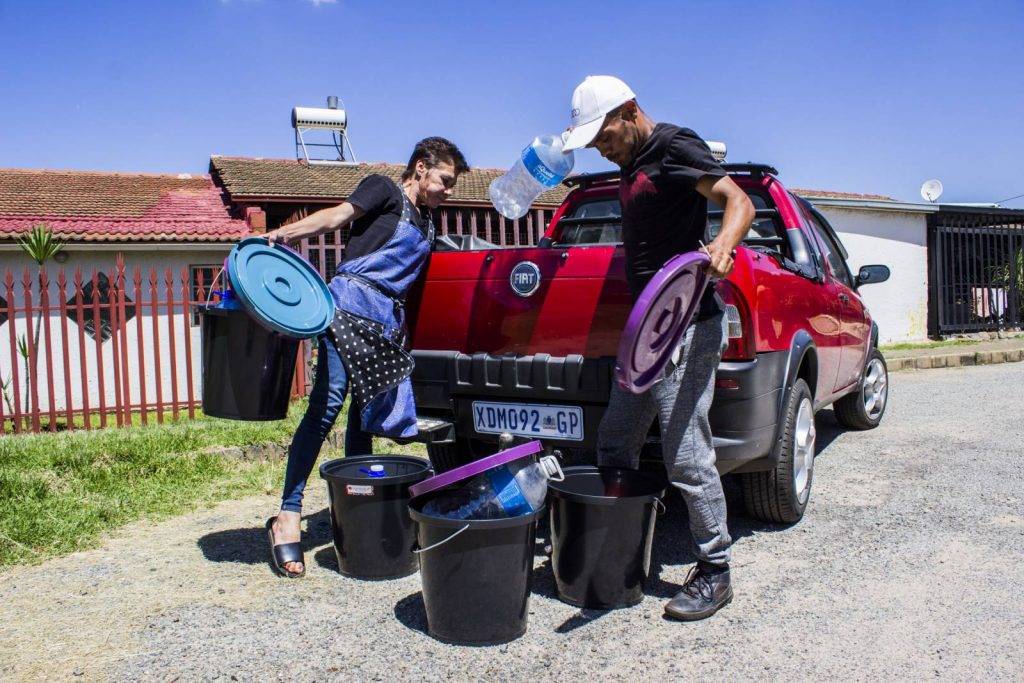 People have to fill up containers daily in Vrededorp. (Delwyn Verasamy/M&G)
‘Not winning this war’
Sitting in his office in Brixton, Ricky Nair’s face is etched with worry. As councillor for ward 58, he has been in office for barely a year, but feels as if he has “walked into a tsunami”, he said. “We’ve been whacked from every side — it’s your continuous power issues and now it’s the water issues.”
Since December, he said, the water supply in the ward, which includes Vrededorp, Jan Hofmeyer, Brixton, Mayfair, Crosby and Langlaagte, has been inconsistent. “Some areas are affected daily, some all the time and some areas come and go intermittently.”
The hardest-hit are the older people. “We have a lot of aged people in our ward. In Jan Hofmeyer and Vrededorp, there’s a lot of old age homes and as much as Joburg Water and NGOs, have supplied and donated some water tanks, the problem is the person who’s now at the age of 70 or 75, still has to go out of their unit and carry water. We tried to get as close to them as possible but it’s still not on,” Nair said, adding that a country that neglects its elders and its children “is no country”.
On the Crosby and Mayfair side, the water issues stem from supply. “The Brixton reservoir is not getting to that 100% capacity, it’s coming up to 70%, they’re throttling both the tower and the reservoir to increase capacity, but you know what happens if you haven’t had power or water for four or five hours? It’s human nature, the moment water comes back you do your washing, you want to get in the shower, you fill a couple of 25 litres because you’re not sure if the water is going off again.”
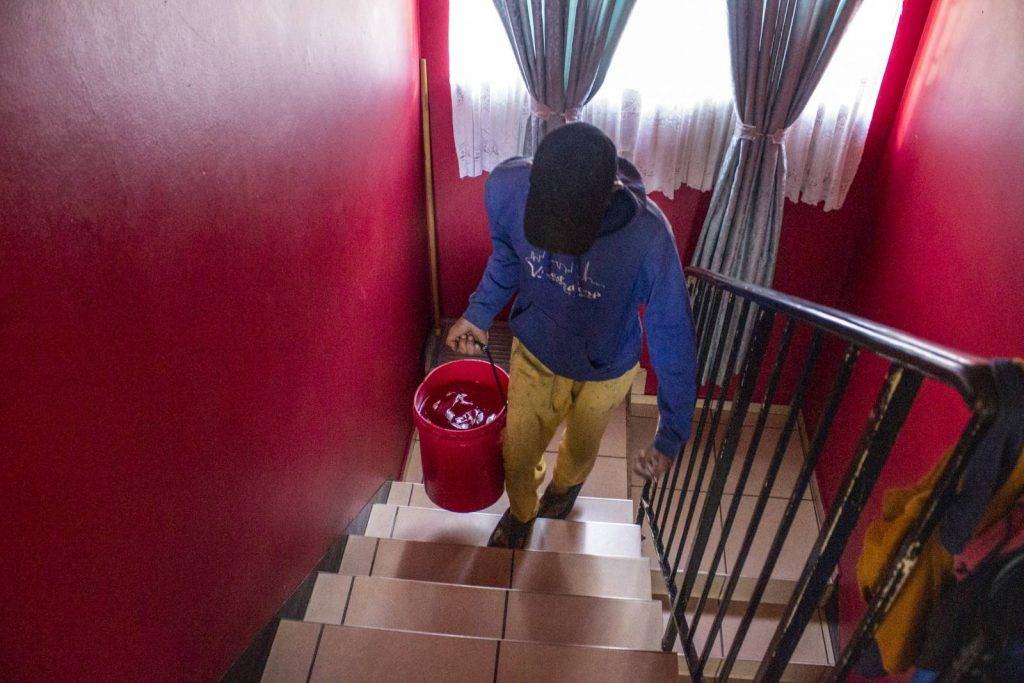 People have to fill up containers daily in Vrededorp. (Delwyn Verasamy/M&G)
‘Driving people crazy’
The ongoing water shortages “are driving people crazy”, he said. “Water is a basic human right. These suburbs are still decent, we’ve got modern homes and comforts … but when you don’t have basic water, it affects your psyche. The way we’ve been living recently you’re taking us back to the Stone Age where we’re collecting water in bottles and filling buckets. Where is the civilised society we claim to be living in?”
He said there are 27 nationalities in his ward, and uncontrolled development and migration are taking a toll on the area’s aged water infrastructure. He has a list of 100 slums, each housing hundreds of people.
“National and provincial government have allowed it. We cannot stop migration, but it’s how big cities in the world handle the migration, that’s the issue. We have not put into place structures to control the migration.”
Johannesburg Water “should have the vision to say, listen there’s an increase in demand so let’s cater for that demand. Then Rand Water will tell you Eskom and load-shedding are to blame, but load-shedding has been around for more than 10 years. Shouldn’t there be a plan in place because water is a basic human necessity, it’s not a luxury.”
This story will be updated with Johannesburg Water’s comments when received.
This article is part of ongoing coverage looking into Johannesburg’s water.