Partners is a 1993 copper statue by Blaine Gibson depicting Walt Disney holding the hand of the most popular character he created, Mickey Mouse. Now, the mouse's time with the company might be coming to an end. (Photo by AaronP/Bauer-Griffin/GC Images)
The gods have some delicious irony planned for Mickey Mouse. Next year he will be cast out into the intellectual property wilderness; his likeness left to the wolves to mangle and market.
Steamboat Willie, his first published appearance, turns 95 in 2024. It’s an important birthday — its copyright is up. Theoretically that means the mouse is fair game and can be used in creative works without permission. To understand the ramifications you need only look at Mickey’s stablemate, Winnie the Pooh. No sooner had his own copyright lifted than he was cast as the titular villain in C-grade horror flick Winnie the Pooh: Blood and Honey, wielding a knife and dicing hapless teenagers.
Disney would prefer that fate did not befall its showcase star. At this moment, we can only assume, a pack of hourly-billing lawyers are wrangling in a dark room somewhere, sewing loopholes between gulps of caviar and Kopi luwak. Mickey Mouse is no ordinary character — he is the face of an empire; one his handlers will do anything to not have besmirched.
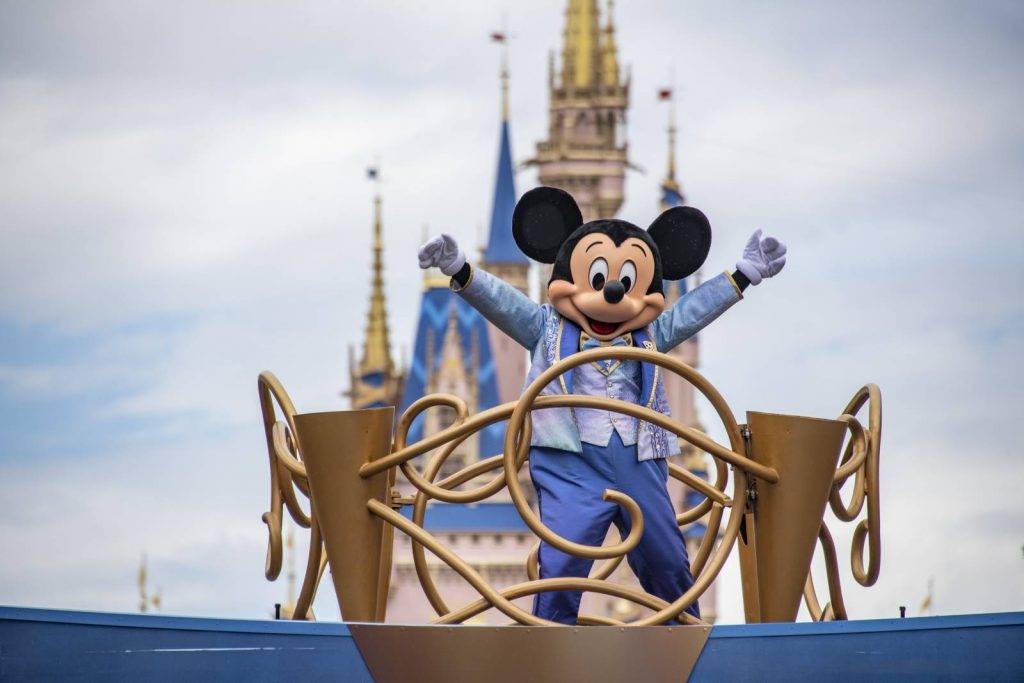 Mickey Mouse is no ordinary character — he is the face of an empire; one his handlers will do anything to not have besmirched.(Photo by Joseph Prezioso/Anadolu Agency via Getty Images)
But there is some irony that backlights their fight. Disney has filled Scrooge McDuck’s vault with billions of dollars made off lore, myths and religion stripped from cultures around the world. Content free from copyright that they certainly did not pay for.
That Faustian bargain was arguably first struck with Christianity in the 1990s. One of the studio’s darkest stories is the Hunchback of Notre Dame, adapted from Victor Hugo’s 1831 novel. Each character in the film was explicitly motivated by religious doctrine and the shifting ideal of righteousness.
The Prince of Egypt went a step further and just ripped a story straight from the Bible. In what must be said is a charming retelling of the emancipation of the Hebrew slaves, Moses frees his people from the subjugation of the evil pharaoh. Along the way he calls on the greatest hits of Old Testament viciousness: famine, swarming locusts, hailfire and the slaughter of firstborn children.
More recently, Disney has extended its storytelling net a little further to capture ideas that would be transformed into global phenomena. Frozen was inspired by Danish author Hans Christian Andersen’s 1844 fairy tale, The Snow Queen; unsurprisingly a premise built on the battle of good versus evil. Both the original and its sequel grossed more than $1 billion each — not accounting for the ubiquitous merchandise, spin-off musicals and other licensing money-printers.
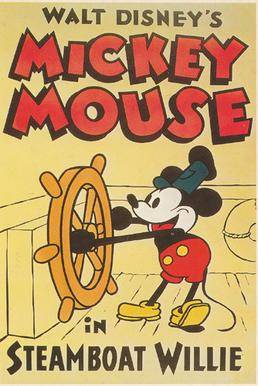 Steamboat Willie, his first published appearance, turns 95 in 2024.
Moana, meanwhile, borrows from Polynesian myth to craft its fantasy. The character of Maui was based squarely on Hawaiian religion’s cultural hero, Māui — he who famously lassoed the sun.
In fairness, many in the cultures who caretake these stories are happy to have the representation. Moana, for one, was dubbed entirely in Tahitian and made available in schools and institutions. (Incidentally, the only previous time Disney had done this for a culture that inspired a film was with The Lion King, which was recorded in Zulu.)
The Norwegian-inspired landscapes of Frozen also seemed to produce a net positive. Tour operators in the country reported a near 40% increase in sales a year after the cinema release.
Whatever the ethical implications of its reproductions, Disney still faces the possibility of having its icon stripped from it — just as it has done to so many others.
But anyone plotting a rendition of Mickey Mouse would do well to exercise caution. This is a company, after all, that once threatened a stonemason with copyright infringement for intent to carve Winnie the Pooh on a child’s gravestone.
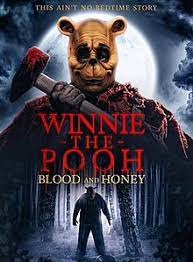 Winnie the Pooh: Blood and Honey
There are innumerable nuances that muddy the waters. For one, Steamboat Willie might be entering the public domain, but all subsequent developments of its characters remain off limits until their own time. Mickey was not always the giggling psychopath we know today: any reproductions will have to be faithful to the original. Doodle him with gloves — which only came later — for instance and you can expect that litigation will ensure your great-grandchildren are eating nothing but cabbage soup for their short, impoverished lives.
The lawyers are also arguing that the world’s most famous mouse has transposed from a character into a trademark, which, unlike copyrights, don’t expire. His silhouette is the seal of a global empire. How exactly that might affect his recasting in creative or commercial projects next year no one can say for sure.
Mickey Mouse, after all, is a bonafide 21st century god. And gods care little for the whims of mortals.