Shuttered: Shakaskraal, in KZN, was prosperous before the cane mill closed and the sugar industry declined, exacerbated recently by the troubles at Tongaat Hulett and Gledhow. (Delwyn Verasamy/M&G)
A town of less than 4 000 people, about 50km from Durban, is in distress because the sugar cane industry which supported it is collapsing.
Just 12km from the last resting place of the famous Zulu king, Shakaskraal, or Chakaskraal as some locals call it, was a booming farming town because it was surrounded by the hilly sugar cane plantations on the KwaZulu-Natal of KwaZulu-Natal.
However, it has not been the same since the Chakaskraal Sugar Mill closed and sugar cane farming declined over the past few years, residents told the Mail & Guardian.
In the 1800s, Indians were brought to what was then Natal as indentured workers on sugar cane plantations. Around this time, sugar companies and mills mushroomed all over the province.
Many businesses in Shakaskraal were dependent on the sugar industry, which was the town’s main economic activity.
These include Nasholan Naidoo’s Chakaskraal Wagon Works, which sells agricultural implements. According to Naidoo, the business has been in existence since 1932, when it manufactured wooden truck bodies and trailers.
“I am the fourth generation. Over the years, we’ve had to downsize and downscale, especially when the mill stopped operating,” Naidoo said.
“Farmers would obviously take their cane to the mill and we fixed a lot of the wear and tear on the trucks. We’ve had to downsize because business has gone down a little bit now.”
When Naidoo, who has been in the family business for 22 years, started, the company had 12 permanent employees but that number has now been halved.
The local mill was shut down in 1961 and the majority of the employees were transferred to the Gledhow sugar mill.
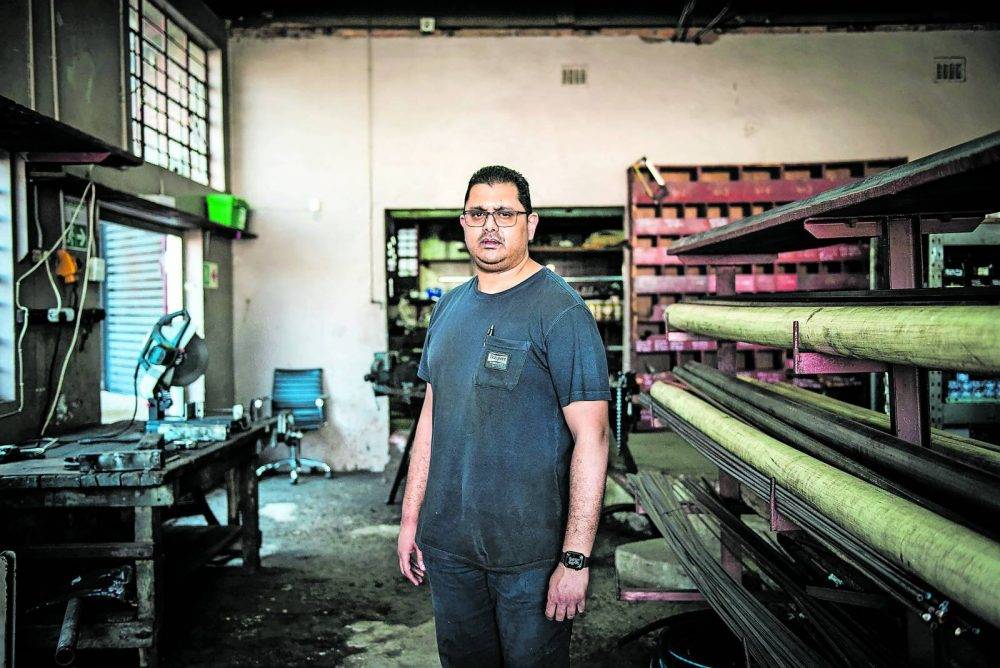 Tough times: Nasholan Naidoo, owner of Chakaskraal Wagon Works, has had to downscale due to the fall-off in the sugar industry.
(Delwyn Verasamy/M&G)
Tough times: Nasholan Naidoo, owner of Chakaskraal Wagon Works, has had to downscale due to the fall-off in the sugar industry.
(Delwyn Verasamy/M&G)
Many people also moved away to other areas. The mill has since been transformed into a steel manufacturing plant.
Shakaskraal is a microcosm of what lies ahead for many other towns in KwaZulu-Natal, should the sugar cane industry collapse.
“Farming has changed; the mills are having problems. I know you’ve heard about Tongaat [Hulett], so that affects us too. If farmers don’t get paid, or their cheques are getting delayed, we get paid late too. We then pay our creditors late as well and this means that supply becomes a problem. It’s a knock-on effect,” Naidoo said.
Tongaat Hulett entered into voluntary business rescue in October as it was struggling to pay its creditors.
After years of predominantly selling agricultural and engineering equipment, the 91-year-old Chakaskraal Wagon Works has been forced to diversify.
“Agriculture is going down. All the farmers are going out of sugar cane and are going into macadamia nuts, and that’s a different industry, with growth taking about seven years before the first crop is ready to be harvested,” Naidoo said.
“We now mainly deal with plumbers and people who are in building trades. We had to modify the business to the changing times. It was more focused on farming but now it’s all round.”
According to research platform Statista, South Africa produced around 17.99 million metric tonnes of sugar cane in 2021-22, down from 18.22 million metric tonnes the previous season.
“Over the last two decades, the quantity of sugar cane produced in South Africa [has declined], with several fluctuations. The trend is related to farmers substituting their production of sugar cane for other, more profitable, and less capital-intensive crops,” Statista said.
Naidoo noted that many people living in Shakaskraal now have to work outside the town, in places like Ballito or as far away as Durban.
“They commute every day. Not many are employed in the area. Work-wise there is nothing. We get guys coming in all the time from the streets looking for jobs …
“At this stage, I don’t know if the business will survive, and be passed on to future generations, just because things are getting tough,” Naidoo said.
The town’s single street has hawkers on every corner, selling all kinds of wares, from chips and snacks to tomatoes and amadumbe, a type of potato.
Juneid Dawood runs a family business with his 89-year-old father and brother. The Economy Supply Store, which has been in existence for 100 years, sells household items, groceries and even fishing equipment.
Next to the supply store is a bakery run by the 55-year-old Dawood.
“This street used to be busy with farmworkers getting off of trucks and coming into the town. We sold cooldrink and bread to parched and famished workers who worked on the sugar cane fields,” he said.
“Now we sell to people passing through the town or just locals who live in the townships.”
The lack of economic activity in the town has impacted the business, including the foot traffic it gets, Dawood said.
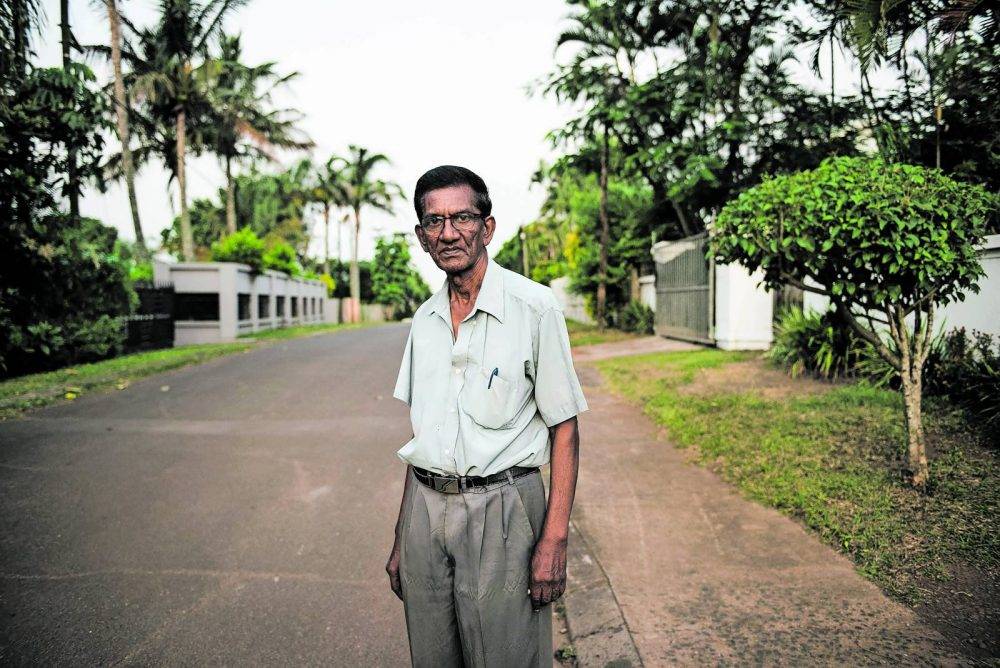 Decline: Dan Monsami, a 79-year-old retired teacher, has seen Chakaskraal go from boom town to a near ghost town.
“I do see the business maybe surviving another 100 years but not in its current form,” he said.
“We opened the bakery to try to support the superstore when the farmworkers moved away and we supply bread to neighbouring towns in Stanger and Eshowe but, even with that, we can only bake 1 000 loaves a day — anything more and
it does not sell.
“There is no growth.”
Dan Monsami, a 79-year-old retired teacher who used to be principal at Temple Valley Secondary School, has lived long enough to see the town during its heyday, when the mill was operational, decline to being a near ghost town.
“The mill opened long before I was born. My father worked there for a long time. He earned £5 a week in 1958 as a driver.
“I remember this clearly because it was a decent pay at the time. He used to transport parts to the mill when the mill broke down,” Monsami said.
When the mill closed down, Monsami’s father transferred to Gledhow, as did other workers. But Gledhow, like Tongaat Hulett, has now also applied for voluntary business rescue.
“The town was very vibrant then. Nowadays, with the change, and it no longer being a farming town, it’s not the same,” Monsami said.
 (John McCann/M&G)
The agricultural sector plays an important role in the KwaZulu-Natal economy, particularly the rural economy, and small towns that are dependent on the economic activity brought by the sector, said Wandile Sihlobo, the chief economist at the Agricultural Business Chamber of South Africa (Agbiz).
The collapse of the sugar industry would not only have a direct impact on the lives and livelihoods of the people who depend on it, but also on the towns that grew up because of the sector.
According to Sihlobo, one person who works in agriculture supports a minimum of four to five people and, when those people are out of work, there are socioeconomic repercussions.
According to Statistics South Africa’s 2022 fourth quarter figures, the agricultural sector employs 860 000 people, with KwaZulu-Natal accounting for 14%.
“Within KwaZulu-Natal, sugar remains an important contributor as well as the horticulture industry.
“Any challenges in this industry, the spillover is on the farmers, as well as the rural economy. Those are the people that are in the coalface of it,” Sihlobo said.