African grey parrots are one of the most heavily trafficked birds in the world. (Photo by: Auscape/Universal Images Group via Getty Images)
“African grey parrots for sale, very healthy and active,” read the online advert posted on Chutku, a free classified platform in Nigeria, offering the endangered birds for sale for 35 000 naira (R791).
Another classified advert on Olist Nigeria, a free online marketplace, stated: “If you want a good African grey parrot that talks quickly and [is] very intelligent, don’t miss this. They were brought in from Cameroon. Birds are all in good health. Am in Abuja but can be sent anywhere across the country.” The birds were on sale for 60 000 naira (R1 341).
Coveted for their intelligence, their uncanny ability to mimic and for their longevity, African grey parrots are one of the most heavily trafficked birds in the world and wildlife trade organisations are worried that the growing illicit online trade has taken wing on the continent.
Earlier this month, the Global Initiative Against Transnational Organised Crime (GI-TOC), wildlife trade specialists Traffic and the World Parrot Trust urged African online platforms to take immediate action to address illegal sales of endangered wildlife on their e-commerce and social media sites.
Their concern is that platforms in Africa do not have policies regarding the sale of wildlife, and those that do are not ensuring that these policies are effectively enforced. “If this situation is not reversed, the impact on wildlife populations and biodiversity across the region will be severe,” they warned in a joint statement.
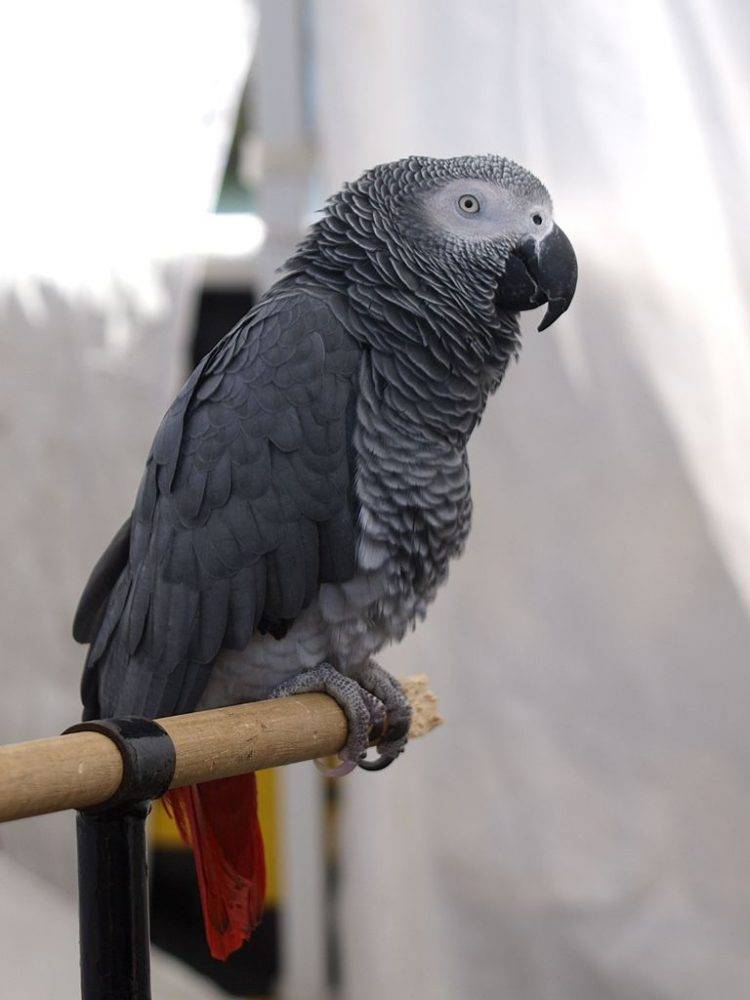 African Grey Parrot, Psittacus erithacus, UK. (Photo by: Education Images/Universal Images Group via Getty Images)
The African grey is assessed as endangered by the International Union for Conservation of Nature (IUCN)’s Red List of Threatened Species.
In January 2017, African greys, which are native to equatorial Africa, were moved to Appendix I of the Convention on International Trade in Endangered Species of Wild Fauna and Flora (Cites), meaning that international trade of wild-sourced parrots for commercial purposes was no longer permitted.
The three organisations said they had found species for sale with “clear links to international trade, breaking local and international laws”, which is especially prevalent in Nigeria and Kenya.
African grey parrots have been decimated in the wild by the pet trade, said Rowan Martin, the director of the Africa conservation programme of the World Parrot Trust.
“This once abundant species is now at risk of extinction in many parts of their natural range. Trapping wild animals and bringing them into our homes is not only driving species to extinction but leads to suffering and risks spreading zoonotic diseases.”
In 2021, analysis by the GI-TOC and the World Parrot Trust found that despite high levels of local and international protection, African greys are being advertised on so-called “classifieds platforms” across the African continent, including in countries outside the species’ natural range, and which represent some of the largest and most rapidly developing economies.
The pattern of these adverts suggests illegal trade across borders, contravening agreements under Cites, and within countries, contravening national laws. The analysis described how keeping parrots and other birds is popular in many regions, including Europe, North America, Latin America and Asia.
“However, with the exception of South Africa, this practice has historically been relatively uncommon in Africa, despite several highly desirable parrot species being endemic to the continent.”
The continent is the global centre of the wild parrot trade: three of the four most traded species listed on the Cites appendices are endemic to the continent, including African greys, the report said.
“As increasing international protection has made it more difficult to export listed parrots from African countries, this has the likely effect of increasing local availability, drives down local prices and prompts traders to develop alternative markets closer to home.”
This “cocktail of conditions” sets the stage for further growth of this market for pet birds and other wildlife in sub-Saharan Africa.
Recent reports on online markets reveal that wildlife is being bought and sold illegally online on the continent at “concerning” levels, Martin said, explaining that this trade happens openly online.
“Buyers and sellers connect through an ad on an e-commerce platform but sales and deliveries are typically arranged through private channels, often using other online services. Our research identified Nigeria and Kenya as being particular hotspots for online sales of African grey parrots.”
These are countries with relatively advanced online economies. “As internet penetration increases and e-commerce expands in other countries, we are concerned that emerging online markets will stimulate sales and demand for parrots and other wildlife,” he said.
Globally, demand for exotic pets has gone hand-in-hand with increases in disposable income. “The rise of social media and online platforms not only facilitates trade but by expanding reach and intersecting with new markets and audiences, it can encourage and further stimulate demand.” The more people see online, the more normalised it feels, and demand grows, he said.
The rate of decline in African greys varies between countries but in areas where wild populations are being exploited for the trade, “declines of more than 80% have been found over a 14-year period”, Martin said.
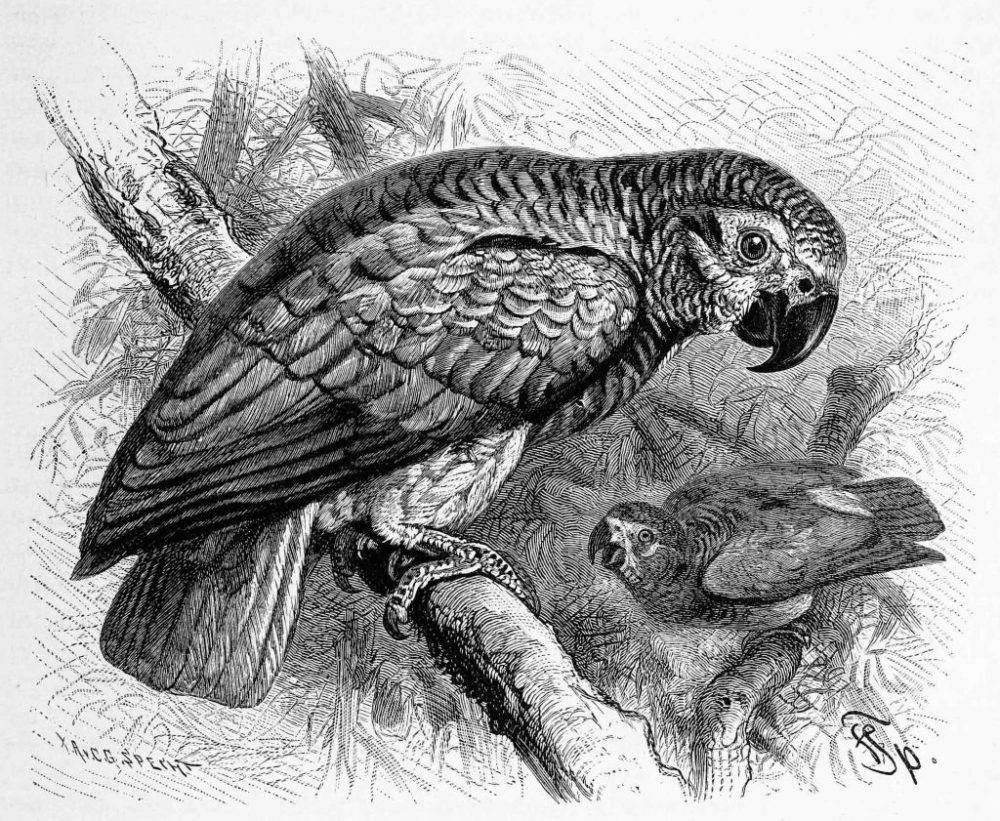 Bird, gray parrot, Psittacus erithacus, Jako, a species of bird from the family of actual parrots, Historical, digitally restored reproduction from an original from the 18th century. (Photo by: Bildagentur-online/Universal Images Group via Getty Images)
Giulia Roncon, an analyst on environmental crime at the GI-TOC, said that as the internet has become a bigger part of people’s lives, the illegal wildlife trade has moved online.
“The online trade in endangered species is easily overlooked, leaving a gap in the global response that allows wildlife traders to openly seek customers online, market goods, conduct transactions and stimulate demand,” she said, adding that online markets are helping illegal traders to advertise, grow business reputations, and connect to far-flung consumers.
“Between October 2020 and March 2021, our monitoring efforts on African e-commerce platforms led to the identification of a total of 782 online advertisements for African grey parrots that we determined were illicit.
“Subsequently, in June 2022, another monitoring exercise revealed a similar high number, despite our attempts to engage with these platforms and share our previous detections to address the issue.”
Roncon cited a 2022 survey by Traffic, which found that crocodiles, tortoises, smaller reptiles such as geckos and lizards, parrots, and monkeys are the species most often illegally traded on online platforms on the continent. She said that 91% of all species observed in these online adverts are listed as threatened with extinction by the IUCN.
“We definitely saw the rise of new markets for African grey parrots in our study,” she said. “We discovered some new markets [in Ghana and Benin] that were previously unknown. The issue is that African grey parrots are an endangered species and we see that many of the birds being traded are caught from wild populations.”
This is not sustainable. “Illegal trade is one of the major drivers of extinction,” she said. “Trade in live animals, like the pet parrot trade, can also lead to the emergence of new zoonotic diseases and global pandemics.”
Roncon added that as the populations of African greys began to decline, export restrictions were implemented by some range states and major markets also banned imports.
“Consequently, we observed a significant increase in the presence of captive-bred parrots dominating the international market. These parrots are predominantly produced in South Africa, however they are probably still using wild-sourced breeding stock from regions where the African grey population is already being illegally poached”.