The Economic Freedom Fighters (EFF) could unseat the Democratic Alliance (DA) as official opposition in the 2024 general elections
The Economic Freedom Fighters’ (EFF) 10th anniversary celebration was a serious show of strength and organisational capacity — and choreographic nous — by the country’s third-largest political party.
EFF president Julius Malema hoisted aloft on a hydraulic platform above the packed-to-the-brim FNB Stadium as he concluded his address to the celebration was pure political theatre — and a vivid reminder that 10 years on, he remains firmly in control of the party.
Malema — and the party he founded along with his deputy, Floyd Shivambu, after their expulsion from the ANC, whose youth league they led, in 2013 — have plenty of reasons to break out the bunting and red confetti.
Unlike other breakaways from the governing party, the EFF has both survived and prospered as it reaches the 10-year milestone.
The United Democratic Movement (UDM), formed by Bantu Holomisa, who was expelled from the ANC, and former National Party constitutional negotiator Roelf Meyer, in 1997, took 14 seats in the National Assembly and established itself in six of the nine provinces in the 1999 elections.
But the UDM’s fortunes waned quickly, despite successes in local government in the Eastern Cape in 2000, with Meyer leaving the party in the same year after falling out with Holomisa.
Since then, successive elections have seen the UDM lose support and the party has been reduced to two seats in parliament and a presence limited mainly to the Eastern Cape.
The Congress of the People (Cope), established in 2008 by supporters of former president Thabo Mbeki who had left the party after his defeat by Jacob Zuma in 2007, has fared even worse.
Cope, led by Mosiuoa Lekota and Mbhazima Shilowa, made a strong start in the 2009 elections, taking 30 parliamentary seats and establishing itself across the provinces.
But Lekota and Shilowa, neither of whom was satisfied with being a party co-leader, soon fell out, with their factions ending up in court in a leadership battle during 2013 and 2014.
The electoral decline caused by the infighting and factionalism in Cope was dramatic.
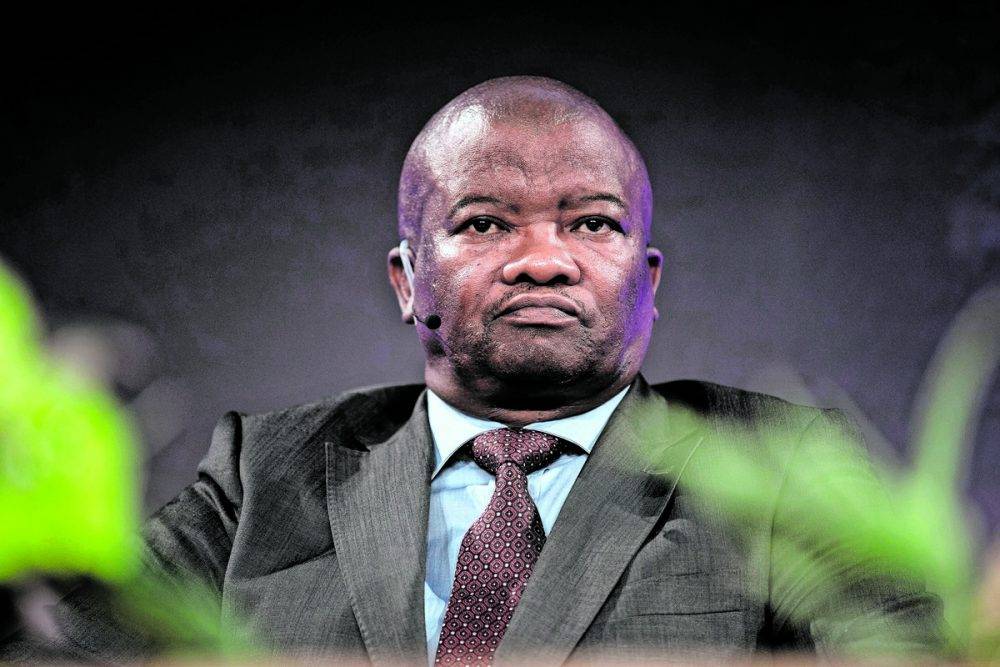
 Breakaways: Support for Bantu Holomisa’s United Democratic Movement and Mosiuoa Lekota’s Congress of the People has dwindled. Photos: Wikus de Wet & Gulshan Khan/Getty Images
Cope won only three parliamentary seats in the 2014 elections and took only 180 000 votes countrywide in the 2016 local government elections, setting in place a further decline that saw it secure only two seats in parliament in 2019.
The party is on the verge of collapse, having been deregistered as a company, and is in the grip of a bitter battle between Lekota and its deputy president, Willie Madisha, who was expelled by the party in June.
It is unlikely to survive the battle — or the 2024 election.
The EFF came out of its first national and provincial elections in 2014 with 25 seats in the National Assembly — beating both the UDM and Cope — and securing a foothold in a number of provinces.
It now has 44 MPs in the National Assembly and 50 seats in the provincial legislatures, increasing its 6.4% of the vote it took in 2014 to just over 10%.
At local government level, the party has shown similar growth, again taking just over 10% in the November 2021 poll and improving on its performance in 2016.
It has also established itself in the role of kingmaker — and breaker — in the country’s major metropolitan councils, leveraging its council votes as a coalition partner in return for powerful and influential MMC portfolios.
Going into next year’s national and provincial elections, the EFF finds itself in an enviable position, one of few opposition parties showing election-to-election growth and attracting rather than shedding support.
Thus far, Malema has faced no real internal revolt, with three MPs who challenged their replacement in parliament in 2015 swiftly expelled from the party, sending a clear message to any other would-be rebels.
Since then, it’s been Malema’s way or the highway as far as the EFF is concerned.
Shivambu, unlike the co-founders of Cope and the UDM, has remained on page with the party leader, with the EFF thus far avoiding the personality and power battles at the top — and resultant factionalism — which destroyed the earlier breakaways from the ANC.
But there are now rumblings in the party about Shivambu being lobbied to stand against Malema at the EFF’s elective conference December 2024, at which the party president has indicated he will stand for a third term if asked to do so by the branches.
Concerns over Malema’s unilateral leadership style and its potential to stunt the party’s further growth appear to be growing, and will continue to do so going into both the national elections and the EFF’s leadership contest.
Malema alluded to this potential threat during the build-up to the anniversary rally, when he attributed his success — and that of the party — to his “ruthlessness” in dealing with any move to unseat him in a thinly veiled message to Shivambu.
It appears that, 10 years into his tenure as president, Malema is finally facing the first substantial challenge to this leadership.
Whether the challenge to Malema gains momentum will be largely dependent on the outcome of next year’s elections, which are likely to be held in May, seven months ahead of the EFF elective conference.
A drop in support — or even a plateau — in the 2024 poll will supply those wanting a change in leadership with ammunition to use against Malema — and a compelling argument to convince Shivambu, or any other contender, to stand.
But if the party continues to grow, and takes more seats in parliament and the legislatures next year — and with it more largesse to dispense — Malema’s critics will be hard pressed to justify denying him a third term.