ANC treasurer general Gwen Ramokgopa. (Alet Pretorius/Gallo Images)
ANC treasurer general Gwen Ramokgopa has come out in support of party elders who are calling for those implicated in wrongdoing not to be on the list of individuals destined for parliament and provincial legislatures in next year’s elections.
In a wide-ranging interview with the Mail & Guardian, Ramokgopa said the ruling party’s rules already provided for those who had been implicated to step aside.
“The regulations, which are under the elections committee, [do] govern that matter and it is very clear that those that are implicated cannot stand to be elected. So, already, the constitution does indicate that those that are implicated in corruption and related serious offences must step aside,” she said.
This has implications for ANC national chairperson and Mineral Resources and Energy Minister Gwede Mantashe, who is one of the party’s top seven officials, as well as for deputy secretary general Nomvula Mokonyane. Both of the prominent party figures were implicated in the state capture report.
Chief Justice Raymond Zondo, who chaired the commission that probed state capture said, upon further investigation, authorities were likely to find evidence that Mantashe was corrupt in dealings with facilities company Bosasa, which paid for upgrades to his home when he was secretary general of the ANC.
Zondo referred to Bosasa as a business organisation that was “heavily invested in securing tenders from particular government departments and organs of state”.
Bosasa upgraded security at Mantashe’s Boksburg, Gauteng, property, as well as at his homes in Cala and Elliotdale in Eastern Cape.
The work was commissioned by former Bosasa chief executive Papa Leshabane. Mantashe has since taken the report on review.
The ANC leader — considered by some to be one of the most prominent individuals in the national executive committee (NEC) — appeared before the party’s integrity committee earlier this year but Mokonyane chose not to.
She is facing a disciplinary process, together with 90 other ANC leaders.
The commission recommended Mokonyane be investigated and prosecuted for corruption, pointing to evidence of her having received bribes from the Bosasa criminal enterprise.
Ramokgopa said she was aware there was pressure from society and within the party for those implicated in corruption to be dealt with.
“Sometimes, correctly so, there is impatience in terms of due process but you can really be assured that we are unrelenting as a collective in executing this constitutional and policy mandate,” she said.
An ANC 2017 resolution said those who had been charged with corruption must voluntarily step aside, while those alleged, reported and accused of corruption should face the integrity committee.
“I must indicate, and it is not going to be by the NEC, it’s not going to be by the affected people. It would be through the committee that is chaired by [Kgalema] Motlanthe, the electoral committee and the integrity committee will also play a role,” Ramokgopa said.
The ANC’s chief financial officer said Mokonyane’s refusal to appear before the integrity committee had to do with personal accountability.
“I think the constitution of the ANC is very clear. The current NEC was also very clear — it is the one that decided that those implicated who have not gone to the integrity committee should go to the disciplinary processes.
“And we really, really continue to call on all leaders to lead by example. But the rules must apply to all of us, me and anybody else.”
She said the ANC had shown it was decisive in enforcing discipline and integrity by taking the painful step of suspending, and later expelling, former secretary general Ace Magashule.
In an October interview with the M&G, integrity committee head Frank Chikane said the body would call on the NEC for the step-aside resolution to include those implicated in wrongdoing, in addition to those facing criminal charges.
Chikane said the ANC was at a “crisis point”, telling the M&G: “You are going to have people who have brought the organisation into disrepute appearing in the nomination list — and that will bring the organisation into disrepute.”
The ANC stalwart said in his discussions with top officials he had emphasised it was critical to regain the confidence of the electorate.
Although the ANC had taken responsibility for failing to halt state capture, the party lacked the “capacity to act” on reports, Chikane added.
The ANC’s slow pace in dealing with this matter led to one of its senior stalwarts Mavuso Msimang resigning last week.
Msimang said the dramatic decline in the organisation’s popularity was attributable to widely held perceptions that its members and deployees were corrupt, that the organisation had a high tolerance for venality and that the deployment of unsuitable people accounts for the government’s deplorable levels of service to the public.
To address these perceptions, he said, the Veterans League had urged ANC leadership “to ensure that members who have been accused of criminality or recommended for referral to criminal justice institutions by commissions set up to investigate corruption, should not be allowed to continue in office”.
“The Veterans League specifically recommended that such individuals be considered ineligible for nomination to represent the ANC in the 2024 national and provincial elections. Unfortunately, the ANC NEC has shown no urgency to deal with this matter,” Msimang said.
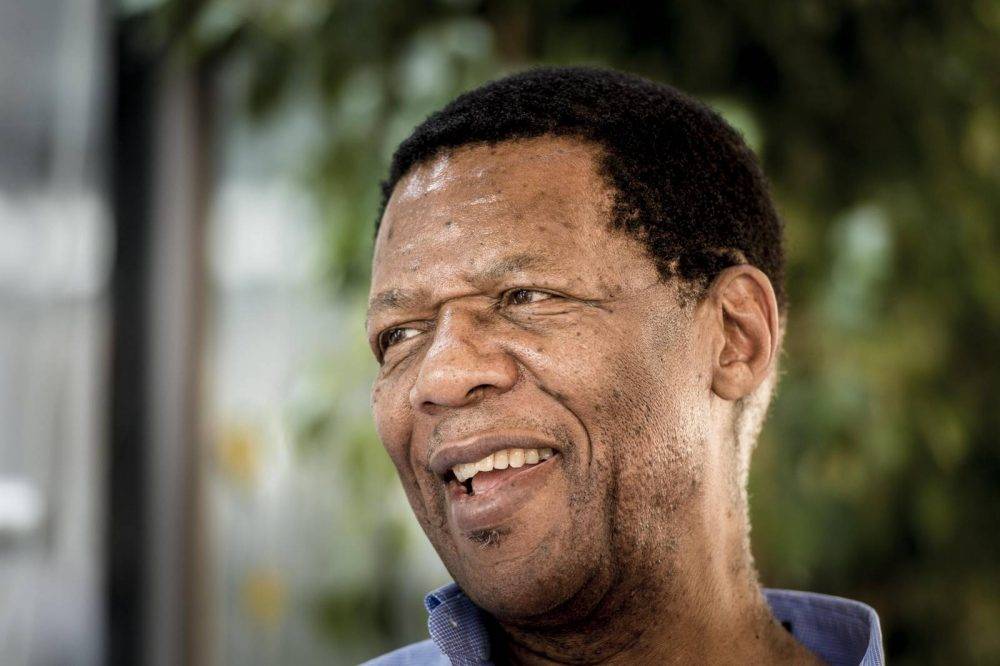 Veteran member Mavuso Msimang resigned recently over the ANC’s foot-dragging in tackling corruption in its ranks.(Cornel Van Heerden/Gallo Images)
The resolution, emanating from the watershed Nasrec elective conference in 2017, became a bone of contention when President Cyril Ramaphosa tasked the NEC with curtailing growing frustration around allegations of corruption within the ANC’s leadership.
Unable to agree on who should step aside, with many party leaders implicated in corruption, towards the end of 2020, the NEC referred the document to national officials.
This is when party veterans, former treasurer general Mathews Phosa and chair of the ANC electoral committee Motlanthe were roped in to formulate guidelines.
These were adopted by the NEC when it sat in 2021. They stated that the step-aside process and its implementation must be done according to the requirements of the party, labour law and the constitution.
In the same year, Ramaphosa said the NEC had been tasked with readying the guidelines for immediate implementation and this would include consultation with the provinces as well as workshops with party structures.
The guidelines state the step-aside decision may not dilute the constitutional rights of a member and must be taken and communicated with due caution for its potential to violate the rights members enjoy under the law.
“The requirement that natural justice at all times be applied when any rights of a member are threatened by any process is a fundamental requirement,” the document reads.
The guidelines also say members must abide by the integrity commission’s recommendations.
This has been a particularly thorny problem for the ANC since 2017 as some party members have refused to stand aside when faced with criminal charges. The matter became a battleground for the factions vying for power in the ruling party.
The guidelines state that provincial secretaries or the secretary general must table a recommendation in their relevant structure, which then decides how to respond to the integrity commission’s recommendations.
“The recommendation, if it includes an adverse decision against a member recommending that the member step aside or face disciplinary action, must be presented to the member,” the guidelines say.
If the secretary or secretary general at the relevant structure decides “after due consideration” that “an appropriate response is to commence a disciplinary process” then “the member must be requested to step aside”, according to Phosa’s presentation.
It goes on to say: “Failing which the disciplinary action shall commence in accordance with the ANC constitution. Should the member refuse to step aside, and considering the recommendations of the IC [integrity commission], the NEC/NWC/PEC/PWC [national working committee/provincial executive committee/provincial working committee] under rule 25.56 may suspend the member pending the institution of a disciplinary process.
“A disciplinary process shall then follow, in accordance with the ANC constitution, and with due regard to the member’s substantive and procedural rights under South African law,” it says.