Protesters hold a banner calling for an end to the bombing of Gaza and Yemen during the demonstration. Thousands of people marched in solidarity with Palestine in Central London, calling for a ceasefire as the Israel-Hamas war continues. (Photo by Vuk Valcic/SOPA Images/LightRocket via Getty Images)
During the first year of the pandemic in 2020, there was some hope that we were on the precipice of a “great reset” — the term used by the World Economic Forum to describe a much-needed overhaul of the organisation of the global economy.
The term was popularised by a book of the same name, written by Richard Florida in the wake of the 2008 global financial crisis. It has since been borrowed by others, including right-wing conspiracy theorist Alex Jones who endeavoured in his own book to expose the World Economic Forum’s alleged agenda to achieve “an unprecedented amount of control over your daily life”.
Whatever your view of the World Economic Forum — which also happens to be meeting in Davos this week under the banner “rebuilding trust” — its stated aspiration to bring about a better post-Covid economy has not yet come to bear.
If you subscribe to the view that things will get a lot worse before they get better, then you have the privilege of still having some hope. If you don’t, that’s understandable too.
Perhaps the biggest sign of a world in distress is the significant deterioration of geopolitical stability, which has culminated in brutal wars, as well as some especially callous power battles between global leaders.
Released last week, the World Economic Forum’s 2024 Global Risks Report makes the troubling observation that the world has become significantly less peaceful over the past decade.
Active conflicts are at the highest levels in decades, according to the report. There has also been a steep increase in conflict-related deaths, which have nearly quadrupled over the two-year period from 2020 to 2022.
“While difficult to attribute to a single cause,” the report notes, “longer-term shifts in geopolitical power, economic fragility and limits to the efficacy and capacity of international security mechanisms have all contributed to this surge.”
The report comes in the wake of Russia’s invasion of Ukraine, which has claimed hundreds of thousands of lives while also tearing at the little economic stability created in the pandemic’s wake.
It also comes as untold suffering is inflicted on Gazans in a US-backed Israeli assault that many didn’t think would spread beyond Palestine’s borders, but which now most definitely has.
Last Friday, the United States and the United Kingdom carried out strikes on Houthi military targets in Yemen, in an escalation of tensions in the Middle East that have spilled over into the Red Sea — one of the world’s most densely-packed commercial shipping routes.
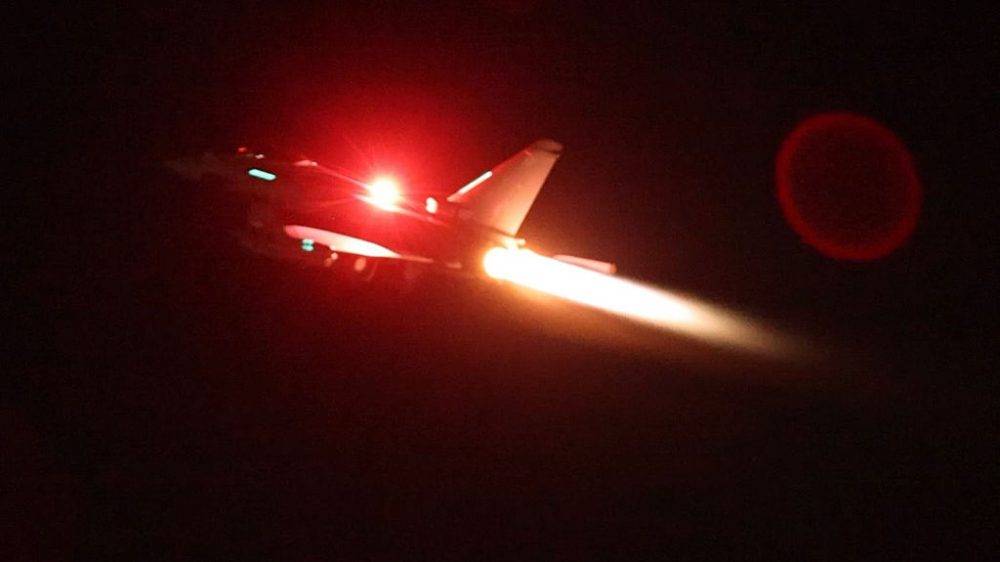 An RAF FGR4 Typhoon takes off from Royal Air Force (RAF) Akrotiri military airbase in Greek Cypriot to conduct its mission against the Iranian-backed Houthis in Yemen on January 12, 2024. (Photo by UK Ministry of Defence/Anadolu via Getty Images)
This after the United Nations Security Council passed a resolution calling the Houthis to “immediately cease all attacks, which impede global commerce and navigational rights and freedoms as well as regional peace”. Earlier in the week, the Houthis launched the 26th attack on commercial shipping since 19 November 2023, when they seized a cargo ship believed to be linked to an Israeli businessman.
The US-UK strikes caused oil prices to rise steeply on Friday.
The Global Risks Report notes that, over the next two years, the attention and resources of global powers are likely to be focused on Ukraine, Gaza, as well as simmering tensions over Taiwan — which has seen two superpowers in the US and China come head-to-head.
“Escalation in any one of these hotspots would radically disrupt global supply chains, financial markets, security dynamics and political stability, viscerally threatening the sense of security and safety of individuals worldwide,” the report warns.
Responding to the strikes, Hezbollah leader Sayyed Hassan Nasrallah said the US had jeopardised all maritime navigation — “even the ships that are not going to Palestine, even the ships which are not Israeli, even the ships that have nothing to do with the matter, because the sea has become a theatre of fighting, missiles, drones and war ships”.
“Security has been disrupted,” Nasrallah added.